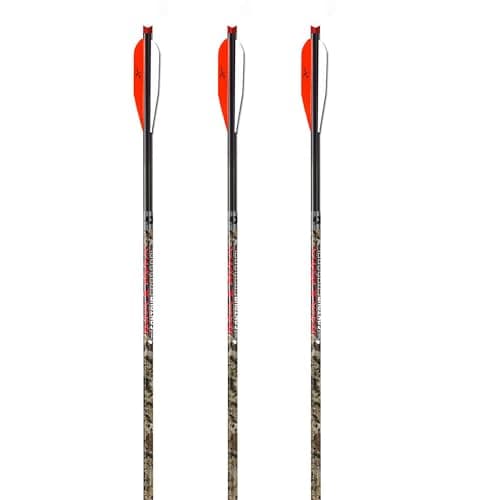
I do not know which arrow my bow needs
Crossbow bolts and broadheads, matched to your bow
Length, weight, nock type and straightness decide whether a bolt is safe in your bow. Broadhead choice then decides what happens at the other end. Published figures only.
String & Stock earns a commission when you buy through our links, at no extra cost to you. Prices come from Amazon and change; the date beside every price is when we last verified it. Full disclosure.
Ranked
Top picks in bolts & broadheads
Ranked on our published rubric, using the maker's own specifications. Prices are live and dated; where no live price resolves, the cell reads Check price.
| # | Product | Weight | Score | Price |
|---|---|---|---|---|
| Rank 1 | Carbon Express Maxima Contour Crossbolts | 390 gr | 9.0 | $29.97Amazon |
| Rank 2 | 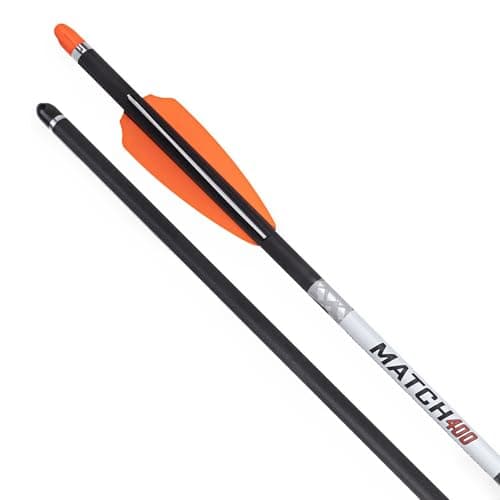 Wicked Ridge Match 400 | 400 gr | 8.5 | $69.99Amazon |
| Rank 3 | 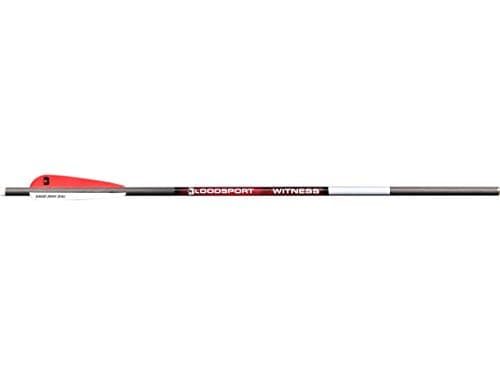 Bloodsport Witness 20-inch | 8.6 | $48.24Amazon | |
| Rank 4 | 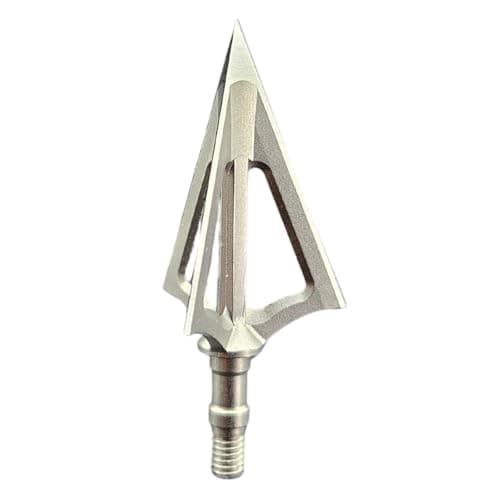 G5 Montec 100 gr | 100 gr (85 and 125 also offered) | 8.9 | $44.95Amazon |
| Rank 5 | 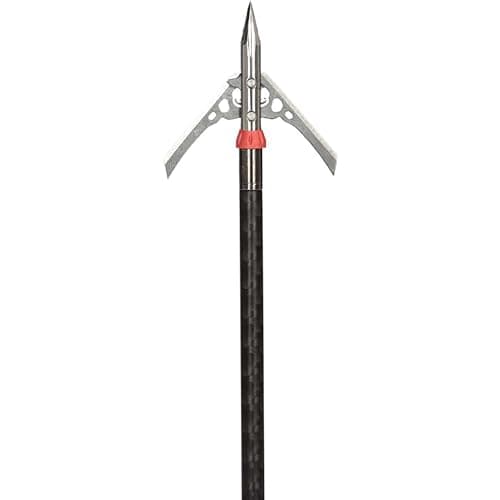 Rage Hypodermic Trypan NC | 100 gr | 8.6 | $57.49Amazon |
Wrong bolt, broken bow
A crossbow bolt has to match your bow on four counts: length, minimum weight, nock type and diameter. Get length or weight wrong and you risk a dry-fire-class failure that destroys the bow. Get nock type wrong and the string can skip the arrow entirely. Check all four against your bow's manual before you order.
Of everything on this site, this is the category where a mistake costs the most. A scope that does not suit you is a disappointment. An arrow that is too short, too light, or carries the wrong nock can cause the string to leave without the arrow, which is the failure mode every maker's anti-dry-fire mechanism exists to prevent — and those mechanisms do not catch every case.
The four compatibility checks, in order
| Check | Typical values here | What happens if you get it wrong |
|---|---|---|
| Length | 16 in, 18 in, 20 in, 22 in | Too short and the arrow can leave the rail before the string releases it |
| Weight | 250-400 gr complete | Below the bow's minimum, the limbs absorb energy the arrow should have taken |
| Nock type | Half-moon, flat, Alpha-Nock, V-Track, proprietary | The wrong nock lets the string skip over or under the arrow |
| Diameter | .300 in ID standard, .204 in small-diameter | Small-diameter arrows need a bow built for them |
Nock type is the one that catches people out
A half-moon nock has a groove that must be indexed to the string. A flat nock does not care about orientation. Alpha-Nock (TenPoint and Wicked Ridge) has a deep groove and a large radius base that stops shoot-over. V-Track (Killer Instinct) is designed to reduce center-serving wear. Several bows here specify proprietary nocks: the CenterPoint Hellion requires CP400 lighted nocks, and Ravin arrows are their own system.
Buying a six-pack of excellent bolts with the wrong nock is a waste of money at best. Check the bow's manual, not the arrow's marketing.
Weight, speed and what you are trading
A heavier arrow leaves slower and carries more energy downrange. A lighter arrow leaves faster and sheds energy quicker. The bolts here run from 250 gr (Excalibur Diablo, built for a recurve) to 400 gr (TenPoint CenterPunch16, Wicked Ridge Match 400). For deer, the mainstream answer is 400 gr complete, and most makers' included arrows are close to it.
The more useful figure is front-of-center: how much of the total weight sits forward of the shaft's balance point. Wicked Ridge publishes 14 percent for the Match 400, achieved with a 46-grain aluminum insert. Guide Gear's Victory-made bolts carry a 110-grain brass insert, the heaviest here. More weight forward makes an arrow fly like a dart instead of a tumbling stick, and it is the cheapest accuracy improvement available.
Straightness: who publishes it, and what it means
| Bolt | Published straightness |
|---|---|
| TenPoint EVO-X CenterPunch16 | .001 in |
| Carbon Express Maxima Contour | .002 in (checked to 1/10,000 in) |
| Bloodsport Witness | .003 in |
| Killer Instinct HYPR-V | .003 in |
| Excalibur Diablo | .003 in |
| Wicked Ridge Match 400 | .004 in |
| Barnett Headhunter | not published |
| Easton 9MM / XX75 | not published |
Does .001 in beat .003 in on a 30-yard deer? Not measurably. It does at 60 yards, and it matters more as bow speed rises, because a small initial error has more flight time to grow. If you shoot inside 40 yards, buy on weight matching and nock fit, not on the straightness decimal.
Broadheads: mechanical or fixed
This is the one genuine argument in the category, and both sides are right about different things.
- Fixed blades have no moving parts, lose no energy opening, and penetrate better. They also plane in the wind and demand a well-tuned bow. The one-piece steel heads here — G5 Montec, TenPoint EVO-X Montec — have nothing that can fail.
- Mechanicals fly like field points because they are closed in flight, then open to a much wider cut. They spend energy opening, and the retention system (collar, band, or ferrule geometry) is a part that can fail. Cutting diameters here reach 2.3 in.
For a crossbow specifically, two things shift the argument. Crossbows generate a lot of energy, which gives a mechanical the budget to open and still penetrate. But crossbow speed is also what tears mechanicals apart in flight, which is why a broadhead rated for crossbow speeds is not optional above about 400 fps. Grim Reaper publishes a 400 fps rating. Most do not publish one at all.
The full argument is in mechanical vs fixed blade, and the grain-weight question is in 100 vs 125 grain.
What this section contains
Seven roundups covering bolts, broadheads by type, broadheads by game and broadheads matched to bow speed; two comparisons on the arguments that matter; and two spec guides on bolt weight and the bolt-versus-arrow terminology question. Every product lists its published figures and leaves the unpublished ones empty.
Every page in this section
Bolts & Broadheads
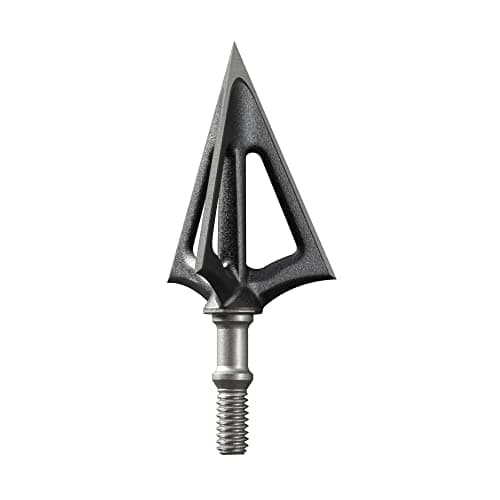
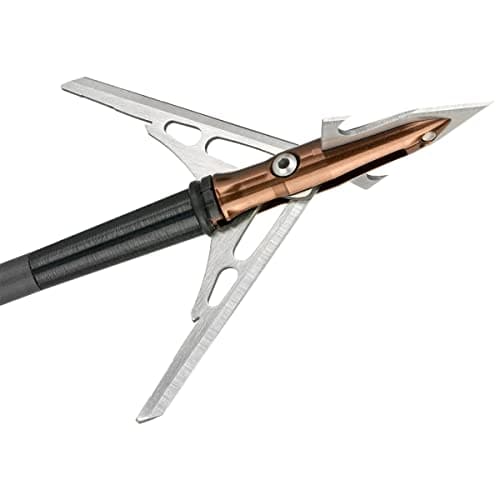
11 pages in this section. Roundup tiles carry the live price and a buy link for their top pick.
Frequently asked questions
What length crossbow bolt do I need?
Whatever your bow's manual specifies, with no substitutions. Common lengths are 16, 18, 20 and 22 inches, and the right one depends on the bow's rail and power stroke. A bolt shorter than specified can leave the rail before the string releases it. The arrows that came with your bow are the reference — match their length.
How heavy should a crossbow bolt be for deer?
Around 400 grains complete, including the point, is the mainstream answer and it is close to what most makers include with their bows. The hard limit is your bow's published minimum arrow weight: going under it transfers energy into the limbs instead of the arrow. See crossbow bolt weight.
Are mechanical broadheads good for crossbows?
Yes, with one condition: the head must be rated for crossbow speeds. Crossbow velocity is what opens mechanical blades in flight on heads designed for compound bows. Buy the crossbow-specific version — Rage, NAP and Grim Reaper all make them — and above about 400 fps look for a published speed rating.
What is the difference between a crossbow bolt and an arrow?
In current usage, almost nothing — makers use both words for the same product, and TenPoint and Wicked Ridge now say arrows. Historically a bolt was shorter and had no fletching. What matters is the specification, not the noun. See crossbow bolt vs arrow.
Can I shoot broadheads into my practice target?
Only if the target says so. Broadhead-capable targets use self-healing foam that closes behind the blades — Rinehart's 18-1 and RhinoBlock, and Block's Poly Fusion all state broadhead compatibility. Bag and mesh targets are field-point targets: broadheads shred them. Keep a separate broadhead target and shoot it sparingly.