Guides
Crossbow draw weight, explained
The number on the limb is stored energy, not what you pull. For the hunter this site is written for, that distinction is the whole purchase.
String & Stock earns a commission when you buy through our links, at no extra cost to you. Prices come from Amazon and change; the date beside every price is when we last verified it. Full disclosure.
Ranked
Quick picks
| # | Product | Draw weight | Score | Price |
|---|---|---|---|---|
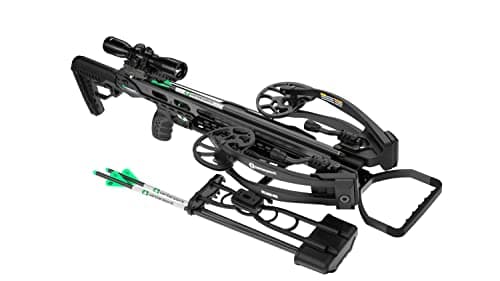
| Rank 1 | CenterPoint Hellion 400 | 185 lb | 8.3 | $339.95Amazon |
| Rank 2 | 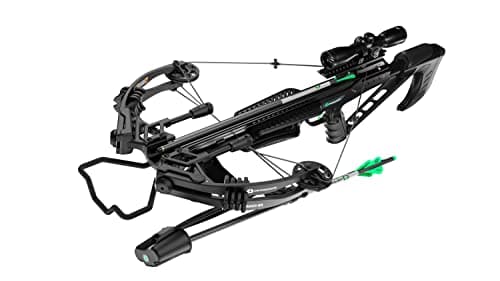 CenterPoint Dagger 405 | 220 lb | 8.0 | $249.99Amazon |
| Rank 3 | 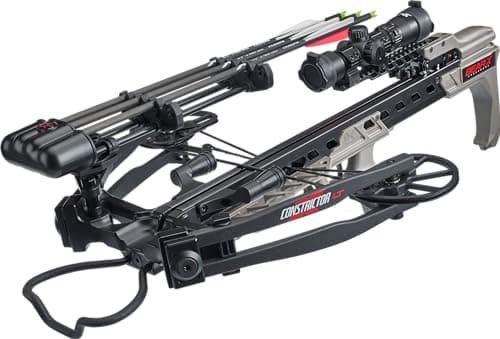 Bear X Constrictor LT | 200 lb | 8.5 | $664.99Amazon |
| Rank 4 | 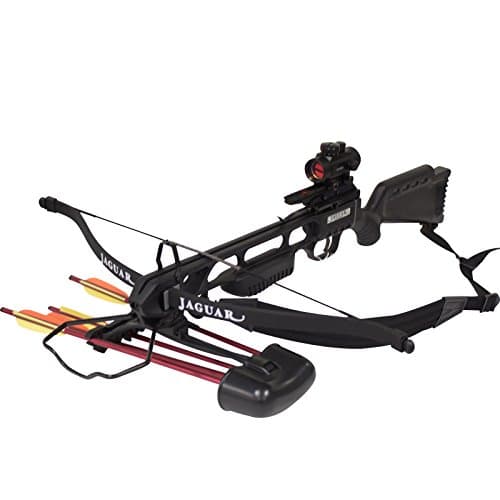 SAS Jaguar 175 lb Recurve | 175 lb | 6.8 | $169.99Amazon |
| Rank 5 | 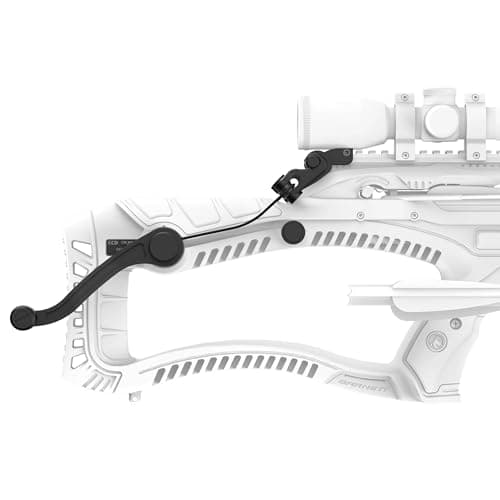 Barnett Crank Cocking Device | 8.6 | $149.99Amazon |
Crossbow draw weight is the peak force needed to draw the string to the latch — the energy stored in the limbs. It is not the force you apply, because nobody cocks a crossbow bare-handed. A 200-pound bow with a rope cocker is a 100-pound pull; with a 93 percent crank it is about 14 pounds.
Draw weight is the most-quoted crossbow specification and the one most likely to mislead a buyer. It predicts speed. It does not predict effort, and effort is why most people on this site are shopping.
What it measures
The peak force required to draw the string to the latch, measured by the maker. Higher draw weight stores more energy, which produces more arrow speed for a given power stroke. The bows on this site publish 175 lb to 220 lb.
| Bow | Draw weight | Speed | What it tells you |
|---|---|---|---|
| SAS Jaguar Recurve | 175 lb | 245 fps | A recurve extracts less speed per pound of draw |
| CenterPoint Hellion 400 | 185 lb | 400 fps | Efficient compound geometry — the best ratio here |
| CenterPoint Wrath 430 | 200 lb | 430 fps | More draw, more speed, a bullpup frame |
| Bear X Constrictor LT | 200 lb | 415 fps | Same draw, slightly less speed |
| CenterPoint Dagger 405 | 220 lb | 405 fps | The most draw and not the most speed |
Why draw weight does not predict effort
The force you apply is draw weight minus whatever the cocking aid removes. Published reductions: a rope cocker 50 percent, CenterPoint's crank 70 percent, Barnett's crank 93 percent and 13 lb at the handle, TenPoint's integrated systems 5 lb absolute.
| Draw weight | Rope (50%) | 70% crank | 93% crank | Integrated |
|---|---|---|---|---|
| 175 lb | 88 lb | 53 lb | 12 lb | 5 lb |
| 185 lb | 93 lb | 56 lb | 13 lb | 5 lb |
| 200 lb | 100 lb | 60 lb | 14 lb | 5 lb |
| 220 lb | 110 lb | 66 lb | 15 lb | 5 lb |
The full treatment is in crossbow cocking effort explained.
In detail
Bows across the draw-weight range, and the crank that flattens it
CenterPoint Hellion 400
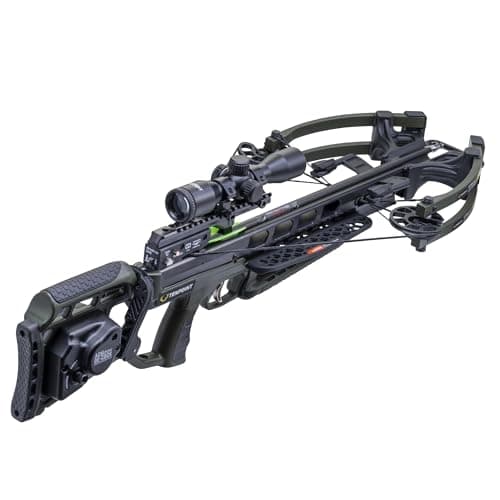
8 inches cocked, 12 uncocked, 400 fps off a 185-pound draw, for the price of a mid-range scope. It is the narrowest bow on this site under five hundred dollars, which makes it the budget answer to the blind-window problem. Note that it requires CP400 lighted nocks.
| Published spec | Value |
|---|---|
| Speed | 400 fps |
| Draw weight | 185 lb |
| Cocked width | 8 in |
| Uncocked width | 12 in |
| Limbs | Compression fiberglass quad |
| Arrows | Three 20 in .003 straightness arrows |
| Nocks | Requires CP400 lighted nocks |
What it does well
- An 8-inch cocked width is the narrowest here outside the Ravin line
- A 185-pound draw is lower than its rivals at the same speed
- Roller retention spring and CNC aluminum rails at a budget price
Where it falls short
Our rubric
- 6.6
- 8.4
- 7.8
- 9.6
- 8.0
- 9.0
CenterPoint Dagger 405
405 fps off a 220-pound draw for around the price of a good scope, with the Whisper silencing package, a rope cocker and arrows included. The 220-pound draw is the catch: that is the heaviest figure on this site, and the included rope cocker still leaves you pulling about 110 pounds.
| Published spec | Value |
|---|---|
| Speed | 405 fps |
| Draw weight | 220 lb |
| Cocked width | 15 in |
| Cocking aid | Rope cocker, included |
| Noise control | Whisper: string stops, limb dampeners, string silencers |
| Scope | 4x32 illuminated |
| Included | Parallel quiver, rail lube, three 20 in arrows |
What it does well
- 405 fps at the lowest price per foot-per-second here
- The Whisper silencing package is standard, not an upgrade
- Complete kit: scope, quiver, rope cocker, lube, arrows
Where it falls short
Our rubric
- 5.4
- 8.6
- 8.4
- 6.6
- 7.6
- 9.4
Bear X Constrictor LT
415 fps off a 200-pound draw, 10 inches cocked and 14 uncocked, with an aluminum cocking sled, a 1-5x24 illuminated speed-comp scope and a 5-arrow quiver. Bear publishes both width figures, which is more than most makers do, and both are good.
| Published spec | Value |
|---|---|
| Speed | 415 fps |
| Draw weight | 200 lb |
| Cocked width | 10 in |
| Uncocked width | 14 in |
| Cocking aid | Aluminum cocking sled, included |
| Scope | 1-5x24 illuminated speed comp |
| Included | Three TrueX Max 425 gr arrows, 5-arrow top-mount quiver, sling, lube |
What it does well
- Both cocked and uncocked widths published, and both are narrow
- A variable 1-5x scope with a speed dial rather than a fixed 4x32
- Sling and aluminum sled included
- Ambidextrous top-mount quiver
Where it falls short
Our rubric
- 6.8
- 9.0
- 8.2
- 9.0
- 7.8
- 8.6
SAS Jaguar 175 lb Recurve
175-pound draw, 245 fps, fiberglass limbs and a red dot. A recurve crossbow has no cams or cables to serve, which is a genuine maintenance advantage, and 245 fps is honest about what it is: a close-range bow for a shooter who wants simple.
| Published spec | Value |
|---|---|
| Draw weight | 175 lb |
| Speed | 245 fps |
| Limb | Compression-molded fiberglass |
| Design | Recurve |
| Safety | Auto safety cocking mechanism |
| Sight | Red dot, included |
| Stock | Reinforced composite |
What it does well
- No cams or cables to serve or replace
- 175 pounds is a lower draw than most compound bows here
- Cheapest complete bow on the site
Where it falls short
Our rubric
- 7.0
- 4.8
- 6.4
- 5.8
- 7.6
- 8.6
Barnett Crank Cocking Device
Barnett publishes two numbers that almost nobody else does: 93 percent resistance reduction, and 13 pounds of actual pull at the handle. On a 150-pound Barnett that turns an impossible draw into something you can do one-handed from a seated position. The compatibility list on the listing runs to dozens of named models, which is the other reason to pick it — you can check your bow before you buy.
| Published spec | Value |
|---|---|
| Effort reduction | 93% |
| Pull at the handle | 13 lb |
| Type | Crank, stock-mounted |
| Handed | Ambidextrous |
| Fits | Barnett Raptor, Whitetail Hunter, Ghost, Recruit, Droptine, Wildcat and more |
| Hardware | Crank plus all installation hardware included |
| De-cocks |
What it does well
- 93 percent reduction and a 13 lb handle pull, both published
- A named-model compatibility list you can check against your bow
- Ambidextrous handle
- Everything needed to install is in the box
Where it falls short
Our rubric
- 9.6
- 7.8
- 7.4
- 6.4
- 8.2
What you actually need for deer
Every bow on this site exceeds what a whitetail requires. Where states set a minimum draw weight it typically falls between 75 and 125 lb, and the more meaningful threshold is kinetic energy — commonly cited guidance puts whitetail around 25 ft-lb, against published figures here of 134-152 ft-lb.
So draw weight is not a capability question for deer. It is a speed question and an effort question, and the effort half is solved by the aid.
Recurve versus compound, at the same draw weight
The SAS Jaguar's 175 lb makes 245 fps; the CenterPoint Hellion's 185 lb makes 400 fps. Ten pounds of draw and 155 fps of difference. That is the compound's cams and cables multiplying the limbs' force — and it is why draw weight is only comparable within the same architecture. See TenPoint vs Excalibur.
Power stroke, the other half of the equation
Speed comes from stored energy and the distance over which it accelerates the arrow. Bear X publishes a 12.7 in power stroke on the Intense, which is how it reaches 400 fps. A longer power stroke gets more speed from the same draw weight, which is the engineering argument behind reverse-draw layouts.
How to use the number when shopping
What draw weight tells you, and what to check instead
- Want to know if it will kill a deer?Check kinetic energy, not draw weight. See kinetic energy.
- Want to know if you can cock it?Check the cocking aid's published reduction against the draw weight. See crank vs rope.
- Comparing two bows at the same speed?Lower draw weight is better engineering — it means a more efficient bow and an easier cock.
- Comparing a recurve to a compound?Draw weight is not comparable across architectures. Compare speed and width instead.
- Checking legality?Some states set a minimum draw weight for big game. Check your own agency's rules. See regulations.