Scopes
How to sight in a crossbow
About a dozen bolts and an afternoon. The order matters — set the speed dial before you zero, or you will do it twice.
Set the scope's speed dial to your bow's published fps first. Zero at 20 yards with three-bolt groups, adjusting to the center of the group rather than the last shot. Verify at 40 yards. Then confirm three broadheads group with your field points. Twelve to eighteen bolts total.
Step one: mount the scope properly
Mounting
- 01
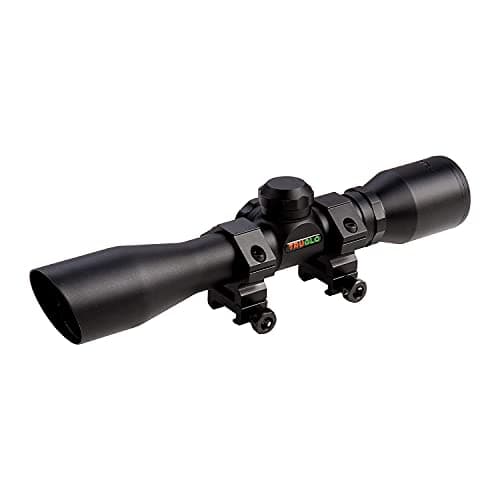
Set the eye relief
Shoulder the bow with your eyes closed, open them, and slide the scope forward or back until the full field of view appears with no black ring. Do that in your actual shooting position, including a heavy coat if you hunt in one.
- 02
Level the reticle
With the bow upright and level, rotate the scope until the vertical crosshair is truly vertical. A canted reticle puts your long-range holds off to one side.
- 03
Torque the rings evenly
Tighten in a cross pattern, a little at a time, so the tube is clamped evenly. Over-tightening can damage the tube; under-tightening loses your zero on the first shot.
The detail on mounts and rail types is in the mounting guide.
Step two: set the speed dial, before you zero
This is the step people do in the wrong order. The speed dial rotates the entire aim-point ladder, so if you zero first and dial afterwards, you have to zero again.
- Find your bow's published speed. If the listing does not publish one, see the note below.
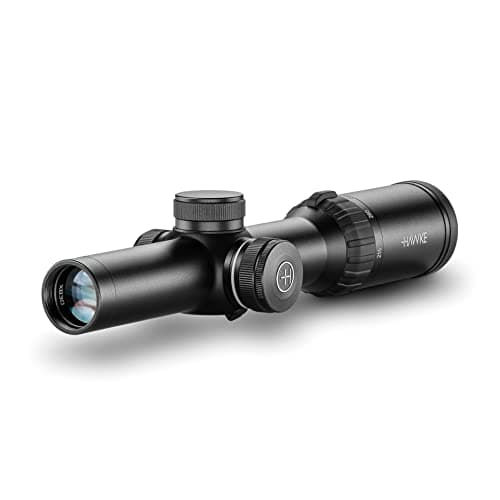
- Set the scope's speed ring to that figure. The Hawke XB30 Pro covers 215-450 fps; the TenPoint RangeMaster covers 380-505 fps.
- If your bow's speed falls outside the scope's range, stop. The aim points cannot be made correct and you need a different scope. See crossbow speed rings explained.
Step three: zero at 20 yards
The 20-yard zero
- 01
Shoot from a rest at 20 yards
Sandbag, shooting stick, bench — anything solid. You are testing the bow and scope, not your off-hand hold. Fingers below the flight deck.
- 02
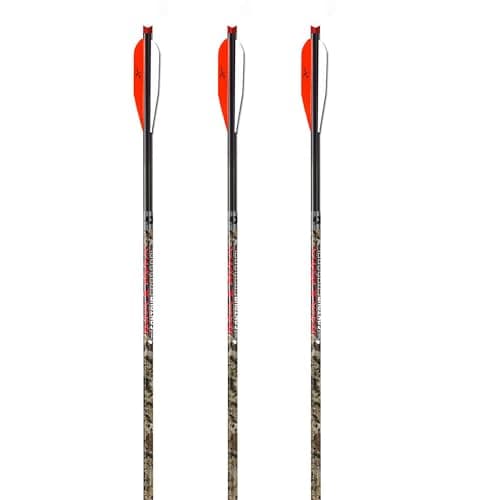
Shoot three bolts, then look at the group
Adjust to the center of the group, never to the last shot. One bolt tells you nothing; three tell you where the bow is pointing.
- 03
Adjust windage and elevation
Move the reticle toward the group. Most crossbow scopes have capped fingertip turrets; count the clicks and note them, so you can get back if you lose your way.
- 04
Shoot three more and confirm
The top aim point — the 20-yard dot or crosshair — should now be on the bullseye. If it is, the scope is zeroed and the rest of the ladder should follow.
Step four: verify at 40 yards
Move to 40 yards and shoot three bolts using the scope's 40-yard mark. If the ladder is calibrated correctly for your bow's speed, they should land close to the bullseye without further adjustment.
- Hitting high at 40 means the dial is set too slow for your bow. Increase it slightly, re-verify at 20, re-check at 40.
- Hitting low at 40 means the dial is set too fast. Decrease it and repeat.
- Scattered at 40 is usually not the scope. Check for uneven cocking, mismatched bolts, or a loose scope mount.
TenPoint's RangeMaster instructions follow the same logic: sight at 20, verify and micro-tune at 50, and the scope is then zeroed at 100.
Step five: confirm your broadheads
This is the step that gets skipped and it is the one that matters on opening morning. Broadheads do not necessarily fly with field points — a fixed blade in particular can plane in a way a field point does not.
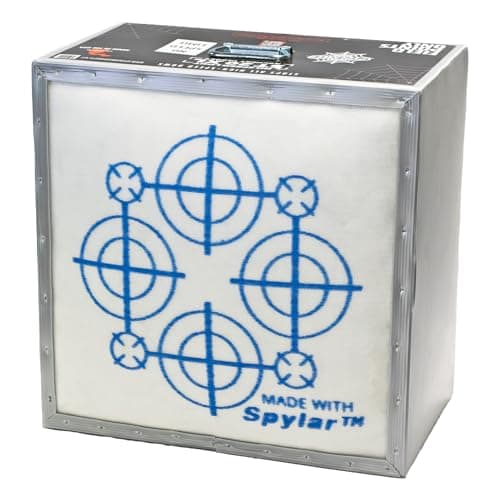
- Move to a broadhead-capable target. The Rinehart 18-1, RhinoBlock or Block Poly Fusion all state broadhead compatibility. Never shoot broadheads into a bag or mesh target.
- Shoot three broadheads at 20 yards. Three, not thirty — broadheads are expensive and the target is finite.
- Compare the group to your field-point group. If they coincide, you are done.
- If they do not, see mechanical vs fixed blade — a mechanical usually flies closer to a field point, and a fixed head may need the bow tuned or a different head.
Keeping the zero
- Check the ring screws before each hunt. A crossbow's forward recoil works screws loose over a season.
- Shoot one bolt at the start of every hunting trip. One bolt at 20 yards tells you whether anything moved in transit.
- Do not change bolt weight without re-verifying. A 350 gr and a 400 gr arrow do not land in the same place.
- Re-verify after a knock. A bow that falls out of a truck has lost its zero until proven otherwise.