Scopes
Crossbow scope speed rings, explained
The collar marked 300, 350, 400 is not a magnification ring. Here is what it actually changes, and why getting it wrong moves every aim point.
String & Stock earns a commission when you buy through our links, at no extra cost to you. Prices come from Amazon and change; the date beside every price is when we last verified it. Full disclosure.
Ranked
Quick picks
| # | Product | Speed range | Score | Price |
|---|---|---|---|---|
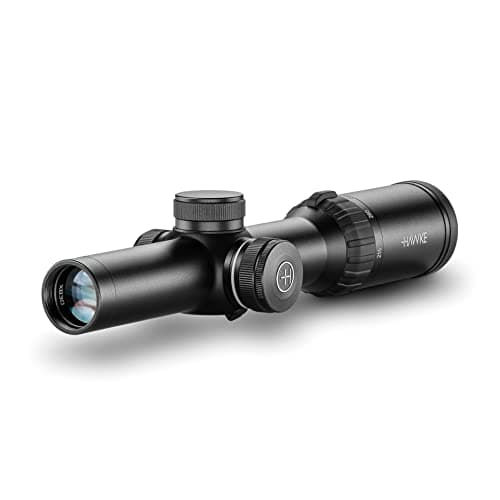
| Rank 1 | Hawke XB30 Pro SR 1-5x24 | 215-450 fps | 8.9 | $173.98Amazon |
| Rank 2 | 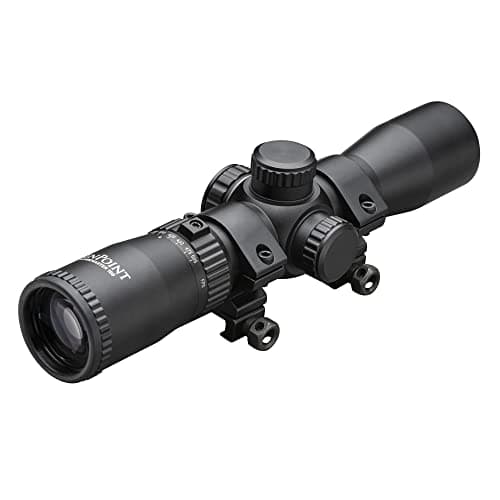 TenPoint RangeMaster 100 | 380-505 fps | 8.8 | $299.99Amazon |
| Rank 3 | 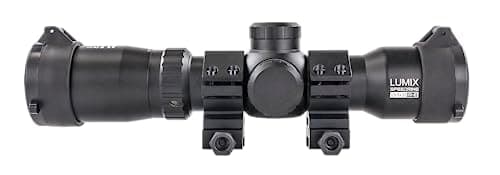 Killer Instinct Lumix Speedring 1.5-5x32 | 270-450 fps | 8.2 | $94.99Amazon |
| Rank 4 | 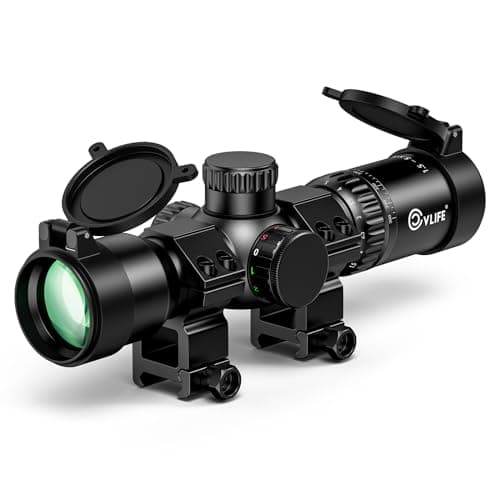 CVLIFE 1.5-5x32 Rangefinder Reticle | 300-460 fps | 8.1 | $99.99Amazon |
| Rank 5 | 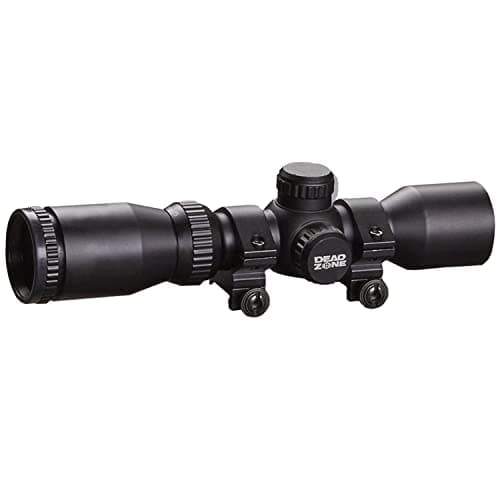 Excalibur Dead Zone | 300-410 fps | 8.0 | $119.99Amazon |
A crossbow scope's speed ring rotates the optical system so the stacked aim points match your bow's actual bolt velocity. Set it to your bow's published fps, zero at 20 yards, and the 30, 40 and 50-yard marks land where they should. Set it wrong and every mark except the 20-yard one is off.
This is the mechanism that makes a crossbow scope different from a rifle scope, and it is also the most commonly misunderstood control on the bow — frequently mistaken for a magnification ring, which on some scopes it shares a collar with.
Why crossbow scopes need one at all
A rifle bullet shoots relatively flat to 200 yards. A crossbow bolt does not: it is heavy, slow and drops steeply, so you need a different hold for 20, 30, 40 and 50 yards. Crossbow scopes solve that by stacking the holds in the reticle — dots or crosshairs at pre-calculated drops.
Those drops are computed from an assumed bolt velocity. A 300 fps bow and a 430 fps bow have different trajectories, so a fixed reticle can only be right for one of them. The speed ring moves the whole ladder to match yours.
What it physically does
On most crossbow scopes, rotating the speed ring moves an internal lens group, which changes the magnification slightly and in doing so changes the apparent spacing of the reticle marks relative to the target. Closer spacing suits a faster bolt (less drop), wider spacing a slower one.
This has one practical consequence worth knowing: on scopes where the speed ring and the zoom ring are the same collar — the Vortex Crossfire II is an example — you cannot change magnification without changing the calibration. Pick your speed setting and leave it.
In detail
Scopes with a speed ring
Hawke XB30 Pro SR 1-5x24
A speed-selector power ring covering 215 to 450 fps, which is the broadest span any scope on this site publishes. Dial your bow's speed and the reticle's aim points line up with your trajectory. 16-layer multi-coated glass in a 30 mm mono-tube does the rest. If you own more than one bow, or expect to change bows, this is the scope that follows you.
| Published spec | Value |
|---|---|
| Speed range | 215-450 fps |
| Magnification | 1-5x |
| Objective | 24 mm |
| Tube | 30 mm |
| Reticle | Illuminated SR, stepless rheostat |
| Glass | 16-layer fully multi-coated |
| Weatherproofing | Nitrogen purged, waterproof, fog proof |
What it does well
- 215-450 fps covers every bow on this site, from the SAS recurve to the R470
- Stepless illumination rheostat rather than fixed brightness steps
- 30 mm mono-tube passes more light than a 1-inch body
- Metal screw-in lens covers rather than rubber flip caps
Where it falls short
Our rubric
- 9.8
- 8.8
- 8.6
- 8.6
- 8.4
TenPoint RangeMaster 100
A 2-7x36 variable that accommodates 380 to 505 fps — the only scope here whose speed range starts where most others stop. Nine illuminated aim references on an etched-glass reticle: dots at 20, 30 and 40, crosshairs at 50, 60 and 70. If you bought a 430 or 470 fps bow, most crossbow scopes cannot be dialed for it. This one can.
| Published spec | Value |
|---|---|
| Speed range | 380-505 fps |
| Magnification | 2-7x |
| Objective | 36 mm |
| Max calibrated range | 100 yd |
| Reticle | Etched glass, 3 illuminated dots at 20/30/40 yd, 3 crosshairs at 50/60/70 yd |
| Weatherproofing | Water and fog proof |
| Zero procedure | Sight at 20 yd, micro-tune at 50 yd, zeroed at 100 |
What it does well
- 380-505 fps is the only range here that covers a 470 fps bow
- 7x at the top end is real magnification for a 100-yard hold
- Etched-glass reticle stays clean in the field of view
- 36 mm objective gathers more light than the 24 mm competition
Where it falls short
Our rubric
- 9.0
- 9.0
- 9.2
- 9.0
- 7.4
Killer Instinct Lumix Speedring 1.5-5x32
An adjustable speed gauge covering 270 to 450 fps, variable reticle brightness, and a metal chassis that is fog, water and shock proof, for less than a hundred dollars. For a budget bow that shipped with a fixed 4x32, this is the single cheapest upgrade that changes how the bow shoots past 40 yards.
| Published spec | Value |
|---|---|
| Speed range | 270-450 fps |
| Magnification | 1.5-5x |
| Objective | 32 mm |
| Reticle range | Up to 100 yd |
| Reticle | Adjustable brightness illuminated |
| Chassis | Metal, fog, water and shock proof |
| Lens covers | Spring-loaded flip |
What it does well
- 270-450 fps covers nearly every bow on this site
- Variable brightness, not a two-step switch
- Metal chassis at a sub-hundred-dollar price
- Cheapest real upgrade over a bundled fixed-power scope
Where it falls short
Our rubric
- 8.8
- 7.0
- 7.8
- 7.4
- 9.4
CVLIFE 1.5-5x32 Rangefinder Reticle
A 300 to 460 fps speed ring, a 20 to 100 yard ballistic reticle, five illumination levels and a claimed 95 percent light transmission, for a hundred dollars. The speed range is the headline: almost nothing else at this price can be dialed for a 430 fps bow.
| Published spec | Value |
|---|---|
| Speed range | 300-460 fps |
| Magnification | 1.5-5x |
| Objective | 32 mm |
| Length | 8.2 in |
| Reticle | Etched glass ballistic, red and green, 5 brightness levels |
| Light transmission | 95% (claimed) |
| Durability | Aircraft-grade aluminum, shock tested to 1000 G, nitrogen purged |
What it does well
- 300-460 fps covers fast bows at a budget price
- Five illumination levels and an etched-glass reticle
- Rings, flip caps, batteries and a wrench are all in the box
Where it falls short
Our rubric
- 9.0
- 7.2
- 8.0
- 7.4
- 9.2
Excalibur Dead Zone
An adjustable speed dial from 300 to 410 fps driving Excalibur's chevron reticle from 20 to 60 yards. A chevron has a point rather than a center, which some shooters find faster to place on a deer's chest than a dot that covers the spot you are aiming at. The 60-yard ceiling is honest about crossbow range.
| Published spec | Value |
|---|---|
| Speed range | 300-410 fps |
| Tube | 1 in |
| Objective | 32 mm |
| Reticle range | 20-60 yd |
| Reticle | Excalibur chevron |
| Glass | Multi-coated |
| Rings | 1-inch rings |
What it does well
- The chevron point does not obscure the aiming spot the way a dot does
- A 20-60 yard reticle matches real crossbow shot distances
- Adjustable speed dial at a mid-budget price
Where it falls short
Our rubric
- 7.6
- 7.8
- 8.4
- 7.6
- 8.6
The ranges, so you can check your bow
| Scope | Published speed range | Independent zoom? |
|---|---|---|
| Hawke XB30 Pro | 215-450 fps | Speed-selector power ring |
| TenPoint RangeMaster 100 | 380-505 fps | Magnification and speed share the ring |
| Killer Instinct Lumix | 270-450 fps | Adjustable gauge |
| CVLIFE 1.5-5x32 | 300-460 fps | Adjustable speed ring |
| Excalibur Dead Zone | 300-410 fps | Adjustable speed dial, fixed power |
Setting it correctly
- Find your bow's published speed on the maker's listing or in the manual.
- Set the ring to that figure before you zero. Dialing afterwards moves your zero.
- Zero at 20 yards using the top aim point.
- Verify at 40 yards using the 40-yard mark. Hitting high means the dial is set too slow; hitting low means too fast.
- Adjust the dial, re-confirm at 20, re-check at 40. Two iterations is normal.
The full sequence is in how to sight in a crossbow.
Three complications
Your bow may not shoot its published speed
Published figures are measured with the maker's own arrow at a specific weight. A heavier arrow is slower. If you shoot 400 gr arrows and the figure was measured with 350 gr, your real velocity is lower — which is exactly what the 40-yard verification step catches.
Your bow may not publish a speed at all
Several on this site do not, including premium models. Options: have a bolt chronographed at a pro shop, or find the dial setting empirically by adjusting until your 40-yard holds land correctly. The second works and costs bolts.
Your bow may be outside the scope's range
This is the disqualifying case. A 470 fps bow cannot be calibrated on a scope that stops at 450, and a 245 fps recurve cannot be calibrated on one that starts at 300. There is no workaround — the aim points cannot be made correct. Check the range before you buy the scope.