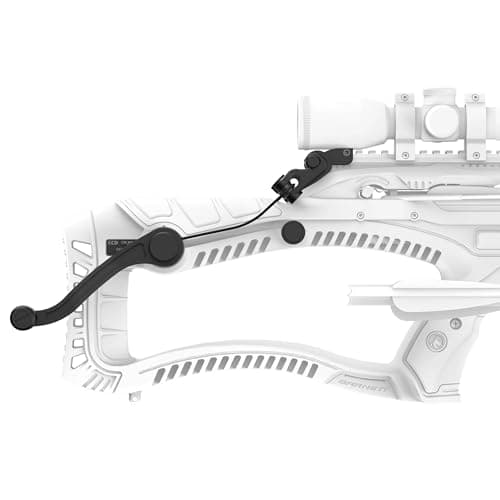
I cannot pull the string back
Crossbow cocking aids, ranked by the effort they remove
Ropes, sleds and cranks, compared on the one figure that matters: how many pounds you are left pulling. Published reductions only, with the compatibility lists that decide whether a unit fits your bow.
String & Stock earns a commission when you buy through our links, at no extra cost to you. Prices come from Amazon and change; the date beside every price is when we last verified it. Full disclosure.
Ranked
Top picks in cocking aids
Ranked on our published rubric, using the maker's own specifications. Prices are live and dated; where no live price resolves, the cell reads Check price.
| # | Product | Effort removed | Score | Price |
|---|---|---|---|---|
| Rank 1 | Barnett Crank Cocking Device | 93% | 8.6 | $149.99Amazon |
| Rank 2 | 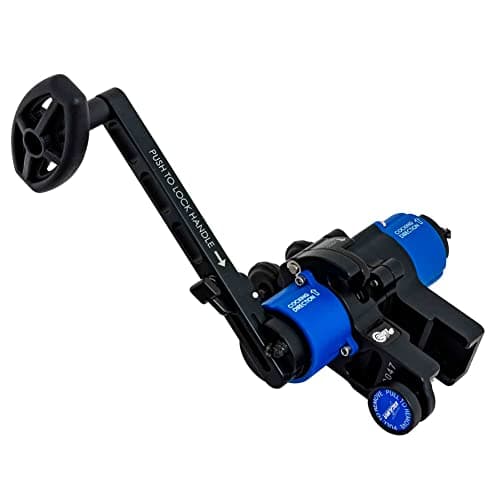 Excalibur Charger EXT | 8.4 | $249.98Amazon | |
| Rank 3 | 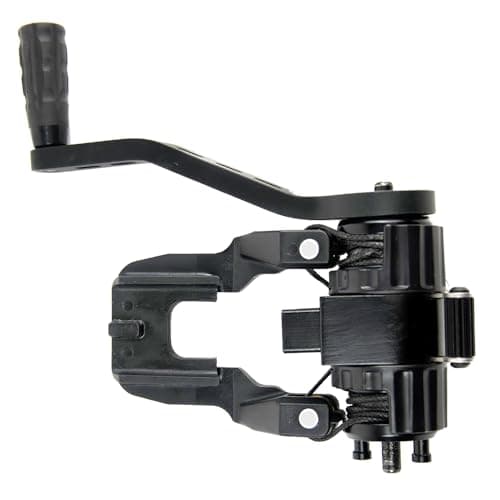 Killer Instinct DSC Compact Decocker | 8.4 | $149.95Amazon | |
| Rank 4 | 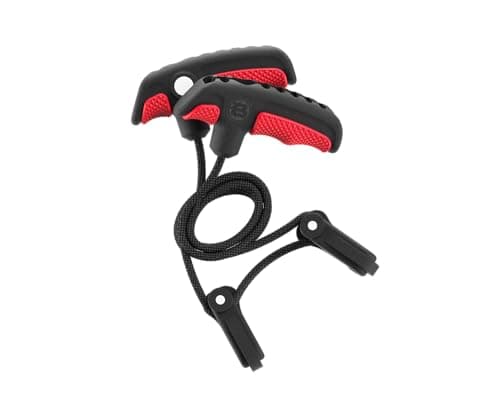 Barnett Premium Rope Cocking Device | 8.4 | $24.99Amazon | |
| Rank 5 | 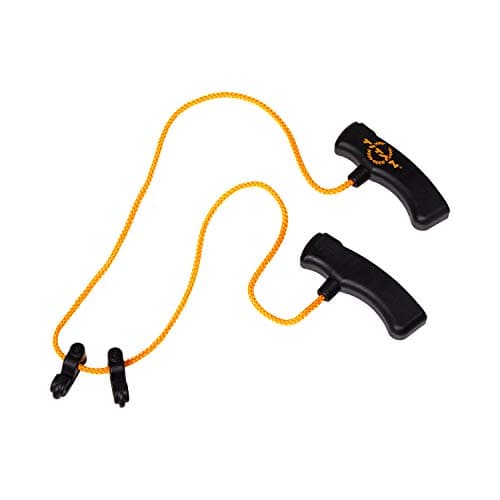 Allen Double Handled Crossbow Cocking Rope | 8.3 | $16.44Amazon |
This is the section that decides whether you can use a crossbow
A rope cocker cuts the pull by 50 percent. An aftermarket crank cuts it by 70 to 93 percent. An integrated crank brings it to about 5 pounds. On a 200-pound bow, that is the difference between a 100-pound pull, a 14-pound pull, and a 5-pound one.
Everything else on this site serves a buying decision. This section serves a physical one. If drawing a compound bow is what sent you looking at crossbows, the cocking aid is the actual product you are shopping for — the bow is the thing you choose afterwards, from whatever your chosen aid fits.
That is the opposite of how crossbow coverage is usually organized, and it is why this section exists as a full hub rather than a paragraph inside a bow review.
The three kinds of aid, and what each one actually does
Rope cockers: 50 percent, every time
A rope cocker is a cord with two handles and two string hooks. You stand on the stirrup, hook the string either side of the rail, and pull the handles up. The mechanical advantage comes from the pulley arrangement, and every maker publishes the same figure: 50 percent. Barnett, Excalibur, Allen and the generic units all state it.
Fifty percent of a 200 lb bow is a 100 lb lift. That is a real lift. It is also two-handed, symmetrical and over in two seconds, which is why a healthy shooter is fine with a rope and a recovering shoulder is not.
The quality differences between rope cockers are smaller than the price differences: hook design (rollers reduce rail friction), handle size (bigger is better with gloves), rope length, and whether the handles stay together in a pocket. The rope cocker roundup covers them.
Sleds: the same 50 percent, pulled straighter
A sled is a rigid frame that engages the whole string at once rather than two independent hooks. The reduction is the same, but the string comes back square. An uneven cock is the most common cause of a flier that the shooter blames on the bolt, so this matters for accuracy rather than effort.
Cranks: 70 to 93 percent, and the real answer
A crank is a geared winch. You turn a handle; the gearing does the work. The published figures are specific and they vary a lot:
| Device | Published reduction | Effort left on a 200 lb bow |
|---|---|---|
| Barnett Crank Cocking Device | 93% | 13 lb at the handle (published) |
| Atdsetr BAR20020 (Barnett pattern) | 93% | about 14 lb |
| Excalibur Charger EXT | not stated as % | 12 lb draw effort (published) |
| CenterPoint Power Draw | 70% | about 60 lb |
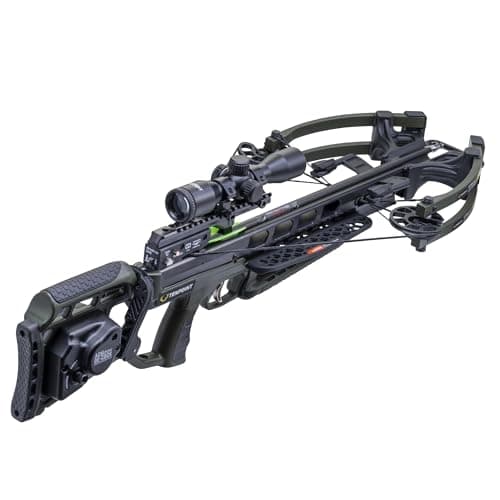
| TenPoint ACUdraw / ACUslide (integrated) | not stated as % | 5 lb (published) |
Note the spread. CenterPoint's 70 percent and Barnett's 93 percent are both called cranks and they are not the same product. On a heavy bow the difference is roughly 60 lb of pull versus 14 lb.
Fit is the thing that goes wrong
Almost every cocking aid on this page is brand-specific, and several are model-specific. The Barnett crank's listing names dozens of compatible models. The Excalibur Charger EXT fits TwinStrike, Micro and Bulldog series. The CenterPoint Power Draw needs a MIL-SPEC buffer tube. Bear's sled ships with three inserts for four named bows.
- Find your bow's exact model name, including the suffix (STR, XP, LT, De-Cock — they matter).
- Check it against the aid's published compatibility list, not against the brand.
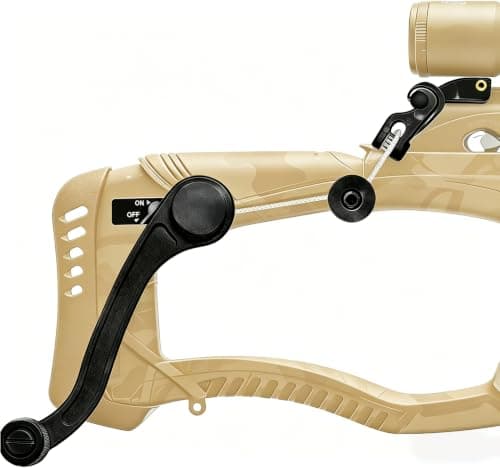
- If the bow has an integrated gearbox, you need the handle, not a full crank unit.
- If nothing fits, a universal rope cocker always works. It is 50 percent, but it works.
The universal crank compatibility guide walks through the mounting patterns and what actually makes a crank universal or not.
De-cocking: the part people discover in October
A cocked crossbow has to be unloaded somehow. Without a de-cocking system, the answer is firing a bolt into a target, which means carrying a discharge target to and from every sit. Three systems here unload the bow directly: TenPoint's ACUdraw De-Cock and ACUslide, and Killer Instinct's DSC decocker. On the rest, backwinding is either unsupported or unsafe.
What this section contains
Four roundups — all cocking devices, cranks specifically, ropes specifically, and the silent-cranking subset — plus a crank-versus-rope comparison, a compatibility guide, a page written for shooters with a shoulder problem, and step-by-step procedures for cocking and de-cocking. The procedures are deliberately unmonetized: they are safety content and bolting a product onto them would be worse than leaving them bare.
Every page in this section
Cocking Aids
10 pages in this section. Roundup tiles carry the live price and a buy link for their top pick.
Frequently asked questions
How much does a crossbow cocking device reduce draw weight?
Rope cockers consistently publish a 50 percent reduction. Aftermarket cranks publish 70 percent (CenterPoint Power Draw) to 93 percent (Barnett). Integrated crank systems publish an absolute figure instead: TenPoint states 5 pounds of cocking effort for ACUdraw and ACUslide, and Excalibur states 12 pounds for the Charger EXT. On a 200-pound bow that is a 100-pound pull, a 14-pound pull, or a 5-pound one.
Will any crank cocking device fit my crossbow?
No. Cranks mount to a specific stock pattern and most are brand-specific — several are model-specific. Check your bow's exact model name against the aid's published compatibility list before buying. Rope cockers are the genuinely universal option, and they are the reason to keep one in the bag even if you run a crank.
Can I de-cock a crossbow with a crank?
Only if the maker says so. TenPoint's ACUdraw De-Cock and ACUslide systems and Killer Instinct's DSC decocker are designed to backwind safely. Most aftermarket cranks publish nothing about de-cocking, and attempting it on a unit that does not support it can injure you or damage the bow. Without a de-cocking system, unload by firing a bolt into a target.
Does a cocking aid affect accuracy?
Yes, through string alignment. A crossbow needs the string drawn evenly on both sides of the rail; if one side comes back further than the other, the bolt leaves at an angle. Sleds and cranks engage the string squarely by design. Rope cockers can be pulled unevenly, which is why makers emphasize adjusting the rope to the bow and the shooter.
Do I need a cocking aid if my crossbow came with one?
Most packages include a rope cocker, and most of those are adequate. The reason to buy another is to move up a category — from rope to crank — or to carry a spare, because a cocking aid left at home is a hunt that does not happen. The cheapest rope cockers here cost less than a tube of string wax.