Cocking Aids
How to de-cock a crossbow
Three legitimate ways to unload a cocked bow, one of which requires a target in your pack. Plus the thing you must never attempt.
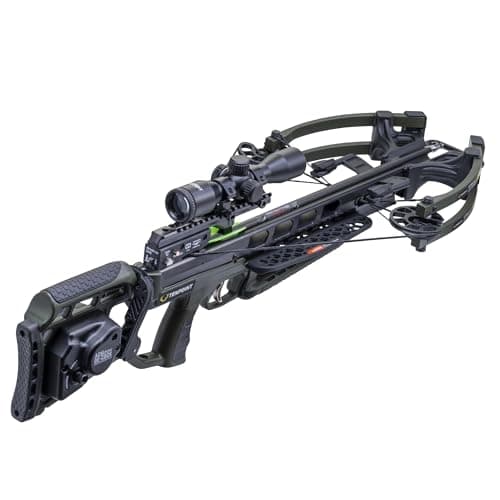
If your bow has a de-cocking system — TenPoint's ACUslide or ACUdraw De-Cock, or Killer Instinct's DSC decocker — backwind the handle and let the Auto-Brake hold it. If it does not, the only safe method is to fire a bolt into a target. Never attempt to backwind a crank whose maker does not publish de-cocking capability.
Method one: a de-cocking system
If your bow has one, this is the whole answer, and it is worth money for exactly this reason. Three systems on this site publish it:
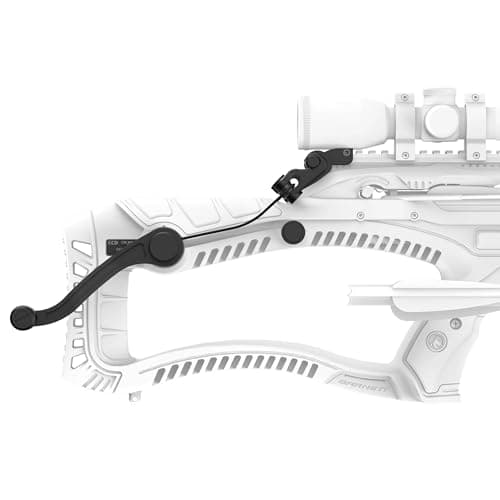
- TenPoint ACUdraw De-Cock. The listing describes pressing a button to move the trigger to de-cock mode, then backwinding. The Auto-Brake gear system means you can remove your hand at any point with no other action required and the handle stops in place.
- TenPoint ACUslide. Silent cocking and safe de-cocking from the same mechanism: backwind the handle and stop at any point without fear of injury, damage or losing control.
- Killer Instinct DSC Compact Decocker. The one aftermarket crank here that publishes de-cocking.
De-cocking with a system that supports it
- 01
Unload the arrow first
Remove the bolt from the rail before you do anything else. De-cocking with an arrow loaded is a loaded bow pointed somewhere.
- 02
Put the bow in de-cock mode if required
On ACUdraw De-Cock, a button moves the trigger to de-cock mode. Read your manual — the step varies by system.
- 03
Engage the crank handle
Seat it properly. A handle that slips halfway through is the failure you are trying to avoid.
- 04
Backwind steadily
Wind in the reverse direction at a controlled pace, keeping the rail pointed somewhere safe. On an Auto-Brake system you can stop at any point and let go.
- 05
Confirm the string is fully forward
Wind until the string is seated at rest against the limbs. Check visually. Then stow the handle.
Method two: fire a bolt into a target
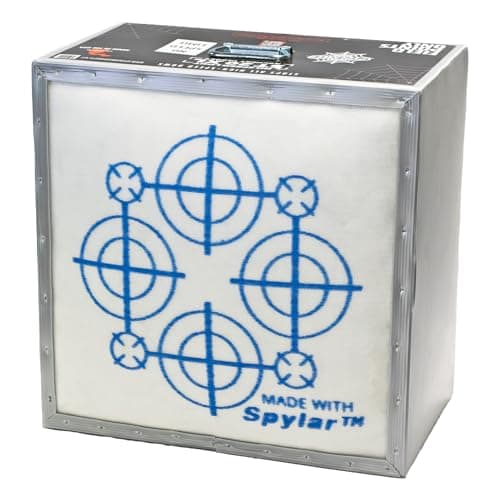
Without a de-cocking system, this is the standard method and it means carrying a target. A small foam cube — the Delta McKenzie Speedbag Revolver is 12 in and 15 lb and rated to 450 fps — is the usual answer, or a dedicated discharge target.
Discharging safely
- 01
Pick a safe backstop and direction
The target, then earth behind it. Never the ground alone at a steep angle — a bolt can skip. Know what is beyond.
- 02
Use a field point, not a broadhead
Broadheads destroy bag and mesh targets and bury themselves in foam. Keep one field-point bolt in the quiver as your discharge arrow.
- 03
Set up a real shot
Close range, square to the target, both hands on the bow and fingers below the flight deck. This is a shot, not a formality.
- 04
Fire, then confirm the bow is unloaded
Check the rail and the latch. Engage the safety. Then retrieve the bolt.
Method three: a de-cocking bolt
Some makers sell a de-cocking bolt: a heavy, blunt arrow designed to be shot into the ground at a controlled angle to absorb the bow's energy without a target. Treat it as a maker-specific accessory and follow that maker's instructions, because the safe angle and surface matter. Where your manual does not describe one, do not improvise.
Why this is a buying decision, not a field skill
Firing a bolt to unload means: carrying a target in and out, climbing down from a stand with a cocked bow, setting up a shot at the end of a cold sit, and re-cocking if you turn out not to be finished. For some hunters that is a mild nuisance. For a hunter with a shoulder problem it is the harder half of the whole exercise.
That is why de-cocking features prominently in our rubric, and why the TenPoint Titan X De-Cock is our pick on best crossbows for a shoulder injury. The Titan 400 is the same bow without it, which makes the price of the feature unusually easy to see.
How long can you leave a bow cocked?
Makers generally advise against extended periods, and the practical limit is a day's hunt rather than a week. Leaving a bow cocked overnight in a vehicle is a bad idea for the string and a worse idea for safety. Check your own manual, because the guidance varies.
Frequently asked questions
How do you de-cock a crossbow without shooting it?
Can you de-cock a crossbow by hand?
What is a de-cocking bolt?
Can you leave a crossbow cocked overnight?
Do I need a discharge target?
Sources
Read next
Cocking Aids
How to cock a crossbow
Guides
Crossbow safety
Crossbows
The best crossbows under $1,000
Cocking Aids
Crossbow cocking aids for a bad shoulder
Targets & Cases
The best crossbow targets