Cocking Aids
Crossbow cocking effort, explained
The number on the limb is not the number you pull. Here is how to work out what your shoulder is actually doing, and why it should decide which bow you buy.
String & Stock earns a commission when you buy through our links, at no extra cost to you. Prices come from Amazon and change; the date beside every price is when we last verified it. Full disclosure.
Ranked
Quick picks
| # | Product | Effort removed | Score | Price |
|---|---|---|---|---|
| Rank 1 | Barnett Crank Cocking Device | 93% | 8.6 | $149.99Amazon |
| Rank 2 | 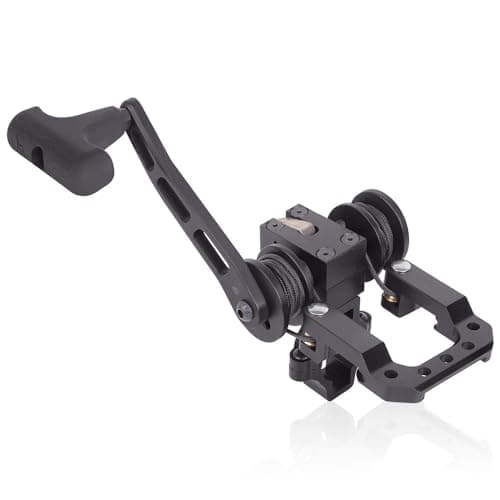 CenterPoint Power Draw Crank | 70% | 8.0 | $58.99Amazon |
| Rank 3 | 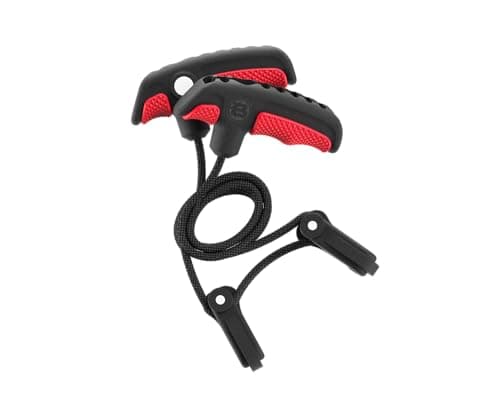 Barnett Premium Rope Cocking Device | 8.4 | $24.99Amazon | |
| Rank 4 | 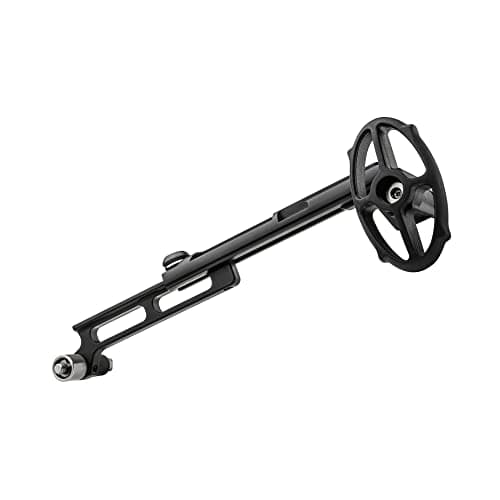 TenPoint 6-inch XTEND Adjustable Crank Handle | 8.3 | $79.99Amazon | |
| Rank 5 | 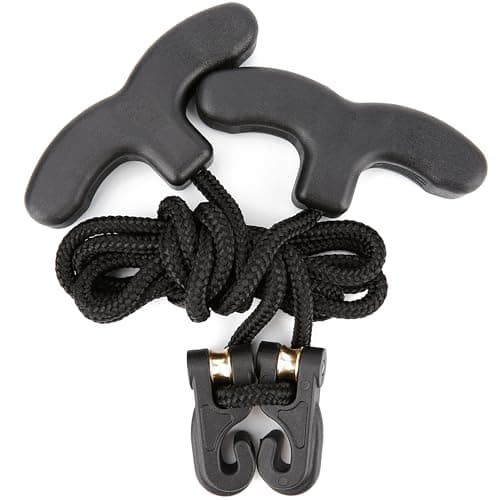 Omoojee 63-inch Crossbow Cocking Rope | 8.0 | $7.49Amazon |
Cocking effort is the force you apply, which is the bow's draw weight minus whatever the cocking aid removes. A 200-pound bow with a rope cocker is a 100-pound pull; with a 93 percent crank it is about 14 pounds; with an integrated system TenPoint publishes 5 pounds. The draw weight alone tells you almost nothing about the effort.
Draw weight is the most-quoted and least-useful crossbow specification. It tells you how much energy the limbs store, which matters for speed, and it tells you nothing about what the purchase will feel like — because nobody cocks a crossbow bare-handed.
Draw weight versus cocking effort
Draw weight is the peak force required to draw the string to the latch, measured by the maker. It is a property of the bow.
Cocking effort is the force you apply at the rope handles or the crank handle. It is a property of the bow and the aid together, and it is the only one of the two numbers your shoulder experiences.
A 185 lb bow and a 220 lb bow sound similar. With a rope cocker they are a 93 lb lift and a 110 lb lift. With a 93 percent crank they are 13 lb and 15 lb. The aid compresses the difference almost to nothing, which is why the aid, not the bow, is the decision.
The arithmetic
Cocking effort = draw weight × (1 − reduction). Published reductions:
| Aid | Published reduction | Source |
|---|---|---|
| Rope cocker (all brands) | 50% | Barnett, Excalibur, Allen, generic listings |
| Cocking sled | 50% | Same mechanism, better alignment |
| CenterPoint Power Draw crank | 70% | CenterPoint listing |
| Barnett crank | 93%, and 13 lb at the handle | Barnett listing |
| Atdsetr BAR20020 | 93% | Product listing |
| Excalibur Charger EXT | 12 lb draw effort | Excalibur listing |
| TenPoint ACUdraw / ACUslide | 5 lb cocking effort | TenPoint listings |
In detail
The aids whose figures drive this
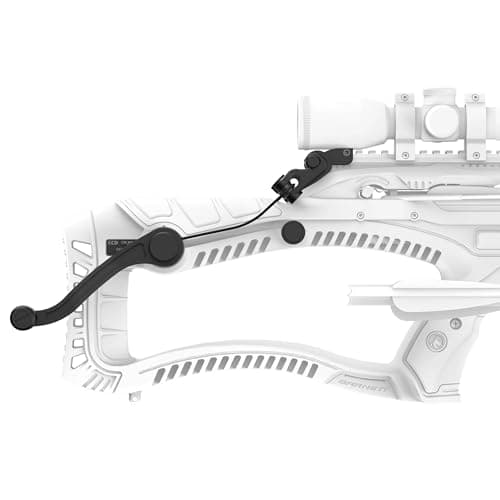
Barnett Crank Cocking Device
Barnett publishes two numbers that almost nobody else does: 93 percent resistance reduction, and 13 pounds of actual pull at the handle. On a 150-pound Barnett that turns an impossible draw into something you can do one-handed from a seated position. The compatibility list on the listing runs to dozens of named models, which is the other reason to pick it — you can check your bow before you buy.
| Published spec | Value |
|---|---|
| Effort reduction | 93% |
| Pull at the handle | 13 lb |
| Type | Crank, stock-mounted |
| Handed | Ambidextrous |
| Fits | Barnett Raptor, Whitetail Hunter, Ghost, Recruit, Droptine, Wildcat and more |
| Hardware | Crank plus all installation hardware included |
| De-cocks |
What it does well
- 93 percent reduction and a 13 lb handle pull, both published
- A named-model compatibility list you can check against your bow
- Ambidextrous handle
- Everything needed to install is in the box
Where it falls short
Our rubric
- 9.6
- 7.8
- 7.4
- 6.4
- 8.2
CenterPoint Power Draw Crank
70 percent effort reduction for about a third of what a Barnett crank costs, mounting to CenterPoint bows with a MIL-SPEC buffer tube. 70 percent is less than the 93 percent Barnett publishes, but on a 185-pound bow it is the difference between cannot and can.
| Published spec | Value |
|---|---|
| Effort reduction | 70% |
| Type | Crank, clip-on |
| Mount | MIL-SPEC buffer tube |
| Fits | CenterPoint bows with a MIL-SPEC buffer tube, including Amped 425 and Sniper Elite 385 |
| Handed | Right or left |
| Carry | Clips off and fits in a gear bag |
| De-cocks |
What it does well
- Cheapest published effort reduction per dollar here
- Clips off for the walk in
- Ambidextrous
Where it falls short
Our rubric
- 7.6
- 6.4
- 7.0
- 8.6
- 9.4
Barnett Premium Rope Cocking Device
50 percent tension reduction from a 50-inch rope with hook-style ends, a knurled soft grip and a magnet lock so the handles stay put in your pocket. It is adjustable to both the bow and the user, which matters more than it sounds: an evenly-pulled string is an accurate one.
| Published spec | Value |
|---|---|
| Tension reduction | Up to 50% |
| Rope length | 50 in |
| Type | Rope cocker, hook style |
| Handed | Ambidextrous |
| Grip | Diamond knurl soft grip with magnet lock |
| Adjustable | To both the crossbow and the user |
| De-cocks |
What it does well
- Adjustable to the bow and to your arm length
- Magnet lock keeps the handles together in a pocket
- Pulls the string evenly, which is the accuracy argument for a rope
- Costs less than a box of broadheads
Where it falls short
Our rubric
- 6.8
- 9.0
- 8.0
- 9.6
- 9.4
TenPoint 6-inch XTEND Adjustable Crank Handle
A longer handle is a longer lever. Extended to its full 6 inches this one cuts cocking effort by up to 45 percent compared with the standard handle on any TenPoint gear-assisted bow. If you own an ACUslide bow and still find the crank hard, this is the cheapest meaningful improvement available.
| Published spec | Value |
|---|---|
| Effort reduction vs standard handle | Up to 45% |
| Adjustable length | 5-6 in |
| Type | Replacement crank handle |
| Fits | All ACUslide bows including Flatline 460, Havoc RS440, Siege RS410 |
| Also fits | ACUdraw PRO and ACUdraw, via the included hex-drive conversion |
| De-cocks | Yes, on ACUslide bows — backwind and stop anywhere |
What it does well
- Up to 45 percent less effort for the price of a box of broadheads
- Adjustable from 5 to 6 inches so you can tune the lever
- Converts from square to hex drive for older ACUdraw units
Where it falls short
Our rubric
- 8.8
- 6.6
- 8.4
- 9.0
- 9.0
Omoojee 63-inch Crossbow Cocking Rope
A 63-inch universal rope cocker with T-handles, an integrated roller and a 50 percent reduction claim, for less than a tube of string wax. It is the one to buy as a second cocker so one lives in the blind bag and one in the truck, because the day you forget yours is the day it matters.
| Published spec | Value |
|---|---|
| Force reduction | 50% |
| Rope length | 63 in |
| Type | Rope cocker, T-handle |
| Roller | Integrated roller mechanism |
| Adjustable | Cord adjusts to archer and bow |
| Fits | Universal across crossbow models |
| De-cocks |
What it does well
- Cheapest cocking aid on the site
- 63 inches is long enough for tall shooters
- Integrated roller and adjustable cord at this price is unusual
Where it falls short
Our rubric
- 6.6
- 9.0
- 7.6
- 9.6
- 9.8
Why the absolute figures beat the percentages
Three makers publish a figure in pounds rather than a percentage: Barnett (13 lb), Excalibur (12 lb) and TenPoint (5 lb). Those are better numbers, because the percentage version requires you to know your bow's draw weight — and a surprising number of listings do not publish it.
It also removes an ambiguity. A 93 percent reduction of what, exactly: peak draw weight, or average force through the stroke? A stated 13 lb at the handle has no such question.
What a longer handle does
A crank handle is a lever, and a longer lever needs less force. TenPoint's XTEND handle adjusts from 5 in to 6 in and, at full extension, publishes up to 45 percent less cocking effort than the standard handle on any of its gear-assisted bows.
That is worth understanding because it compounds: an already-low 5 lb integrated system with a longer handle is lower still. It is also the cheapest effort reduction available to anyone who already owns the right bow.
What cocking effort does not tell you
- Speed. That comes from draw weight and power stroke, not from how easily you cocked it.
- Noise. A silent crank and a noisy crank can publish the same reduction. See silent crank cocking devices.
- Time. A crank is slower than a rope. If a second animal appears, low effort does not help you.
- Whether it de-cocks. A separate capability, published separately, and most devices do not have it.
How to use this when shopping
- Find your bow's draw weight in the manual, or the candidate bow's listing.
- Decide the effort figure you want — be specific. 15 lb? 50 lb?
- Work backwards to the reduction you need, then find an aid that publishes it and fits your bow.
- If no aid that fits publishes enough reduction, the bow is the wrong bow. That is a conclusion worth reaching before the purchase.
Frequently asked questions
What is cocking effort on a crossbow?
How do I calculate crossbow cocking effort?
Does draw weight matter if I use a crank?
Is 5 pounds of cocking effort real?
Does a longer crank handle reduce effort?
Sources
Read next
Cocking Aids
Crank vs rope cocker
Cocking Aids
The best crossbow cocking devices
Cocking Aids
Crossbow cocking aids for a bad shoulder