Guides
The first crossbow setup checklist
Unbox to hunting-ready in one afternoon and about eighteen bolts. The order matters more than anything else on this page.
String & Stock earns a commission when you buy through our links, at no extra cost to you. Prices come from Amazon and change; the date beside every price is when we last verified it. Full disclosure.
Ranked
Quick picks
| # | Product | Rubric score | Score | Price |
|---|---|---|---|---|
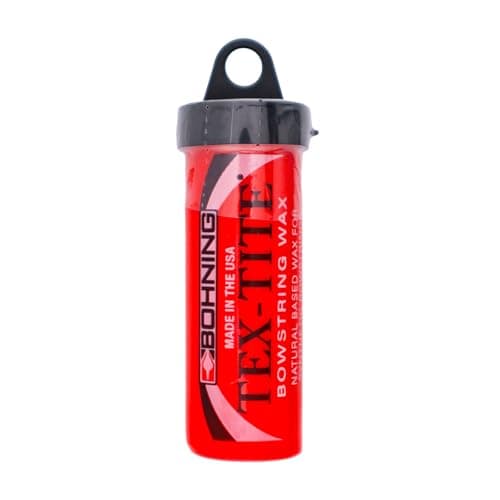
| Rank 1 | Bohning Tex-Tite Bowstring Wax | 9.2 | $12.59Amazon | |
| Rank 2 | 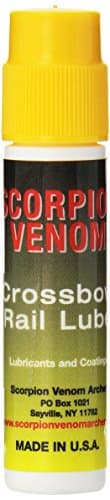 Scorpion Venom Crossbow Rail Lube | 8.4 | $14.99Amazon | |
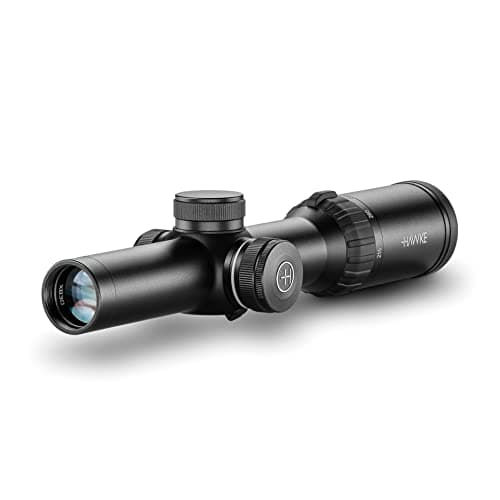
| Rank 3 | 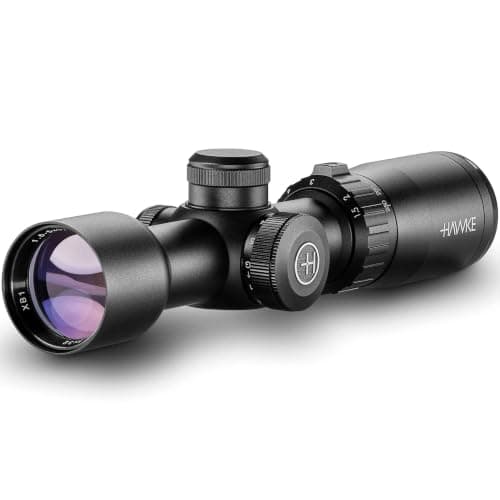 Hawke XB1 SR 1.5-5x32 | 8.7 | $159.99Amazon | |
| Rank 4 |  Rinehart 18-1 | 9.0 | $159.99Amazon | |
| Rank 5 | 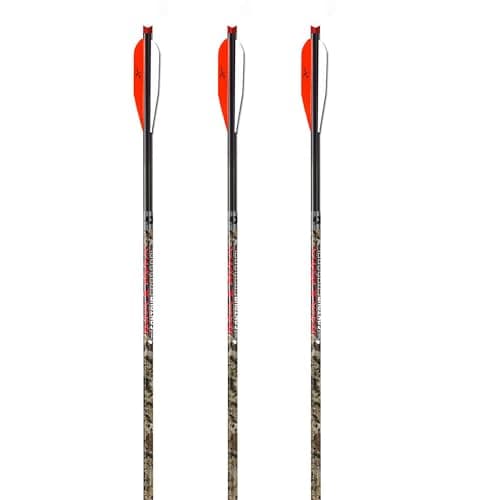 Carbon Express Maxima Contour Crossbolts | 9.0 | $29.97Amazon |
Read the manual's minimum arrow weight and nock type, assemble and mount the scope, set the speed dial to the bow's published fps, zero at 20 yards, verify at 40, then confirm three broadheads group with your field points. About eighteen bolts and one afternoon.
Step 1: read three things in the manual
- Minimum total arrow weight. Going under it damages the bow over time. See bolt weight.
- Required nock type. Half-moon, flat, Alpha-Nock, V-Track, or proprietary. The wrong nock lets the string skip the arrow.
- Rail lube interval. Usually 20-30 shots; your bow may differ.
Also note whether your bow de-cocks. If it does not, you need a discharge target and a plan for the end of every sit.
Step 2: assemble and inspect
- Most bows arrive mostly or fully assembled; TenPoint's Titan line ships assembled and pre-sighted.
- Check every fastener — limb bolts, stock, foregrip, quiver bracket. Snug, not forced.
- Inspect the string and cables, especially the center serving.
- Wax the string and lube the rail before the first shot. A dry rail from the factory is normal.
Step 3: mount the scope
Mounting
- 01
Set eye relief in your actual shooting position
Seated in your blind chair, in the coat you hunt in. Shoulder the bow with your eyes closed, open them, and slide the scope until the full field of view appears with no black ring.
- 02
Level the reticle
With the bow upright and level, rotate the scope until the vertical crosshair is truly vertical. A canted reticle pushes your 50-yard hold to one side.
- 03
Tighten the rings evenly
Cross pattern, a little at a time, with even gaps either side of each ring. Snug rather than tight.
The detail is in the mounting guide.
Step 4: set the speed dial, before zeroing
This is the step people do last, and doing it last means doing the next step twice. The speed ring rotates the whole aim-point ladder.
- Set the ring to your bow's published fps.
- If your bow's speed is outside the scope's range, stop — the aim points cannot be made correct and you need a different scope.
- If your bow publishes no speed, you will find the setting empirically in step 6. See speed rings explained.
In detail
The consumables and gear this sequence needs
Bohning Tex-Tite Bowstring Wax
A natural-based wax made for synthetic bowstrings that stays tacky in any weather, in a 1-ounce tube. A dry string frays and then breaks, and a broken string on a cocked crossbow is the most dangerous failure the machine has. This costs less than a single bolt.
| Published spec | Value |
|---|---|
| For | Synthetic fiber bowstrings |
| Base | Natural wax |
| Size | 1 oz tube |
| Weather | Remains tacky in all weather conditions |
| Purpose | Lubricates and lengthens string life |
| Use on rail | No — strings and cables only |
What it does well
- Stays tacky in cold and wet rather than going hard
- Formulated for synthetic strings, which is what your bow has
- Cheapest item on the site, and it prevents the worst failure
Where it falls short
Our rubric
- 9.0
- 8.6
- 9.4
- 9.8
Scorpion Venom Crossbow Rail Lube
A dedicated crossbow rail lube. This is a separate product from string wax for a reason: the rail is where the string drags across the barrel on every shot, and the wrong lubricant there either gums up or wears off. The listing publishes only packaging dimensions, so judge it on the category rather than the data.
| Published spec | Value |
|---|---|
| For | Crossbow rail |
| Not for | Strings and cables — use wax |
| Color | Yellow |
| Published detail | Packaging dimensions only |
What it does well
- A rail-specific lubricant, which the rail needs and wax cannot do
- Widely used in the crossbow category
Where it falls short
Our rubric
- 8.4
- 8.0
- 8.6
- 8.4
Hawke XB1 SR 1.5-5x32
Calibrated for 250 to 425 fps with 10-yard aim points running from a 20-yard zero all the way to 100, on 11-layer multi-coated glass. The no-fault lifetime warranty is the part worth noting: Hawke repairs or replaces it regardless of how it broke, which on a crossbow — a machine that recoils forward into its own scope — is not a trivial promise.
| Published spec | Value |
|---|---|
| Speed range | 250-425 fps |
| Magnification | 1.5-5x |
| Objective | 32 mm |
| Aim points | 20-100 yd in 10 yd steps |
| Reticle | XB1 SR, red and green illuminated |
| Glass | 11-layer fully multi-coated, System H2 |
| Warranty | No-fault lifetime repair or replace |
What it does well
- Aim points to 100 yards from a 20-yard zero
- Red and green illumination rather than one color
- No-fault lifetime warranty covers accidental damage
- Fast-focus eyebell and a high-torque zoom ring
Where it falls short
Our rubric
- 8.8
- 8.4
- 9.0
- 8.2
- 8.8
Rinehart 18-1
Eighteen shootable faces of self-healing foam, broadhead capable, rated to 500 fps and explicitly crossbow approved. This is the one target on the site that handles the two hardest things at once: a 470 fps bolt and a fixed broadhead. 15 inches a side and light enough to carry by the handle.
| Published spec | Value |
|---|---|
| Speed rating | Up to 500 fps |
| Faces | 18 |
| Dimensions | 15 x 15 x 15 in |
| Broadhead capable | Yes |
| Foam | Signature series self-healing |
| Crossbow approved | Yes |
| Carry | Easy-carry handle |
What it does well
- 500 fps and broadhead capable together, which is rare
- Eighteen faces means you rotate rather than shooting out one spot
- Self-healing foam closes the hole behind the arrow
- Light with a carry handle
Where it falls short
Our rubric
- 9.4
- 8.6
- 9.0
- 9.4
- 8.0
Carbon Express Maxima Contour Crossbolts
Dual Spine Weight Forward is not marketing: the shaft has two spines, a stiffer section forward of a softer one, and Carbon Express claims it cuts oscillation in half. The figures are the reason to buy — .002 inch straightness checked to a ten-thousandth, spine sorted to .0025 inch, weight sorted to 1 grain. Nothing else on this page publishes that level of sorting.
| Published spec | Value |
|---|---|
| Length | 20 in |
| Weight | 390 gr |
| Diameter | 0.348 in |
| Straightness | +/- .002 in |
| Spine tolerance | +/- .0025 in |
| Weight tolerance | +/- 1.0 gr |
| Vanes and nocks | 3 in Dragon Vanes; moon nocks installed, C-Nocks included |
What it does well
- Straightness, spine and weight tolerances all published and all tight
- Dual-spine construction claims 50 percent less oscillation
- Both moon nocks and flat C-Nocks in the pack, so it fits more bows
- Laser-matched sets rather than randomly boxed shafts
Where it falls short
Our rubric
- 9.4
- 8.2
- 9.6
- 8.6
- 8.0
Step 5: zero at 20 yards
- Shoot from a solid rest — a bench, sandbag or shooting stick. You are testing the bow, not your hold.
- Fingers below the flight deck. Every shot, from the first one.
- Shoot three bolts, then adjust to the center of the group, never to the last shot.
- Shoot three more and confirm the top aim point is on the bullseye.
Step 6: verify at 40 yards
Shoot three bolts using the scope's 40-yard mark. If the ladder is calibrated for your bow's real speed, they should land close without further adjustment.
- High at 40 means the dial is set too slow. Increase it, re-confirm at 20, re-check at 40.
- Low at 40 means the dial is set too fast. Decrease it and repeat.
- Scattered at 40 is usually not the scope — check for an uneven cock, mismatched bolts, or a loose mount.
Step 7: confirm your broadheads
The step most people skip, and the one that matters on opening morning.
- Move to a broadhead-capable target. Never a bag or mesh target.
- Spin test each head on the shaft and look for tip wobble.
- Shoot three broadheads at 20 yards.
- Compare to your field-point group. If they coincide, you are ready.
- If they do not, see mechanical vs fixed blade.
Step 8: the blind rehearsal
Five minutes that no specification can replace. Set up your blind in the yard, sit in the chair you will use, wear the coat you will wear, and swing the bow through the window to each side. If it does not swing, you have found that out in October rather than in November. See cocked width and ground blinds.
Step 9: decide how you will unload
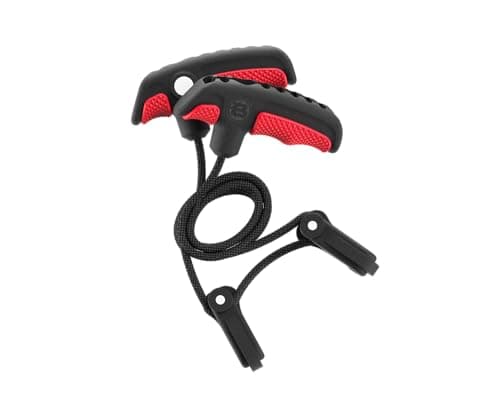
Before the first hunt, not during it. Either your bow de-cocks — backwind with the system it publishes — or you carry a discharge target and a dedicated field-point bolt. See how to de-cock a crossbow.
Step 10: the pre-hunt routine, from now on
- Shoot one bolt at 20 yards at the start of every trip. It confirms nothing moved in transit.
- Check every fastener. Vibration works them loose over a season.
- Inspect the string's center serving.
- Flex-test every carbon bolt before shooting it.
- Wax and lube on the maintenance schedule. See crossbow maintenance.