Guides
Crossbow maintenance
Three routine jobs, under forty dollars of consumables, and they prevent the two failures that actually matter.
String & Stock earns a commission when you buy through our links, at no extra cost to you. Prices come from Amazon and change; the date beside every price is when we last verified it. Full disclosure.
Ranked
Quick picks
| # | Product | Rubric score | Score | Price |
|---|---|---|---|---|
| Rank 1 | Bohning Tex-Tite Bowstring Wax | 9.2 | $12.59Amazon | |
| Rank 2 |  Scorpion Venom Crossbow Rail Lube | 8.4 | $14.99Amazon | |
| Rank 3 | 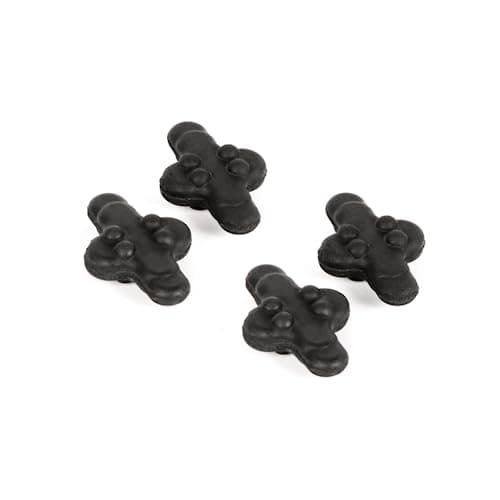 LimbSaver String Silencers (4-pack) | 8.8 | $10.99Amazon | |
| Rank 4 | 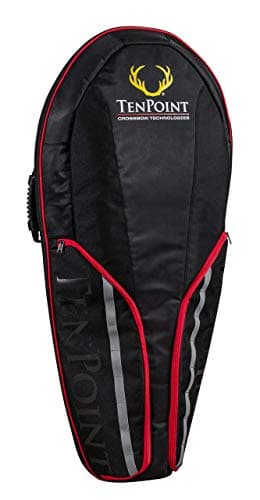 TenPoint Narrow Soft Case | 8.9 | $149.99Amazon | |
| Rank 5 | 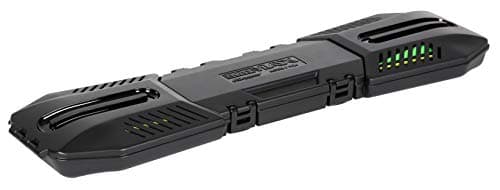 Plano Bow-Max Crossbow Bolt Case | 8.6 | $23.85Amazon |
Crossbow maintenance is three jobs: wax the string and cables, lube the rail, and check every bolt and screw for tightness. The consumables cost under forty dollars together and they prevent the two failures that matter — a frayed string letting go under load, and a dry rail wearing the center serving through.
The schedule
| Job | Frequency | Why |
|---|---|---|
| Wax string and cables | Every few shooting sessions, and before storage | A dry string frays and then fails under load |
| Lube the rail | Every 20-30 shots, or as the maker specifies | A dry rail wears the center serving through |
| Check all fasteners | Before every hunt | Forward recoil works screws loose over a season |
| Inspect the string serving | Before every hunt | Fraying at the serving is the warning sign |
| Inspect limbs and cams | Before every hunt and after any knock | A cracked limb is a catastrophic failure |
| Flex-test carbon bolts | Before every shot | A cracked carbon shaft can look fine |
| Shoot one bolt at 20 yd | Start of every trip | Confirms nothing moved in transit |
In detail
The consumables and the storage
Bohning Tex-Tite Bowstring Wax
A natural-based wax made for synthetic bowstrings that stays tacky in any weather, in a 1-ounce tube. A dry string frays and then breaks, and a broken string on a cocked crossbow is the most dangerous failure the machine has. This costs less than a single bolt.
| Published spec | Value |
|---|---|
| For | Synthetic fiber bowstrings |
| Base | Natural wax |
| Size | 1 oz tube |
| Weather | Remains tacky in all weather conditions |
| Purpose | Lubricates and lengthens string life |
| Use on rail | No — strings and cables only |
What it does well
- Stays tacky in cold and wet rather than going hard
- Formulated for synthetic strings, which is what your bow has
- Cheapest item on the site, and it prevents the worst failure
Where it falls short
Our rubric
- 9.0
- 8.6
- 9.4
- 9.8
Scorpion Venom Crossbow Rail Lube
A dedicated crossbow rail lube. This is a separate product from string wax for a reason: the rail is where the string drags across the barrel on every shot, and the wrong lubricant there either gums up or wears off. The listing publishes only packaging dimensions, so judge it on the category rather than the data.
| Published spec | Value |
|---|---|
| For | Crossbow rail |
| Not for | Strings and cables — use wax |
| Color | Yellow |
| Published detail | Packaging dimensions only |
What it does well
- A rail-specific lubricant, which the rail needs and wax cannot do
- Widely used in the crossbow category
Where it falls short
Our rubric
- 8.4
- 8.0
- 8.6
- 8.4
LimbSaver String Silencers (4-pack)
Four string leeches in NAVCOM material, which LimbSaver credits with cutting up to 90 percent of string noise by damping oscillation. A crossbow's noise comes mostly from the string and limbs ringing after the shot, and this is the ten-dollar version of the fix.
| Published spec | Value |
|---|---|
| Noise reduction | Up to 90% of string noise |
| Per pack | 4 |
| Material | NAVCOM |
| Mechanism | Reduces string oscillation |
| Install | Easy, no tools stated |
| Designed for | Compound and recurve bows |
What it does well
- A published 90 percent string-noise figure
- Four in a pack, enough for two bows
- Installs without a press
- Cheapest noise fix available
Where it falls short
Our rubric
- 8.6
- 8.2
- 9.2
- 9.6
TenPoint Narrow Soft Case
A water-resistant padded case with quick-release straps that work sling-style or as a backpack, and the fit list on the listing names about thirty specific bows across forward-draw and reverse-draw layouts. That list is the reason to buy it: case fit is where most online purchases go wrong.
| Published spec | Value |
|---|---|
| Type | Soft, narrow, padded |
| Carry | Two padded quick-release straps, sling or backpack |
| Interior | Foam padded with a hook-and-loop retention strap |
| Storage | Two external zippered pockets, one internal |
| Weather | Water resistant |
| Forward-draw fit | NXT 400, Shadow NXT, Stealth 450, Titan 400/De-Cock/M1/X, Turbo M1/S1/X, TX 440 |
| Reverse-draw fit | Flatline 460, Havoc RS440, Nitro 505/X/XRT, Siege 425/420/RS410, TRX 26/515, Vapor RS470, XR-410 |
What it does well
- An explicit named fit list for both draw layouts
- Backpack straps, which matter on a long walk in
- Three pockets, so the cocking aid and lube travel with the bow
- MOLLE webbing on the exterior pockets
Where it falls short
Our rubric
- 9.6
- 8.4
- 9.2
- 9.0
- 7.6
Plano Bow-Max Crossbow Bolt Case
A hard case for six bolts up to 23.75 inches, with H-latch closures and internal accessory storage, made in the USA. A crushed vane throws a bolt off at 40 yards, and loose bolts in a truck bed is how vanes get crushed. 22.74 inches long, 2.33 pounds.
| Published spec | Value |
|---|---|
| Capacity | 6 bolts up to 23.75 in |
| Dimensions | 22.74 x 2.14 in |
| Weight | 2.33 lb |
| Type | Hard bolt case |
| Closures | Heavy-duty H latches |
| Storage | Internal accessory compartment, lashing-strap slots |
| Origin | Made in the USA |
What it does well
- Protects vanes, which is what actually ruins loose bolts
- Takes bolts to 23.75 inches, so it fits 22-inch shafts with broadheads
- Internal accessory storage for nocks and points
- Cheap
Where it falls short
Our rubric
- 9.0
- 8.8
- 8.6
- 7.4
- 9.4
Job one: wax the string and cables
Bohning's Tex-Tite is a natural-based wax made for synthetic bowstrings that stays tacky in all weather, in a 1 oz tube. A dry string's fibers abrade against each other and against the rail, and the failure mode — a string letting go on a cocked bow — is the most dangerous thing a crossbow does.
Waxing
- 01
Work the wax into the string, not the serving
Rub the tube along the string, then work it in with your fingers until it disappears. Do not wax the center serving — the woven section where the string contacts the rail and the nock. Wax there attracts grit.
- 02
Do the cables too
On a compound crossbow the cables wear the same way. Same wax, same method.
- 03
Remove the excess
A visible film of wax collects dust and grit, which is abrasive. Work it in until the string looks dry.
Job two: lube the rail
The rail is where the string drags across the barrel on every shot, and it needs a dedicated rail lube rather than string wax. Scorpion Venom's crossbow rail lube is the category-standard product; several bows ship with a stick of it.
- A thin film, on the top surface of the rail only where the string travels.
- Not on the arrow groove, where it collects grit that then abrades the shaft.
- Not string wax. Different product, different job — wax gums up on a rail.
- Every `20-30` shots is the usual guidance; check your manual.
Job three: check every fastener
A crossbow's limbs snap forward at the shot and the whole machine vibrates. Over a season that works screws loose, and a loose mount loses zero and makes noise.
- Scope ring screws, in a cross pattern, snug rather than tight.
- Limb bolts and limb pocket hardware. If anything here is loose, stop and consult the maker.
- Quiver bracket. The usual rattle.
- Stock and foregrip fasteners, especially on an adjustable stock.
- The cocking aid's mount, if it is stock-mounted. A loose crank pulls unevenly.
What to inspect, and when to stop shooting
Any of these means stop and get the bow looked at or the part replaced:
- Fraying or fuzzing at the center serving, or serving separation. This is the commonest reason a string needs replacing early. See string replacement.
- Any crack, split or delamination in a limb. Catastrophic failure risk. Stop immediately.
- A cam or cable that looks out of track, or frayed cable serving.
- A worn or chewed rail surface.
- A nock that fits loosely, or a bolt whose nock is cracked.
- A carbon shaft that creaks or feels soft when flexed. Flex-test before every shot.
Storage
- Uncocked. Always.
- Dry. Wipe the bow down, wax the string, lube the rail, then put it away. Moisture trapped against the rail and hardware is how corrosion starts.
- In a case, not a damp garage corner. TenPoint's narrow soft case publishes water resistance and padded straps; a sealed hard case traps moisture worse than a breathable soft one, so dry the bow first.
- Bolts in a bolt case. A crushed vane throws a bolt off at distance, and loose bolts in a truck bed is how vanes get crushed.
What you cannot do yourself
On a compound crossbow, string and cable replacement needs a bow press and is a shop job. On a recurve — Excalibur's whole range — the string can be changed in the field with a stringing aid, which is one of the main arguments for the architecture. See TenPoint vs Excalibur.