Guides
Crossbow string replacement
Shot count and visible wear, not calendar time. The center serving is where it fails, and that is the thing to inspect.
String & Stock earns a commission when you buy through our links, at no extra cost to you. Prices come from Amazon and change; the date beside every price is when we last verified it. Full disclosure.
Ranked
Quick picks
| # | Product | Rubric score | Score | Price |
|---|---|---|---|---|
| Rank 1 | Bohning Tex-Tite Bowstring Wax | 9.2 | $12.59Amazon | |
| Rank 2 | 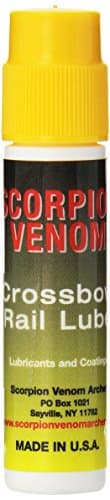 Scorpion Venom Crossbow Rail Lube | 8.4 | $14.99Amazon | |
| Rank 3 | 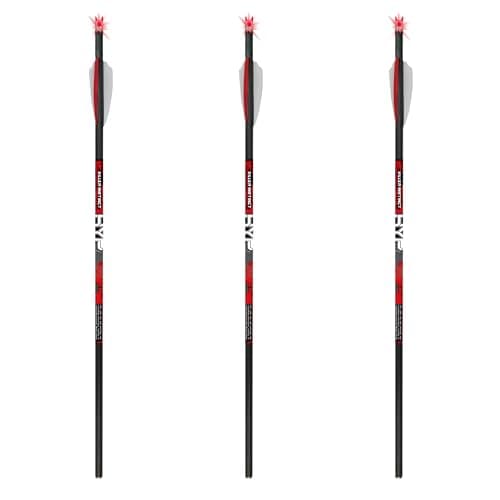 Killer Instinct Lighted HYPR-V 20-inch | 8.4 | $52.99Amazon | |
| Rank 4 | 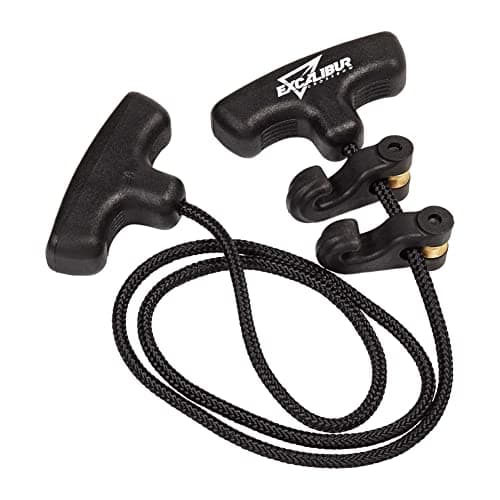 Excalibur Rope Cocking Aid | 8.0 | $27.99Amazon | |
| Rank 5 | 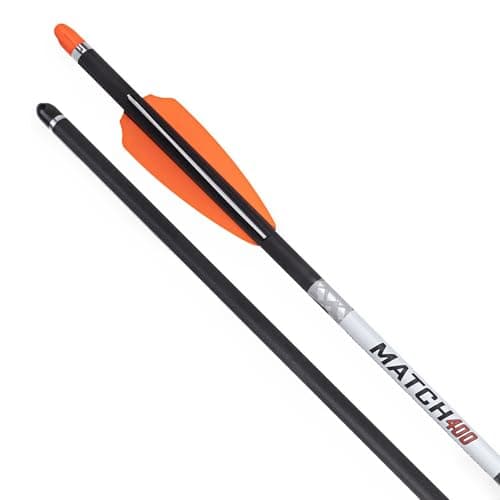 Wicked Ridge Match 400 | 8.5 | $69.99Amazon |
Replace a crossbow string on shot count and visible wear rather than calendar time. Makers typically specify a shot interval; check your manual. The thing to inspect is the center serving — the woven section that contacts the rail and the nock — because that is where a crossbow string wears out first.
A string that lets go on a cocked bow is the most dangerous failure a crossbow has. It is also almost always preceded by visible warning signs, which is why the inspection matters more than the interval.
What actually wears out
Not the string body, usually. The center serving — the tightly wound thread over the middle of the string where the nock sits and the rail touches — takes the abuse from two directions:
- The rail. On every shot the serving drags along the barrel. A dry rail abrades it far faster than a lubed one.
- The nock. The string snaps into and out of the nock's groove on every shot. Killer Instinct introduced its V-Track nock system specifically to reduce center-serving wear, which tells you how significant a factor nock design is.
So the two things that extend string life are a lubed rail and a well-designed nock. Both are cheap.
In detail
The consumables and nocks that extend string life
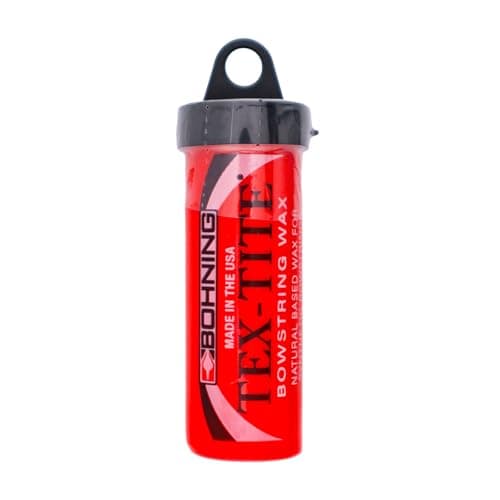
Bohning Tex-Tite Bowstring Wax
A natural-based wax made for synthetic bowstrings that stays tacky in any weather, in a 1-ounce tube. A dry string frays and then breaks, and a broken string on a cocked crossbow is the most dangerous failure the machine has. This costs less than a single bolt.
| Published spec | Value |
|---|---|
| For | Synthetic fiber bowstrings |
| Base | Natural wax |
| Size | 1 oz tube |
| Weather | Remains tacky in all weather conditions |
| Purpose | Lubricates and lengthens string life |
| Use on rail | No — strings and cables only |
What it does well
- Stays tacky in cold and wet rather than going hard
- Formulated for synthetic strings, which is what your bow has
- Cheapest item on the site, and it prevents the worst failure
Where it falls short
Our rubric
- 9.0
- 8.6
- 9.4
- 9.8
Scorpion Venom Crossbow Rail Lube
A dedicated crossbow rail lube. This is a separate product from string wax for a reason: the rail is where the string drags across the barrel on every shot, and the wrong lubricant there either gums up or wears off. The listing publishes only packaging dimensions, so judge it on the category rather than the data.
| Published spec | Value |
|---|---|
| For | Crossbow rail |
| Not for | Strings and cables — use wax |
| Color | Yellow |
| Published detail | Packaging dimensions only |
What it does well
- A rail-specific lubricant, which the rail needs and wax cannot do
- Widely used in the crossbow category
Where it falls short
Our rubric
- 8.4
- 8.0
- 8.6
- 8.4
Killer Instinct Lighted HYPR-V 20-inch
390 grains, .300 inside diameter, .003 straightness, grain-matched to a pound, with an LED nock and the V-Track nock system Killer Instinct introduced to reduce center-serving wear. The serving-wear point is worth taking seriously: a worn serving is the most common reason a crossbow string needs replacing early.
| Published spec | Value |
|---|---|
| Length | 20 in |
| Weight | 390 gr with 100 gr point |
| Straightness | 0.003 in |
| Inside diameter | 0.300 in |
| Weight tolerance | +/- 1.0 gr |
| Nock | V-Track system, LED lighted |
| Fits | All Killer Instinct bows except 1120 Swat XP and Furious Pro 9.5 |
What it does well
- The V-Track nock reduces center-serving wear
- Full specification published: weight, straightness, diameter, tolerance
- Lighted nocks make a low-light recovery far easier
- Backwards compatible with past Killer Instinct models
Where it falls short
Our rubric
- 8.4
- 8.4
- 8.6
- 8.4
- 8.2
Excalibur Rope Cocking Aid
50 percent felt draw reduction with double T-handles, and the listing is explicit that it loads and unloads an Excalibur. On a recurve that matters: a recurve has no retention latch helping you, so a cocking aid that also controls the let-down is a safety item, not a convenience.
| Published spec | Value |
|---|---|
| Felt draw reduction | 50% |
| Type | Rope cocker, double T-handle |
| Handles | T-handles |
| Fits | Any Excalibur crossbow |
| Use | Load and unload |
| Supplied | Assembled or unassembled for customizing |
| Alignment | Provides string alignment for accuracy |
What it does well
- Explicitly rated for unloading as well as loading
- T-handles are easier on cold hands than a knurled grip
- Ships assembled or unassembled so you can set rope length
Where it falls short
Our rubric
- 6.8
- 6.4
- 8.0
- 9.6
- 8.4
Wicked Ridge Match 400
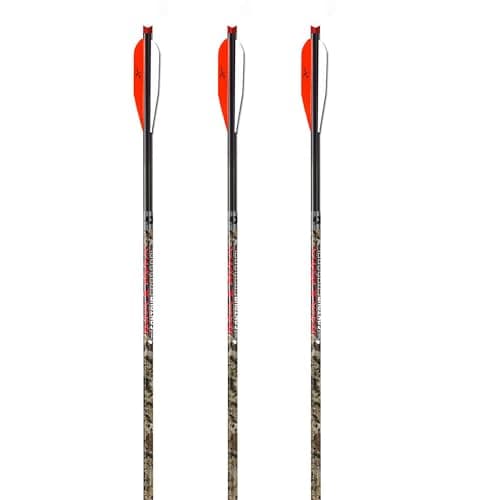
Six 20-inch shafts at 400 grains with a 46-grain aluminum insert that produces 14 percent front-of-center, which Wicked Ridge claims gives up to 20 percent tighter groups than its previous arrow. Six per pack is the practical detail: that is a full quiver and spares in one purchase.
| Published spec | Value |
|---|---|
| Length | 20 in |
| Weight | 400 gr |
| Straightness | within .004 in |
| Insert | 46 gr aluminum |
| Front of center | 14% |
| Nock | Alpha-Nock HP with aluminum bushing |
| Vanes | 3.5 in Bohning X Vanes, slight offset |
What it does well
- Six per pack, which is a quiver's worth in one box
- 14 percent front-of-center published, which most makers do not state
- A 46-grain aluminum insert rather than a plastic one
- Alpha-Nock engages the string deeply, which reduces shoot-over
Where it falls short
Our rubric
- 8.4
- 8.6
- 8.0
- 8.6
- 9.0
What to inspect, before every hunt
- The center serving. Look for fuzzing, separation between the wound threads, or a flattened section. Any of those is the signal.
- The string body either side of the serving, for broken or frayed individual strands.
- The end loops, where the string sits on the cams or limb tips.
- The cables on a compound crossbow, including their serving.
- The rail surface itself. A chewed rail will wear the next string faster.
Why calendar time is the wrong measure
A string that has sat waxed in a case for three years is in better condition than one that has fired three hundred bolts in a season over a dry rail. Shot count and inspection are the measures that track the actual wear mechanism. Where a maker publishes a shot interval, use it as a prompt to inspect rather than as the moment of failure.
What shortens string life
- A dry rail. The single largest factor. Lube every 20-30 shots or as your manual specifies.
- A dry string. Fibers abrade against each other. Wax every few sessions.
- Wax on the serving. It collects grit, which is abrasive. Wax the string body, not the serving.
- A poorly fitting nock. Too tight and the string is stressed on every release; too loose and it can slip.
- Rope-cocker hooks dragged along the rail, which damages the rail and then the serving. Lift them on; prefer roller hooks.
- Underweight arrows, which leave excess energy in the system every shot.
- Storing a damp bow in a closed case.
Can you do it yourself?
Recurve: yes
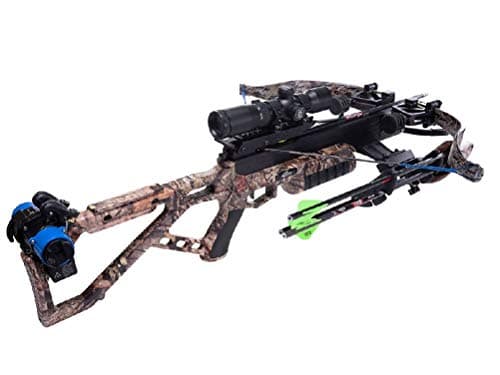
Excalibur's whole range is recurve, and with a stringing aid the string can be changed in the field in minutes. That is one of the strongest practical arguments for the architecture and the reason it suits a multi-day trip. See Excalibur crossbows reviewed.
Compound: no
A compound crossbow's string and cables are under load through the cam system and replacement needs a bow press. That is a shop job, and attempting it without the right equipment is dangerous. Plan for the downtime before the season rather than during it.
Replacing the serving instead
Sometimes the string body is sound and only the center serving is worn. A pro shop can re-serve a string, which is cheaper than replacing it — worth asking about if the rest of the string inspects clean.
Keep a spare
If you shoot a recurve, a spare string and a stringing aid in the pack means a failed string costs you twenty minutes rather than the trip. If you shoot a compound, a spare string ordered before the season means the shop can fit it the same day rather than ordering it in.