Scopes
Mounting a crossbow scope
Rail types, ring height, eye relief and torque. Most lost zeros and most scope-bite complaints trace to one of these four.
String & Stock earns a commission when you buy through our links, at no extra cost to you. Prices come from Amazon and change; the date beside every price is when we last verified it. Full disclosure.
Ranked
Quick picks
| # | Product | Objective | Score | Price |
|---|---|---|---|---|
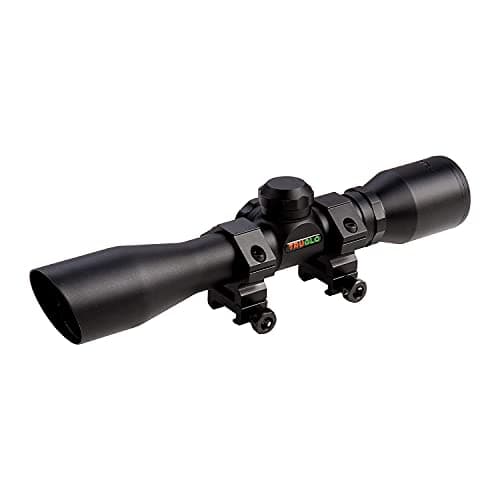
| Rank 1 | TRUGLO 4x32 Compact Crossbow Scope | 32 mm | 7.0 | $53.75Amazon |
| Rank 2 | 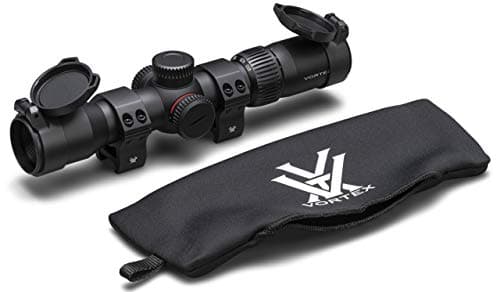 Vortex Crossfire II 2-7x32 Crossbow Kit | 32 mm | 8.6 | $199.00Amazon |
| Rank 3 | 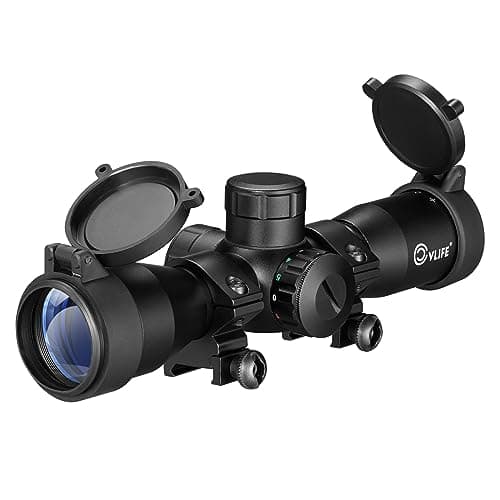 CVLIFE 4x32 Compact | 32 mm | 7.4 | $62.99Amazon |
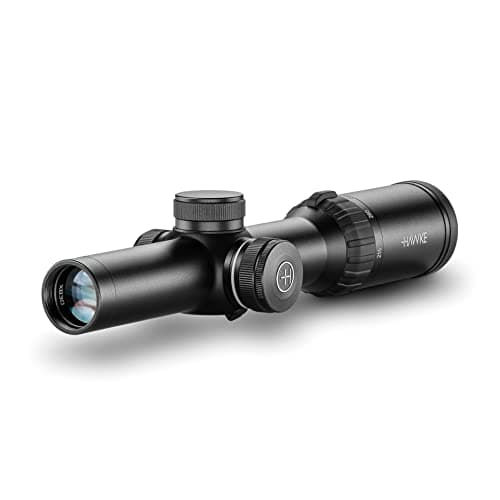
| Rank 4 | 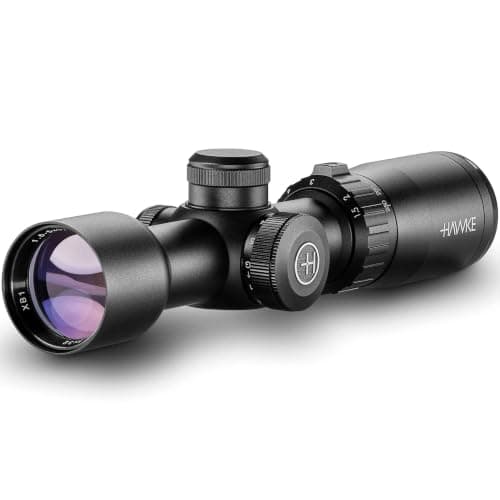 Hawke XB1 SR 1.5-5x32 | 32 mm | 8.7 | $159.99Amazon |
| Rank 5 | 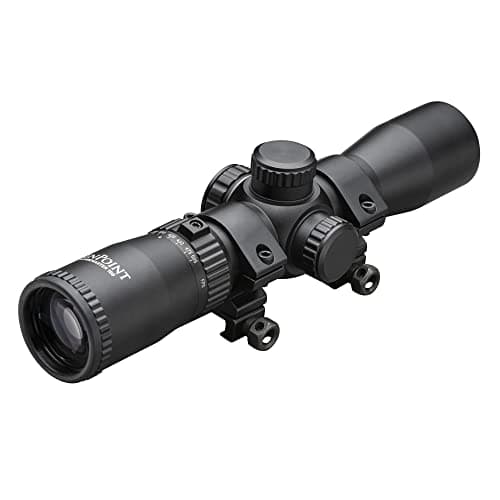 TenPoint RangeMaster 100 | 36 mm | 8.8 | $299.99Amazon |
Most crossbows use a Weaver or Picatinny rail. Pick rings that match your tube diameter (1 inch or 30 mm) and are tall enough to clear the objective bell, set eye relief in your actual shooting position, level the reticle with the bow upright, and tighten the ring screws evenly in a cross pattern.
Mounting is not glamorous and it is where a surprising share of accuracy complaints originate. A scope mounted slightly canted, or in rings a fraction too low, or torqued unevenly, produces exactly the symptoms people blame on the bow or the bolts.
Rail types
A Weaver rail has slots at a non-standard spacing; a Picatinny rail has slots at a fixed, standardized spacing and slightly different dimensions. Picatinny rings generally fit Weaver rails; Weaver rings do not always fit Picatinny. Several bows here publish the detail — the Burris Oracle X specifies a Weaver mount, and Barnett's Hyper Whitetail includes Picatinny accessory rails.
Check your bow before ordering rings, and prefer Picatinny-compatible rings if the bow's rail is not documented.
In detail
Scopes, including three that include rings
TRUGLO 4x32 Compact Crossbow Scope
A one-piece aircraft-aluminum 4x32 with a bolt-drop-compensating reticle, nitrogen filling and weaver rings in the box. The spec worth noticing is 4 inches of eye relief: a crossbow fires forward into its own scope, and generous eye relief is how you keep the ocular off your eyebrow.
| Published spec | Value |
|---|---|
| Magnification | 4x |
| Objective | 32 mm |
| Eye relief | 4 in |
| Reticle | BDC / rangefinder, bolt-drop compensating |
| Tube | One-piece aircraft-grade aluminum, matte |
| Weatherproofing | Nitrogen filled, water and shock resistant |
| Included | Weaver-style scope rings, elastic lens caps |
What it does well
- 4 inches of eye relief, the most generous figure published here
- Rings included
- Leaf-spring fingertip windage and elevation adjustments
- Cheapest branded scope on the site
Where it falls short
Our rubric
- 5.4
- 7.0
- 6.8
- 6.4
- 9.0
Vortex Crossfire II 2-7x32 Crossbow Kit
An XBR-2 reticle built around a 40-yard zero with holdovers from 20 to 100 yards, dual red and green illumination, and the Vortex VIP warranty: unlimited, unconditional, lifetime, transferable. The kit includes 30 mm rings, flip caps and a neoprene cover, so there is nothing else to buy.
| Published spec | Value |
|---|---|
| Magnification | 2-7x |
| Objective | 32 mm |
| Reticle | XBR-2, dual red and green illumination |
| Zero | 40 yd |
| Holdover range | 20-100 yd |
| Included | 30 mm rings, flip caps, neoprene cover |
| Warranty | VIP unlimited lifetime, fully transferable |
What it does well
- The best warranty terms on this site, and transferable
- The kit includes rings and caps, so the price is the whole price
- A 40-yard zero puts the holdovers where crossbow shots actually happen
- O-ring sealed and nitrogen purged
Where it falls short
Our rubric
- 8.0
- 8.6
- 8.8
- 8.4
- 8.6
CVLIFE 4x32 Compact
7.7 inches and 11.3 ounces with a 250 to 350 fps speed adjustment and six aim points to 70 yards. The length is the reason it is here: on a 31-inch bullpup, a 9-inch scope hangs off both ends. Note the speed ceiling of 350 fps — this is a scope for a slower bow.
| Published spec | Value |
|---|---|
| Speed range | 250-350 fps |
| Magnification | 4x |
| Objective | 32 mm |
| Length | 7.7 in |
| Weight | 11.3 oz |
| Reticle | Six aim points with six horizontal lines, 20-70 yd |
| Durability | Aircraft-grade aluminum, shock tested to 800 G |
What it does well
- 7.7 inches and 11.3 ounces suit a short, light bow
- Six aim points plus ranging lines at a low price
- Rings, caps and batteries included
Where it falls short
Our rubric
- 6.4
- 7.0
- 7.4
- 6.8
- 9.0
Hawke XB1 SR 1.5-5x32
Calibrated for 250 to 425 fps with 10-yard aim points running from a 20-yard zero all the way to 100, on 11-layer multi-coated glass. The no-fault lifetime warranty is the part worth noting: Hawke repairs or replaces it regardless of how it broke, which on a crossbow — a machine that recoils forward into its own scope — is not a trivial promise.
| Published spec | Value |
|---|---|
| Speed range | 250-425 fps |
| Magnification | 1.5-5x |
| Objective | 32 mm |
| Aim points | 20-100 yd in 10 yd steps |
| Reticle | XB1 SR, red and green illuminated |
| Glass | 11-layer fully multi-coated, System H2 |
| Warranty | No-fault lifetime repair or replace |
What it does well
- Aim points to 100 yards from a 20-yard zero
- Red and green illumination rather than one color
- No-fault lifetime warranty covers accidental damage
- Fast-focus eyebell and a high-torque zoom ring
Where it falls short
Our rubric
- 8.8
- 8.4
- 9.0
- 8.2
- 8.8
TenPoint RangeMaster 100
A 2-7x36 variable that accommodates 380 to 505 fps — the only scope here whose speed range starts where most others stop. Nine illuminated aim references on an etched-glass reticle: dots at 20, 30 and 40, crosshairs at 50, 60 and 70. If you bought a 430 or 470 fps bow, most crossbow scopes cannot be dialed for it. This one can.
| Published spec | Value |
|---|---|
| Speed range | 380-505 fps |
| Magnification | 2-7x |
| Objective | 36 mm |
| Max calibrated range | 100 yd |
| Reticle | Etched glass, 3 illuminated dots at 20/30/40 yd, 3 crosshairs at 50/60/70 yd |
| Weatherproofing | Water and fog proof |
| Zero procedure | Sight at 20 yd, micro-tune at 50 yd, zeroed at 100 |
What it does well
- 380-505 fps is the only range here that covers a 470 fps bow
- 7x at the top end is real magnification for a 100-yard hold
- Etched-glass reticle stays clean in the field of view
- 36 mm objective gathers more light than the 24 mm competition
Where it falls short
Our rubric
- 9.0
- 9.0
- 9.2
- 9.0
- 7.4
Rings: diameter, height and what comes in the box
| Scope | Tube | Rings included |
|---|---|---|
| TRUGLO 4x32 | 1 in | Yes — Weaver style |
| Vortex Crossfire II kit | 30 mm | Yes — 30 mm rings, flip caps, cover |
| CVLIFE 4x32 | 1 in | Yes — 20 mm mount rings |
| Hawke XB1 | 1 in | Not stated |
| TenPoint RangeMaster 100 | Not stated | Not stated |
Ring height
The rings have to be tall enough that the objective bell clears the rail and the bow's own hardware, and no taller. Too low and the scope will not sit; too tall and your cheek weld floats off the stock, which makes your head position inconsistent and your groups wider. A 36 mm objective — the RangeMaster — needs more height than a 24 mm one.
Setting eye relief properly
Eye relief is the distance from the ocular lens to your eye where you see the full field of view with no dark ring. TRUGLO publishes 4 in, which is the most generous figure here. Most makers do not publish it at all.
The eye-relief procedure
- 01
Get into your actual shooting position
Seated in a chair if you hunt from a blind. Wearing the coat you hunt in. Position changes eye relief and a bench setup can be wrong by an inch.
- 02
Shoulder the bow with your eyes closed
Let your head find its natural place on the stock rather than hunting for the scope.
- 03
Open your eyes and look
If you see a black ring, the scope is too far forward or back. Slide it in the rings until the full field appears instantly.
- 04
Snug the rings and re-check
Then check again at your highest magnification, where the eye box is tightest.
Leveling the reticle
With the bow upright and level — a small bubble level on the rail helps — rotate the scope until the vertical crosshair is truly vertical. A canted reticle is invisible at 20 yards and pushes your 50-yard hold off to one side, which looks like a windage problem that no amount of adjustment fixes.
Torque, which is where zeros are lost
- Tighten the ring screws in a cross pattern, a little at a time, so the tube is clamped evenly all round.
- Aim for even gaps on both sides of each ring. Uneven gaps mean uneven clamping.
- Do not over-tighten. It can dent the tube and damage the internals.
- Do not under-tighten. The scope moves on the first shot and your zero is gone.
- If you have a torque driver, use the maker's figure. If not, snug is better than tight.
Scope bite, and why a crossbow is different
A rifle recoils backwards into your shoulder, which is how scope bite happens. A crossbow's limbs snap forward, which moves the whole machine away from your face — so scope bite is far less likely. What crossbows do instead is vibrate, and vibration is what works ring screws loose over a season.
Check them before each hunt, and shoot one bolt at 20 yards at the start of every trip.