Broadhead zero
How to sight in a crossbow with broadheads
Zero with field points, then prove it with the head you will hunt. If the two groups do not overlap, the field-point zero is the one that is wrong.
String & Stock earns a commission when you buy through our links, at no extra cost to you. Prices come from Amazon and change; the date beside every price is when we last verified it. Full disclosure.
Ranked
Quick picks
| # | Product | Grain | Score | Price |
|---|---|---|---|---|
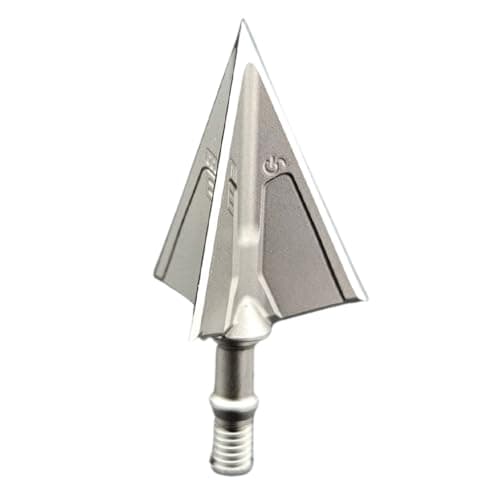
| Rank 1 | G5 Montec M3 100 gr | 100 gr (125 also offered) | 8.9 | $54.95Amazon |
| Rank 2 | 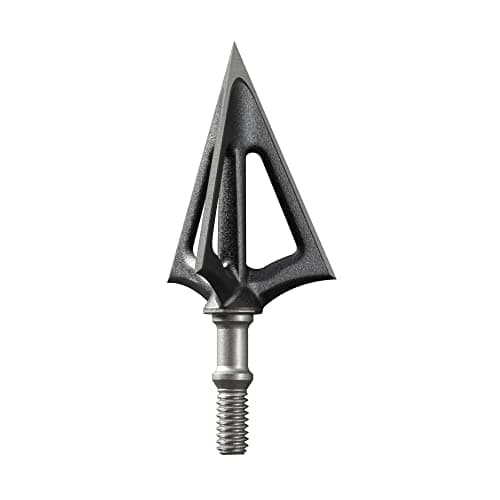 TenPoint EVO-X Montec | 100 gr | 8.8 | $44.99Amazon |
| Rank 3 | 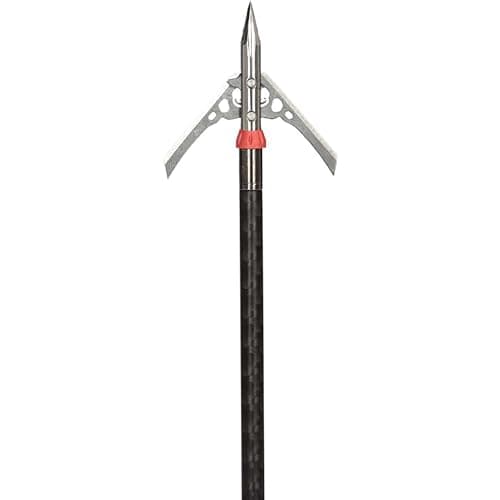 Rage Hypodermic Trypan NC | 100 gr | 8.6 | $57.49Amazon |
Zero the bow with field points of the same grain weight as your broadheads, then shoot three broadheads at 20 yards into a broadhead-rated target. If that group sits on the field-point group, you are done. If it is consistently offset, adjust the scope to the broadhead group - that is the arrow you will hunt with - and verify at 40 yards.
Almost every crossbow is zeroed with field points, which is correct: field points are cheap, they are kind to targets, and they let you shoot the volume a zero needs. The mistake is stopping there. A broadhead is a different shape with blades that catch air, and on some setups it will not land in the same place as a field point of identical weight. Finding that out in October from a tree is a bad way to find out.
This page assumes the bow is already mounted, leveled and zeroed with field points. If it is not, start with crossbow scope mounting and then how to sight in a crossbow, which covers the speed ring and the twelve-bolt zero sequence. Come back here afterwards.
Before you shoot: three checks that prevent the problem
- Match the weight exactly. A 100 gr field point and a 125 gr broadhead are two different trajectories. Zero with the same grain weight you will hunt - this is the single most common cause of a broadhead group that does not match. The trade between the two weights is on 100 vs 125 grain broadheads.
- Spin-test every head. Fit the head, rest the shaft on a spin tester or roll it point-down on a smooth surface, and watch the tip. If it wobbles, the head is not seated square - re-seat it or use a different insert. G5 spin-tests the Montec at the factory, which is a figure worth having, but your assembly is what matters.
- Check the target. A bag target will be destroyed by broadheads and will also pull blades out of alignment on removal. You need a broadhead-rated target - see best broadhead targets - rated above your bow's published speed.
The procedure
Six steps, about nine bolts, one afternoon.
- 01
Confirm the field-point zero
Shoot three field points at 20 yards and mark the group center on the target face. This is your reference. If the field-point group is not tight, stop - a broadhead will not fix a bow or a shooter that is not grouping.
- 02
Fit and spin-test three broadheads
Use three arrows from the same pack, with the same nock and insert, and spin-test each assembled arrow. Set aside anything that wobbles; a wobbling head will throw a flier and you will blame the zero.
- 03
Shoot three broadheads at 20 yards
Aim at the same point as the field points, from the same rest and the same position. Shoot all three before you look at the target, so you are comparing groups rather than single arrows.
- 04
Compare the two group centers
If the broadhead group overlaps the field-point group, your zero is already correct and you can skip to step six. If it is consistently offset in one direction, continue.
- 05
Adjust the scope to the broadhead group
Move the turrets so the broadhead group moves to your aiming point - not the other way round. The broadhead is what you will hunt with, so it is the group that has to be right. Then re-shoot three broadheads to confirm the change landed where you expected.
- 06
Verify at 40 yards, then stop
Shoot two or three broadheads at 40 yards. Any difference in flight characteristics is magnified at distance, so this is where a marginal head or a poorly seated insert shows itself. If 40 yards is good, your zero is good; put the remaining heads away sharp and unshot.
In detail
Three heads that make this easier
G5 Montec M3 100 gr
One solid piece of 420 stainless steel with a 1-1/16 inch cut, no vents, cut-on-contact geometry and every head spin-tested before it ships. There are no blades to replace, no screws to loosen and no collar to fail. For a fast bow, a fixed one-piece head is the most reliable thing you can put on the front of a bolt.
| Published spec | Value |
|---|---|
| Weight | 100 gr (125 also offered) |
| Cutting diameter | 1-1/16 in |
| Blades | 3, fixed |
| Construction | One-piece MIM, 420 stainless steel, no vents |
| Sharpening | Diamond cut, cut-on-contact |
| Quality control | 100% spin-tested |
| Per pack | 3 |
What it does well
- One piece: no blades, screws or collars to fail
- Every head spin-tested before it ships
- Resharpenable, so a head survives more than one animal
- Cut-on-contact geometry starts cutting immediately
Where it falls short
Our rubric
- 8.2
- 9.4
- 9.0
- 9.6
- 8.4
TenPoint EVO-X Montec
Built for TenPoint by G5, which is to say it is a Montec specified for high-speed crossbows: 100 grains, three fixed blades, a 1-1/8 inch cut, one-piece MIM construction and a 100 percent steel ferrule. If you shoot a fast bow and want a fixed head, this is the one that was designed for the application.
| Published spec | Value |
|---|---|
| Weight | 100 gr |
| Cutting diameter | 1-1/8 in |
| Blades | 3, fixed |
| Construction | One-piece MIM, 100% steel ferrule |
| Designed for | High-speed crossbows |
| Sharpening | Diamond cut |
| Per pack | 3 |
What it does well
- Specified for high-speed crossbows, not adapted from a compound head
- One-piece construction with nothing to come loose
- Made by G5, whose Montec is the reference fixed head
Where it falls short
Our rubric
- 8.4
- 9.4
- 9.0
- 9.4
- 8.0
Rage Hypodermic Trypan NC
A one-piece titanium ferrule, .039-inch stainless blades, a hybrid tip and No Collar retention — meaning the blades are held closed by the ferrule geometry rather than a rubber band you have to replace every shot. For a fast bow, the collar is the part that fails, so removing it matters.
| Published spec | Value |
|---|---|
| Weight | 100 gr |
| Blade thickness | 0.039 in |
| Type | Mechanical, expandable |
| Ferrule | One-piece titanium |
| Retention | No Collar |
| Tip | Hybrid |
| Per pack | 3 |
What it does well
- No Collar retention removes the consumable rubber band
- A titanium ferrule is lighter and stronger than aluminum
- .039-inch blades are thick for a mechanical
- Ferrule alignment adapter helps it spin true
Where it falls short
Our rubric
- 8.6
- 8.4
- 8.8
- 8.8
- 7.2
Why fixed and mechanical heads behave differently
A fixed blade head has permanent surfaces that can steer the arrow in flight. The effect is called planing, and it is most pronounced with long blades, with a long ferrule, and at distance. It is also the reason a fixed head is more likely than a mechanical to shoot away from a field-point zero, and why a short-bodied head plants fewer surprises - the QAD Exodus and the one-piece Montecs are both short for this reason.
A mechanical head flies closed, so in flight it is close to a field point in shape, and it will usually land where the field points do. That is one of its genuine advantages and part of why so many crossbow hunters use them. The trade is on the other side of impact, where it spends energy opening - mechanical vs fixed blade sets out the full comparison, and best mechanical broadheads covers the retention systems that crossbow speed defeats.
The three picks, and why each is on this page
G5 Montec M3 100 gr
One-piece metal-injection-molded 420 stainless, 1-1/16 in of cut, no vents, and 100 percent factory spin-tested. One-piece construction is the single best insurance against the thing this page exists to diagnose: there are no blades to sit proud, no screws to loosen and nothing to re-align after a removal from a target. Available in 125 gr too, if you are zeroing at that weight.
TenPoint EVO-X Montec
The same one-piece idea, built specifically for high-speed crossbows by the company that makes the bows, with 1-1/8 in of cut and a 100 percent steel ferrule. If your bow is at the fast end of the range and you want a fixed head that is unlikely to need any scope adjustment at all, start here.
Rage Hypodermic Trypan NC
The mechanical reference point. A 0.039 in blade on a one-piece titanium ferrule with a hybrid tip and no collar to replace. It flies closed and therefore usually lands on a field-point zero, which is exactly why it is the head to try if your fixed heads will not group and you do not want to re-zero for the season.
What to do if the groups will not come together
- Re-check the weight match. Grain weight, insert weight and nock type all have to be identical between your practice and hunting arrows.
- Re-spin every arrow. A single poorly seated head produces one flier that looks like a zero problem.
- Try a shorter-bodied head. Less ferrule and shorter blades mean less surface for air to push on.
- Try a mechanical. It flies closed and will usually land on the field-point zero.
- Check the arrows themselves. A quiver of arrows that are not weight-matched is a quiver of different trajectories - see best crossbow bolts for the published tolerances.
How many arrows this should take
Nine, if the first comparison overlaps: three field points, three broadheads at 20, three at 40. Fifteen if you have to adjust. If you are into your third pack of heads and still chasing it, the problem is not the zero - it is one of the five things in the list above, and it is usually the weight match. Crossbow barrels do not wear out in an afternoon, but broadheads and target foam both do.
Finally, re-confirm the zero whenever anything in the chain changes: a different broadhead, a heavier insert, a new arrow model, a scope that has been off the rail, or a bow that has had a new string. Any one of those invalidates the work above, and all of them are cheap to re-check. Crossbow maintenance covers what else changes over a season.
Frequently asked questions
Do you need to sight in a crossbow with broadheads?
Why do broadheads hit differently than field points?
How many arrows does a broadhead zero take?
Should I adjust the scope to the broadheads or the field points?
Can you shoot broadheads into a bag target?
Sources
Read next
Bolts & Broadheads
Mechanical vs fixed blade broadheads
Targets & Cases
The best broadhead targets for crossbows
Bolts & Broadheads
The best fixed blade crossbow broadheads