100 vs 125 grain
100 vs 125 grain broadheads
Twenty-five grains sounds trivial. It changes your front-of-center, your velocity and your zero, and only one of those is obvious.
String & Stock earns a commission when you buy through our links, at no extra cost to you. Prices come from Amazon and change; the date beside every price is when we last verified it. Full disclosure.
Ranked
Quick picks
| # | Product | Weight | Score | Price |
|---|---|---|---|---|
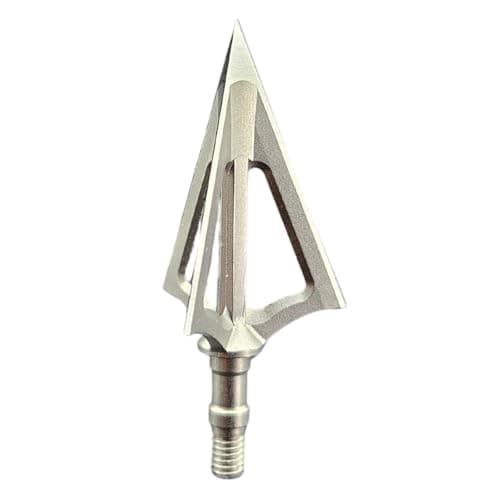
| Rank 1 | G5 Montec 100 gr | 100 gr (85 and 125 also offered) | 8.9 | $44.95Amazon |
| Rank 2 | 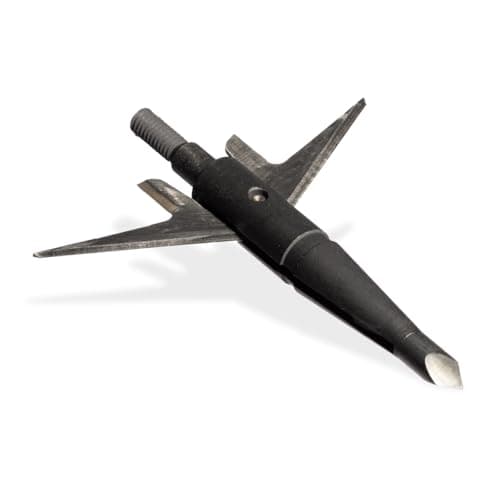 Swhacker #202 125 gr | 125 gr | 8.1 | $41.57Amazon |
| Rank 3 | 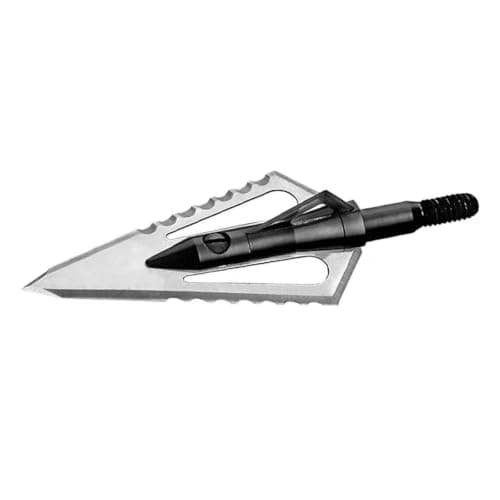 Magnus Stinger Buzzcut 4-Blade 125 gr | 125 gr | 8.2 | $43.60Amazon |
| Rank 4 | 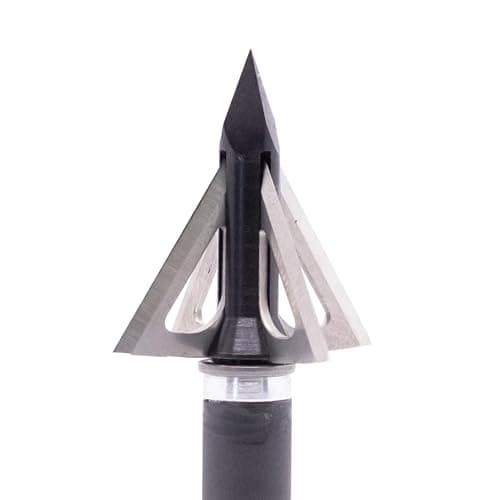 Slick Trick Standard Pro Series and Magnum | 100 gr | 8.7 | $48.99Amazon |
| Rank 5 | 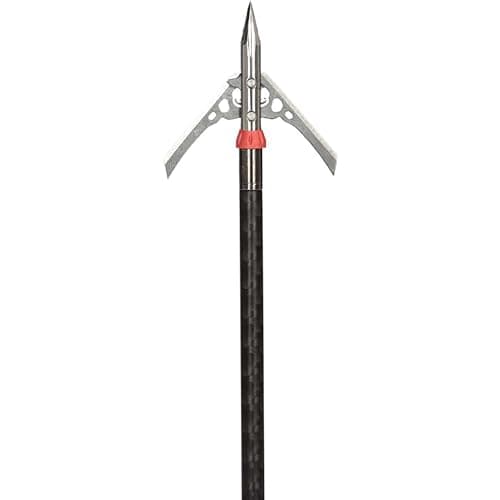 Rage Hypodermic Trypan NC | 100 gr | 8.6 | $57.49Amazon |
A 125-grain head moves more weight forward, improving front-of-center and penetration, and costs some velocity. A 100-grain head is the default, matches what most bows' included arrows are built around, and keeps your published speed closer to reality. Either way, changing grain weight changes your zero and you must re-verify.
Twenty-five grains on a 400 gr arrow is a little over six percent of the total mass, which does not sound like much. What makes it significant is where it goes: all of it at the very front, which is the most leveraged position on the shaft.
In detail
Heads in both weights
G5 Montec 100 gr
One-piece metal-injection-molded steel with a 1 to 1-1/8 inch cut, cut-on-contact geometry and every head spin-tested before it ships. There are no blades to replace, no screws to loosen and no collar to fail. For a fast bow, a fixed one-piece head is the most reliable thing you can put on the front of a bolt.
| Published spec | Value |
|---|---|
| Weight | 100 gr (85 and 125 also offered) |
| Cutting diameter | 1 to 1-1/8 in |
| Blades | 3, fixed |
| Construction | One-piece MIM steel |
| Sharpening | Diamond cut, cut-on-contact |
| Quality control | 100% spin-tested |
| Per pack | 3 |
What it does well
- One piece: no blades, screws or collars to fail
- Every head spin-tested before it ships
- Resharpenable, so a head survives more than one animal
- Cut-on-contact geometry starts cutting immediately
Where it falls short
Our rubric
- 8.2
- 9.4
- 9.0
- 9.6
- 8.4
Swhacker #202 125 gr
A 2.25-inch cut from a 2-blade expandable, with a patented two-stage design: wing blades make the entry hole and the primary blades stay folded behind them until impact. At 125 grains it also shifts weight forward, which is the right direction for a heavy-bolt setup.
| Published spec | Value |
|---|---|
| Weight | 125 gr |
| Cutting diameter | 2.25 in |
| Blades | 2, expandable |
| Type | Mechanical, two-stage |
| Ferrule | Aircraft-grade aluminum |
| Blades material | Stainless steel; hardened steel tip |
| Per pack | 3 |
What it does well
- 2.25 inches is the widest cut on this page
- Two-stage design protects the primary blades until impact
- 125 grains helps front-of-center on a heavy setup
- Replacement blades are sold separately, so the ferrule is reusable
Where it falls short
Our rubric
- 8.0
- 7.6
- 8.0
- 8.4
- 8.2
Magnus Stinger Buzzcut 4-Blade 125 gr
A chisel-cut serrated main blade across four blades at 125 grains. Serrations tear rather than slice, which is a deliberate choice aimed at blood trails rather than clean penetration. At 125 grains it is the heavier option for a heavy-bolt setup.
| Published spec | Value |
|---|---|
| Weight | 125 gr |
| Blades | 4, fixed |
| Main blade | Chisel-cut serrated |
| Type | Fixed |
| Patent | US 7,160,217 |
| Per pack | 3 |
| Cutting diameter |
What it does well
- Serrated main blade is aimed squarely at blood trails
- Four blades at 125 grains for a heavy front-of-center setup
- A long production record behind the Stinger line
Where it falls short
Our rubric
- 7.8
- 8.6
- 8.0
- 9.0
- 8.2
Slick Trick Standard Pro Series and Magnum
Four .035-inch stainless blades in a short Super Steel ferrule giving 2-1/4 inches of total cut, with a 4-edge bone-splitting tip and Alcatraz blade lock. Short, fat and fixed: it flies like a field point because there is barely any ferrule forward of the blades to plane in the wind.
| Published spec | Value |
|---|---|
| Weight | 100 gr |
| Total cut | 2-1/4 in (1-1/8 in + 1-1/8 in) |
| Blade thickness | 0.035 in |
| Blades | Stainless, 4 |
| Ferrule | Super Steel |
| Blade lock | Alcatraz |
| Tip | 4-edge bone splitting |
What it does well
- 2-1/4 inches of total cut from a fixed head
- A short ferrule means less wind planing
- Alcatraz blade lock keeps blades seated through bone
- Explicitly suited to crossbows, compounds and recurves
Where it falls short
Our rubric
- 8.4
- 9.0
- 8.8
- 9.0
- 8.2
Rage Hypodermic Trypan NC
A one-piece titanium ferrule, .039-inch stainless blades, a hybrid tip and No Collar retention — meaning the blades are held closed by the ferrule geometry rather than a rubber band you have to replace every shot. For a fast bow, the collar is the part that fails, so removing it matters.
| Published spec | Value |
|---|---|
| Weight | 100 gr |
| Blade thickness | 0.039 in |
| Type | Mechanical, expandable |
| Ferrule | One-piece titanium |
| Retention | No Collar |
| Tip | Hybrid |
| Per pack | 3 |
What it does well
- No Collar retention removes the consumable rubber band
- A titanium ferrule is lighter and stronger than aluminum
- .039-inch blades are thick for a mechanical
- Ferrule alignment adapter helps it spin true
Where it falls short
Our rubric
- 8.6
- 8.4
- 8.8
- 8.8
- 7.2
What actually changes
| 100 grain | 125 grain | |
|---|---|---|
| Front-of-center | Lower | Higher — more weight at the tip |
| Velocity | Faster | Slower |
| Penetration | Lower | Higher |
| Trajectory past 40 yd | Flatter | Steeper drop |
| Noise | Marginally louder | Marginally quieter |
| Availability | Every head on this site | Swhacker #202, Magnus Stinger, some G5 options |
| Matches bundled arrows | Yes — most bows ship 100 gr points | No — re-verify zero |
Front-of-center, which is the real argument
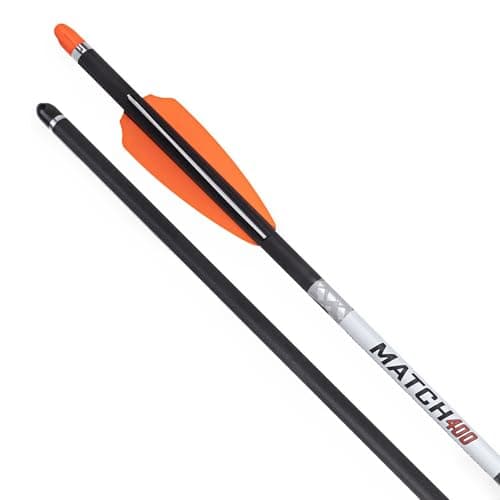
Front-of-center is the proportion of the arrow's weight forward of its balance point. More FOC makes an arrow fly nose-first and recover from imperfections faster — it flies like a dart rather than a tumbling stick. Wicked Ridge publishes 14 percent FOC on its Match 400 arrow, achieved with a 46 gr aluminum insert, and claims up to 20 percent tighter groups from it.
A 125 gr head is another way to buy FOC. So is a heavier insert — Guide Gear's Victory-made bolts carry a 110 gr brass insert, the heaviest on this site, and Bloodsport's 20-inch Witness ships with a 95 gr one. If you want FOC and not the velocity loss at the tip, a heavier insert and a 100 gr head is a different route to the same place.
Velocity, and whether you care
A heavier arrow leaves slower. The practical consequences on a crossbow are small at typical hunting range and real past 40 yards, where the drop steepens. If your bow publishes 400 fps with a 400 gr arrow, going to 425 gr puts you under that figure — which matters because your scope's speed dial is set for a velocity.
The part people forget: your zero moves
This is the one that costs people a shot. Changing from 100 gr to 125 gr changes arrow weight, which changes velocity, which changes trajectory, which moves your 30, 40 and 50-yard holds. Your 20-yard zero shifts least and your long holds shift most.
- Change the head.
- Re-zero at 20 yards.
- Verify at 40 yards and adjust the speed dial if the hold has moved. See crossbow speed rings explained.
- Confirm the broadheads group with field points of the same grain weight.
What your bow says
Check the manual for the minimum total arrow weight. Going heavier is almost always safe; going lighter is the dangerous direction, because below the minimum the limbs absorb energy the arrow should have taken. Nothing on this page asks you to go lighter.
Which we would use
One hundred grains, for most hunters, most of the time. It matches what your bow was built and published around, it keeps your speed dial honest, and every head on this site is available in it.
Move to 125 if you want more penetration for bigger or tougher game, or if your fixed heads are not grouping and you want more FOC to stabilize them. Then re-verify properly, because a 125-grain head on a zero set for 100 is a miss waiting for an opening morning.
Frequently asked questions
Should I use 100 or 125 grain broadheads on a crossbow?
Do heavier broadheads penetrate better?
Will changing broadhead weight change my zero?
Can I use a lighter broadhead for more speed?
What is front-of-center on an arrow?
Sources
Read next
Bolts & Broadheads
Crossbow bolt weight, explained
Bolts & Broadheads
The best crossbow broadheads
Bolts & Broadheads
The best crossbow broadheads for deer