Thread and fit
Crossbow bolt thread size
The thread is almost never your problem. The ferrule diameter, the insert and the grain weight are - and those are the three things listings describe worst.
String & Stock earns a commission when you buy through our links, at no extra cost to you. Prices come from Amazon and change; the date beside every price is when we last verified it. Full disclosure.
Ranked
Quick picks
| # | Product | Weight | Score | Price |
|---|---|---|---|---|
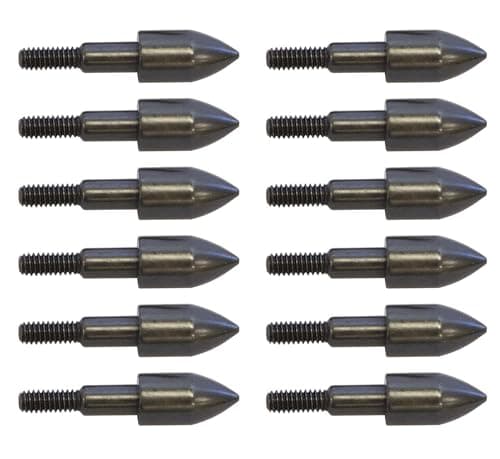
| Rank 1 | NAP Bullet Field Point 5/16 in 100 gr | 100 gr | 9.0 | $4.97Amazon |
| Rank 2 | 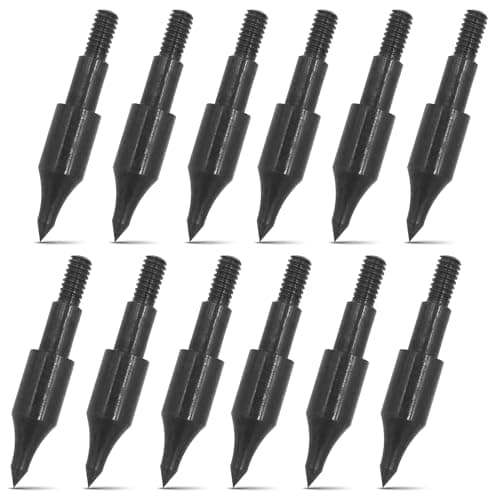 AREYCVK 100 gr Field Points, 12 pack | 100 gr | 8.0 | $9.99Amazon |
| Rank 3 | 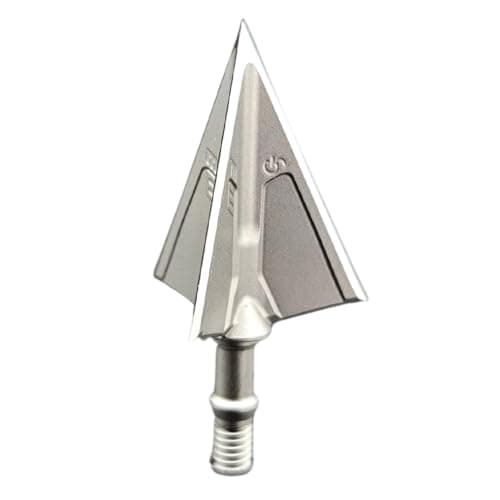 G5 Montec M3 100 gr | 100 gr (125 also offered) | 8.9 | $54.95Amazon |
| Rank 4 | 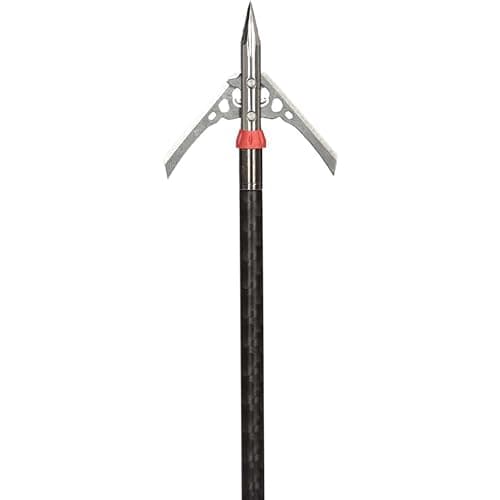 Rage Hypodermic Trypan NC | 100 gr | 8.6 | $57.49Amazon |
| Rank 5 | 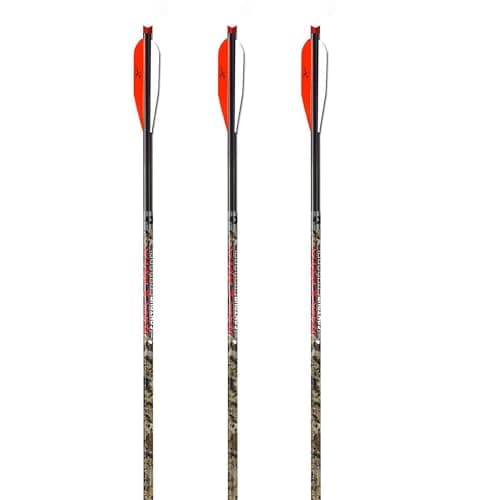 Carbon Express Maxima Contour Crossbolts | 390 gr | 9.0 | $29.97Amazon |
Crossbow bolts use the same 8-32 thread as vertical-bow arrows - a #8 screw at 32 threads per inch - so field points and broadheads interchange freely across almost every brand. The notable exception is Easton's Deep Six system, which uses a finer 40-threads-per-inch pattern and is not compatible with standard points.
If you came here because you were about to buy field points and wanted to know whether they would screw into your bolts: they will. That is the good news and it is most of the answer. The reason this page is longer than one sentence is that "will it thread in" is not the question that actually goes wrong - and the three questions that do go wrong are the ones product listings describe most carelessly.
In detail
Points, heads and shafts that thread together
NAP Bullet Field Point 5/16 in 100 gr
A dozen precision-machined steel bullet points per pack from a broadhead maker, screw-in, easy to pull out of a bag target. The reason it leads here is the option list: NAP offers the same point in 100 and 125 grain and in 11/32, 9/32 and 5/16 inch diameters, so you can match the ferrule diameter of your shaft rather than accepting whatever came in the box.
| Published spec | Value |
|---|---|
| Weight | 100 gr |
| Diameter | 5/16 in |
| Per pack | 12 |
| Fitment | Screw-in, threaded connection |
| Material | Precision-machined steel |
| Weight options | 100 gr and 125 gr |
| Diameter options | 11/32 in, 9/32 in and 5/16 in |
| Intended use | Target practice in cardboard and foam |
What it does well
- Three diameters and two weights in the same point, so you can match your shaft
- A dozen per pack, which is the right quantity for a season of practice
- Made by a broadhead maker, so the weights are consistent with its heads
- Cheapest item on this site
Where it falls short
Our rubric
- 9.4
- 8.8
- 7.8
- 9.6
AREYCVK 100 gr Field Points, 12 pack
Twelve CNC-machined high-carbon-steel points with a tapered shoulder, in a case, for less than a tank of gas. The tapered shoulder is the specification worth noticing: it is what lets you pull the arrow back out of a foam or bag target without taking the target with it.
| Published spec | Value |
|---|---|
| Weight | 100 gr |
| Per pack | 12 |
| Fitment | Standard screw-in thread |
| Material | High-carbon steel, CNC machined |
| Shoulder | Tapered, to reduce target damage |
| Fits | Recurve, compound and crossbow arrows |
| Diameter | |
| Included | Storage case |
What it does well
- A tapered shoulder, which the listing ties directly to easier removal from foam and bag targets
- A case in the box, so a dozen loose points do not end up in the bottom of a pack
- CNC machined, which is what keeps a 100 gr point actually 100 gr
- Cheap enough to keep a spare dozen in the truck
Where it falls short
Our rubric
- 7.4
- 8.0
- 7.6
- 9.2
G5 Montec M3 100 gr
One solid piece of 420 stainless steel with a 1-1/16 inch cut, no vents, cut-on-contact geometry and every head spin-tested before it ships. There are no blades to replace, no screws to loosen and no collar to fail. For a fast bow, a fixed one-piece head is the most reliable thing you can put on the front of a bolt.
| Published spec | Value |
|---|---|
| Weight | 100 gr (125 also offered) |
| Cutting diameter | 1-1/16 in |
| Blades | 3, fixed |
| Construction | One-piece MIM, 420 stainless steel, no vents |
| Sharpening | Diamond cut, cut-on-contact |
| Quality control | 100% spin-tested |
| Per pack | 3 |
What it does well
- One piece: no blades, screws or collars to fail
- Every head spin-tested before it ships
- Resharpenable, so a head survives more than one animal
- Cut-on-contact geometry starts cutting immediately
Where it falls short
Our rubric
- 8.2
- 9.4
- 9.0
- 9.6
- 8.4
Rage Hypodermic Trypan NC
A one-piece titanium ferrule, .039-inch stainless blades, a hybrid tip and No Collar retention — meaning the blades are held closed by the ferrule geometry rather than a rubber band you have to replace every shot. For a fast bow, the collar is the part that fails, so removing it matters.
| Published spec | Value |
|---|---|
| Weight | 100 gr |
| Blade thickness | 0.039 in |
| Type | Mechanical, expandable |
| Ferrule | One-piece titanium |
| Retention | No Collar |
| Tip | Hybrid |
| Per pack | 3 |
What it does well
- No Collar retention removes the consumable rubber band
- A titanium ferrule is lighter and stronger than aluminum
- .039-inch blades are thick for a mechanical
- Ferrule alignment adapter helps it spin true
Where it falls short
Our rubric
- 8.6
- 8.4
- 8.8
- 8.8
- 7.2
Carbon Express Maxima Contour Crossbolts
Dual Spine Weight Forward is not marketing: the shaft has two spines, a stiffer section forward of a softer one, and Carbon Express claims it cuts oscillation in half. The figures are the reason to buy — .002 inch straightness checked to a ten-thousandth, spine sorted to .0025 inch, weight sorted to 1 grain. Nothing else on this page publishes that level of sorting.
| Published spec | Value |
|---|---|
| Length | 20 in |
| Weight | 390 gr |
| Diameter | 0.348 in |
| Straightness | +/- .002 in |
| Spine tolerance | +/- .0025 in |
| Weight tolerance | +/- 1.0 gr |
| Vanes and nocks | 3 in Dragon Vanes; moon nocks installed, C-Nocks included |
What it does well
- Straightness, spine and weight tolerances all published and all tight
- Dual-spine construction claims 50 percent less oscillation
- Both moon nocks and flat C-Nocks in the pack, so it fits more bows
- Laser-matched sets rather than randomly boxed shafts
Where it falls short
Our rubric
- 9.4
- 8.2
- 9.6
- 8.6
- 8.0
The thread: 8-32, almost everywhere
Archery settled on one thread a long time ago. It is designated 8-32: a number 8 screw diameter with 32 threads per inch. It lives on the back of every standard field point and broadhead, and on the inside of the insert glued into the front of your shaft. Component makers describe it as the industry standard precisely because it is - 3Rivers Archery, which sells screw-in adapters for traditional shooters, says its adapters use "the same thread used by all arrow inserts (except Easton Deep Six)".
Crossbow bolts are not special here. A crossbow bolt is a short, usually stiff arrow, and the front end is built the same way an arrow's is. That is why a 100 gr G5 Montec intended for a compound bow threads into a TenPoint bolt without an adapter, and why you can practice with generic field points and hunt with a brand-name head on the same shafts.
| System | Thread | Interchangeable with standard points? |
|---|---|---|
| Standard archery (almost everything) | 8-32 (32 threads per inch) | Yes |
| Easton Deep Six | 40 threads per inch | No - Deep Six components take Deep Six points and heads only |
| Easton 4mm shafts with an 8-32 half-out insert | 8-32 | Yes - the half-out is what converts a small-diameter shaft back to the standard thread |
Where fitment actually fails: three things that are not the thread
1. Ferrule diameter, which half the market calls thread diameter
This is the single most common confusion, and the listings cause it. Field points are sold in diameters - 5/16 in, 9/32 in, 11/32 in are the usual three - and that figure describes the shoulder of the point, not the screw. NAP's own Bullet Field Point listing calls them "thread diameters", which they are not. The thread is 8-32 on all three.
What the diameter has to match is the outside diameter of your shaft. Get it wrong and the point either steps out wider than the shaft - which catches on the way into and out of a target, and spoils arrow flight - or sits narrower, leaving a lip for the shaft's front edge to take the impact. Neither stops the point threading in. Both are wrong.
Crossbow bolts are not standardized on one diameter, which is why this matters. Most carbon crossbow bolts sit in the 5/16 in class, but Easton's 9MM shafts are deliberately fatter and some small-diameter shafts are thinner. Our what size crossbow bolts do I need page covers how length, nock, diameter and weight are each set, and by whom.
2. Insert or outsert - and whether your bolt even has one
The thread you screw into belongs to a component, not to the carbon. Most bolts ship with a brass or aluminum insert bonded inside the front of the shaft. Some use an outsert, which fits over the outside, and some premium systems use a half-out that does both. Three consequences:
- A point that will not start is usually a damaged or glue-fouled insert, not a wrong thread. Epoxy squeeze-out in the threads is extremely common on factory bolts.
- Insert weight is part of your arrow weight. A brass insert adds meaningful grains up front and changes front-of-center, which is why some bolts are sold specifically with brass inserts. See the crossbow bolt weight guide.
- Some practice points are sold without an insert. TenPoint's own field practice points, for instance, state that they screw into an arrow insert that is not included - which is fine if your bolts have them and a problem if you bought bare shafts.
3. Grain weight, which has to match between practice and hunting
The thread being universal means you can practice with a 100 gr field point and hunt with a 125 gr broadhead. Do not. Point weight sits at the very front of the arrow, where it has the largest effect on both total arrow weight and balance, so changing it between practice and the hunt changes where the bolt lands.
Buy field points in the same weight as your broadheads, and replace them when the shoulders get chewed. 100 vs 125 grain broadheads is the full argument over which weight to standardize on, and how to sight in a crossbow with broadheads covers the verification step that catches the difference when it survives anyway.
A quick reference
| Figure | What it is | Typical value | What breaks if it is wrong |
|---|---|---|---|
| Thread | The screw that joins point to insert | 8-32 (32 TPI) | Nothing fits at all - rare, and almost always a Deep Six mix-up |
| Ferrule diameter | The shoulder of the point | 5/16, 9/32 or 11/32 in | Flight suffers and the point catches in targets |
| Point weight | Grains at the tip | 100 gr or 125 gr | Point of impact moves between practice and hunting |
| Insert type | The threaded component in the shaft | Brass or aluminum insert; outsert on some systems | Arrow weight and balance change; stripped threads |
How to check yours in two minutes
- Take a field point out of the bolt you already own. If one came with the bolts, it is the reference for both thread and diameter. Keep it.
- Measure the shaft's outside diameter with calipers if you have them, or compare the point's shoulder to the shaft by eye - a correct point is flush, not stepped.
- Check the weight stamped on the point or the pack. Then buy field points in that weight, and broadheads in that weight.
- If the point will not start, look into the insert with a light. Glue, grit or a burr is the usual culprit. A bolt with a stripped insert is a bolt to retire, not to force.
- If you shoot an Easton small-diameter system, read the shaft's own component chart before buying heads. Deep Six and 8-32 are not interchangeable in either direction.
What to buy
For practice, the NAP Bullet Field Point is the pick here precisely because of the diameter options: the same point in 100 and 125 gr and in 11/32, 9/32 and 5/16 in, so you can match your shaft rather than hope. A dozen costs less than a single broadhead. The AREYCVK twelve-pack is the spare-dozen option, with a tapered shoulder the listing ties directly to pulling arrows out of foam and bag targets more easily - though it publishes no diameter figure at all, which is exactly the gap this page is about.
For hunting on the same shafts, both a fixed head like the G5 Montec M3 and a mechanical like the Rage Hypodermic Trypan NC use the same 8-32 thread and come in matching grain weights. The wider field is on best crossbow broadheads, with the fixed-and-mechanical argument on mechanical vs fixed blade. If you are buying shafts as well, start at best crossbow bolts.
One last thing worth saying plainly: none of this fixes a shot you cannot range. A point that matches your broadhead in weight and diameter is the first step; knowing whether the animal is at 32 or 44 yards is the other one, and the best rangefinders for crossbow hunting covers that.
Frequently asked questions
What thread size do crossbow bolts use?
Are crossbow broadhead threads the same as compound bow broadhead threads?
What is the exception to the 8-32 archery thread?
Does 5/16 inch mean the thread size on a field point?
Why will my field point not screw into my crossbow bolt?
Should my field points be the same weight as my broadheads?
Sources
Read next
Bolts & Broadheads
What size crossbow bolts do I need?
Bolts & Broadheads
Crossbow bolt weight, explained
Bolts & Broadheads
100 vs 125 grain broadheads
Bolts & Broadheads
The best crossbow bolts