Handheld rangefinders
The best rangefinders for crossbow hunting
Your scope already has aim points for 20, 30, 40 and 50 yards. It cannot tell you which one to use. That is the entire job of the cheapest optic you will buy.
String & Stock earns a commission when you buy through our links, at no extra cost to you. Prices come from Amazon and change; the date beside every price is when we last verified it. Full disclosure.
Ranked
Quick picks
| # | Product | Angle mode | Score | Price |
|---|---|---|---|---|
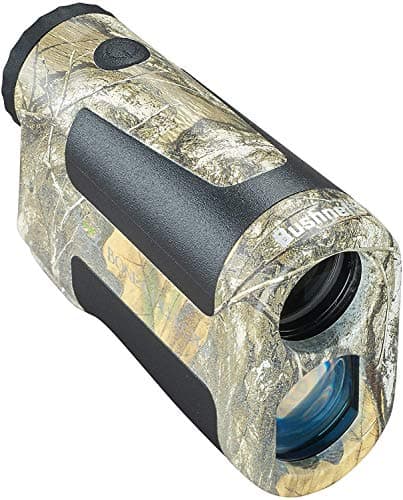
| Rank 1 | Bushnell Bone Collector 850 | ARC - displays true horizontal distance | 8.8 | $169.95Amazon |
| Rank 2 | 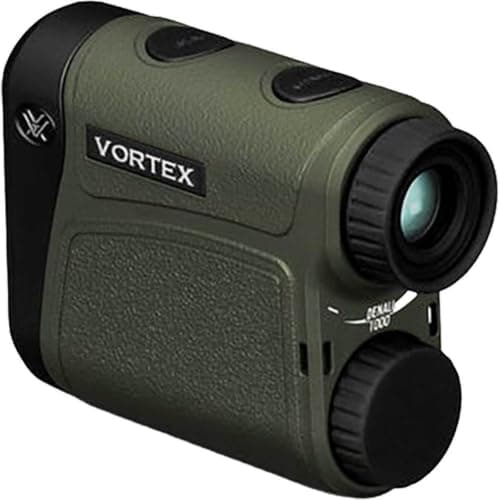 Vortex Denali 1000 | Horizontal Component Distance - slope-angle compensated | 8.0 | $149.99Amazon |
| Rank 3 | 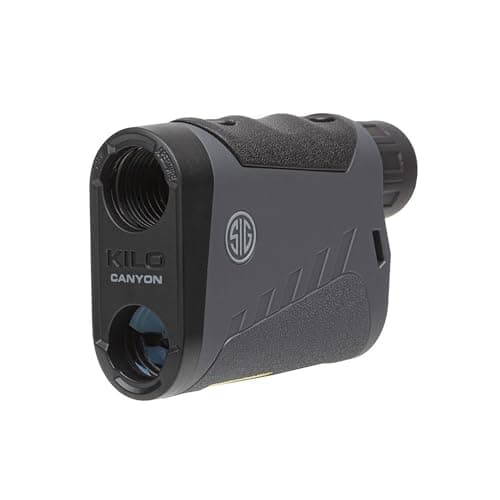 SIG SAUER Kilo Canyon 6x22 | Selectable - line-of-sight or angle-modified range | 8.4 | $199.99Amazon |
| Rank 4 | 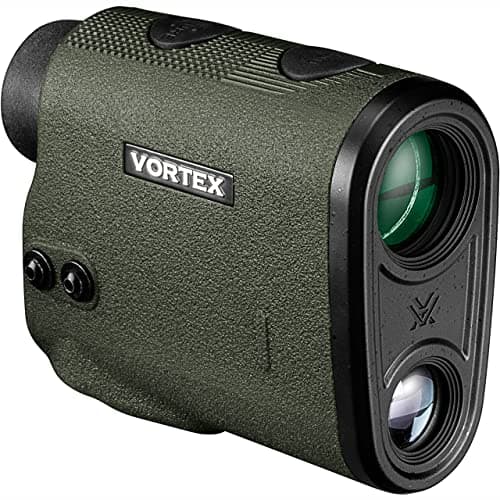 Vortex Diamondback HD 2000 | HCD mode, switchable with line-of-sight | 8.4 | $299.00Amazon |
| Rank 5 | 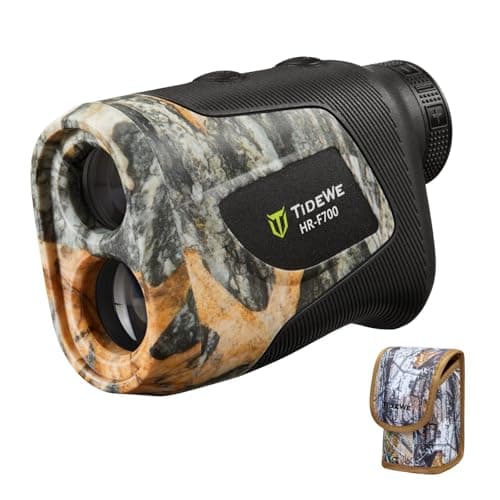 TIDEWE 700-Yard Rechargeable | Horizontal distance mode, plus vertical and straight-line | 8.2 | $59.99Amazon |
For crossbow hunting, buy a handheld laser rangefinder with angle compensation - ARC on a Bushnell, HCD on a Vortex, angle-modified on a Sig. It converts a steep treestand reading into the true horizontal distance your scope's aim points are calibrated against. Maximum range is the specification that matters least.
A crossbow scope with calibrated aim points at 20, 30, 40 and 50 yards is an extremely precise instrument built on one assumption: that you know which of those marks to use. Across a cut cornfield at last light, you usually do not. Being ten yards wrong is the difference between a clean kill and a long night of tracking, and no amount of speed, draw weight or glass fixes it.
That makes a rangefinder the highest-value optic a crossbow hunter owns per dollar. The bow costs four figures. The scope costs three. The thing that tells the scope what to do costs about sixty.
In detail
Five rangefinders, ranked for a bolt
Bushnell Bone Collector 850
ARC angle compensation, a four-times-per-second scan mode and a single button, in a 6x24 body built for dawn and dusk. The figure that matters is the one almost nobody publishes: 350 yards to a deer, as distinct from 850 to a reflective target. That honesty about what the laser will actually do against hide and hair is why it leads the page.
| Published spec | Value |
|---|---|
| Angle compensation | ARC - displays true horizontal distance |
| Magnification | 6x |
| Objective | 24 mm |
| Max range, reflective | 850 yd |
| Max range, tree | 500 yd |
| Max range, deer | 350 yd |
| Scan rate | 4 per second |
| Display | Reticle display with distance, incline angle and battery |
| Units | Yards or meters |
| Glass | Fully multi-coated, Ultra Wide Band coatings |
| Controls | One-button operation, fast-focus eyepiece |
What it does well
- Publishes 350 yd to deer, not just an 850 yd reflective headline
- ARC gives true horizontal distance for a steep treestand shot
- Scan updates 4x per second, so you can sweep a field edge
- One button - operable in gloves without looking at it
- Shows the incline angle as well as the range
Where it falls short
Our rubric
- 9.0
- 9.6
- 8.4
- 7.2
- 9.0
Vortex Denali 1000
Horizontal Component Distance plus a line-of-sight readout, waterproof and shockproof, under the Vortex warranty. It is the cheapest way here to get the one feature that matters from a treestand. The catch is disclosure: beyond the model name, this listing publishes no yardage, magnification or objective figure at all.
| Published spec | Value |
|---|---|
| Angle compensation | Horizontal Component Distance - slope-angle compensated |
| Line of sight | Yes, displays actual line-of-sight range |
| Magnification | |
| Objective | |
| Max range, reflective | |
| Max range, game | |
| Glass | Fully multi-coated, anti-reflective on all air-to-glass surfaces |
| Weatherproofing | Waterproof, shockproof |
What it does well
- HCD and line-of-sight modes, which is the whole job for a crossbow hunter
- Vortex builds it and Vortex warranties it
- Waterproof and shockproof, stated on the listing
- The least expensive branded angle-compensating unit on this page
Where it falls short
Our rubric
- 9.0
- 4.6
- 7.0
- 7.0
- 9.2
SIG SAUER Kilo Canyon 6x22
Four range updates per second in HyperScan, RangeLock to hold the last reading on a distant target, line-of-sight or angle-modified output, and tenth-of-a-yard resolution. The eight onboard ballistic groups are aimed at rifle shooters and do nothing for a bolt, but the ranging engine underneath is the quickest figure on this page.
| Published spec | Value |
|---|---|
| Angle compensation | Selectable - line-of-sight or angle-modified range |
| Magnification | 6x |
| Objective | 22 mm |
| Max range | 3,000 yd |
| Scan rate | 4 per second (HyperScan) |
| Resolution | 0.1 yd/m |
| Display | Red LED illuminated |
| Hold feature | RangeLock - reports the last range result |
| Ballistics | 8 onboard ballistic groups, MOA or MRAD |
| Glass | SpectraCoat anti-reflection coatings |
What it does well
- Four ranges per second and a published 0.1 yd resolution
- RangeLock stops a long reading from dropping out
- Illuminated red display, readable at last light
- Angle-modified output is selectable rather than always-on
Where it falls short
Our rubric
- 8.6
- 8.0
- 9.6
- 9.0
- 7.6
Vortex Diamondback HD 2000
HD glass, XR coatings and a red OLED display that stays legible when the woods go gray, with HCD and line-of-sight ranging modes and a published 1,400 yards on game. It is the glass pick here. It is also several times the price of what a crossbow hunter strictly needs.
| Published spec | Value |
|---|---|
| Angle compensation | HCD mode, switchable with line-of-sight |
| Magnification | 7x |
| Objective | 24 mm |
| Max range, reflective | 2,000 yd |
| Max range, game | 1,400 yd |
| Display | Red OLED |
| Target modes | Normal and Last |
| Glass | HD optical system, XR coatings, ArmorTek lens protection |
| Mounting | Tripod adaptable |
| Warranty | Vortex VIP unlimited lifetime, fully transferable |
What it does well
- Red OLED display, the clearest low-light readout here
- Publishes 1,400 yd on game as well as the reflective figure
- Both HCD and line-of-sight ranging, plus Normal and Last target modes
- Tripod adaptable, which matters if you glass before you hunt
- Transferable lifetime warranty
Where it falls short
Our rubric
- 9.0
- 8.8
- 8.0
- 9.6
- 6.8
TIDEWE 700-Yard Rechargeable
Three to 700 yards, plus or minus one yard, in 0.46 seconds, at 5.67 ounces on a rechargeable cell good for a published 21,000 measurements. It reads horizontal as well as straight-line distance. The 3-yard minimum is the figure no branded unit on this page prints, and it is the one that tells you the thing will read the near edge of a food plot.
| Published spec | Value |
|---|---|
| Angle compensation | Horizontal distance mode, plus vertical and straight-line |
| Magnification | 6x |
| Range | 3-700 yd |
| Accuracy | +/-1 yd |
| Reading time | 0.46 s |
| Weight | 5.67 oz |
| Size | 4.13 x 2.61 x 1.49 in |
| Battery | Rechargeable Li-ion, up to 21,000 measurements |
| Modes | Distance, angle, speed, continuous scan |
| Weatherproofing | Water-resistant |
| Included | Lanyard, storage bag |
What it does well
- Publishes a 3 yd minimum and a +/-1 yd accuracy figure, which the branded units do not
- 5.67 oz - the lightest unit here, and it has a published weight
- Rechargeable, so no spare lithium cell in the pack
- Cheapest on the page by a wide margin
Where it falls short
Our rubric
- 8.0
- 9.2
- 8.8
- 6.0
- 9.6
How we picked
Rangefinders are sold to rifle shooters and golfers, so the headline specification on every box is the one a crossbow hunter should ignore hardest. Nobody shoots a bolt at 2,000 yards. We ranked on what a 20-to-50-yard shot actually needs, in this order. See our methodology for how the rubric works across the site.
1. Angle compensation, which is non-negotiable
From 20 feet up a tree, the straight-line distance to a deer is longer than the distance the bolt has to travel across the ground. An arrow is pulled down by gravity over the horizontal part of that journey, not the diagonal, so a line-of-sight reading tells you to hold for more drop than you actually get - and you shoot high. The steeper the angle and the closer the animal, the bigger the error.
Every maker has its own name for the fix. Bushnell calls it ARC and prints true horizontal distance. Vortex calls it HCD, Horizontal Component Distance. Sig lets you select angle-modified output. TIDEWE simply offers a horizontal-distance mode alongside the straight-line one. They are the same idea and all four are on this page. A rangefinder without it is a rangefinder for a flat range, not a tree.
2. The minimum range, not the maximum
This is the figure the industry hides. A crossbow hunter needs a reading at 15 yards far more often than at 500, and some lasers will not report anything inside about 5 to 10 yards. Only one unit on this page publishes a minimum at all - the TIDEWE, at 3 yd - and that single piece of disclosure is most of why a sixty-dollar rangefinder sits on the same list as a three-hundred-dollar one.
3. Yards to deer, not yards to a reflective target
The big number on the box is measured against a flat, reflective surface. Hide and hair reflect far less. Bushnell is the only maker here that publishes all three figures side by side on its own listing: 850 yd reflective, 500 yd to a tree, 350 yd to a deer. Vortex publishes 2,000 yd reflective and 1,400 yd on game for the Diamondback HD. The rest publish the headline only. That gap in disclosure moved the rankings more than any feature did.
4. Legibility when the light goes
Legal shooting light at both ends of the day is when most crossbow shots happen. A black LCD readout on a dark deer in a dark wood is genuinely hard to read; an illuminated red OLED or LED display is not. This is the one place where paying more buys something a crossbow hunter uses on every hunt.
5. One hand, few buttons, no noise
You are holding a cocked crossbow. Whatever the rangefinder does, it has to do with the other hand, without looking away, and without a beep. A one-button unit with a scan mode beats a menu-driven one with eight ballistic groups, and a scan rate of four readings per second lets you sweep the field edge and get numbers for the whole shooting lane before anything walks into it.
The comparison
| Model | Angle mode | Published range to game | Min range | Display |
|---|---|---|---|---|
| Bushnell Bone Collector 850 | ARC | 350 yd to deer | Reticle LCD with incline angle | |
| Vortex Denali 1000 | HCD | Not published | ||
| Sig Kilo Canyon 6x22 | Selectable, angle-modified | Red LED illuminated | ||
| Vortex Diamondback HD 2000 | HCD or line of sight | 1,400 yd on game | Red OLED | |
| TIDEWE 700-Yard | Horizontal distance mode | 3 yd | LCD |
The picks in detail
Bushnell Bone Collector 850 - the one we would buy
ARC angle compensation, 4 readings per second in scan mode, a display that shows the incline angle as well as the range, and one button to work it. A 6x24 body, fully multi-coated with Bushnell's Ultra Wide Band coatings and a fast-focus eyepiece, built around dawn and dusk.
It wins on honesty. Bushnell prints 850 yd reflective, 500 yd to a tree and 350 yd to a deer on the same listing. That third number is the only one a hunter can plan around, and almost nobody else publishes it. The cons: no minimum-range figure, an LCD rather than an illuminated display, and no bow-ballistics features - it gives you a distance and leaves the holdover to your scope, which is exactly what we want it to do.
Vortex Denali 1000 - the value pick, with a caveat
HCD and line-of-sight modes, waterproof, shockproof, fully multi-coated, and backed by Vortex. It is the cheapest branded way to get angle compensation, and for a hunter who shoots inside 40 yards from a stand that is the whole requirement.
The cons are about disclosure, not hardware. Beyond the model name, this listing publishes no yardage, no magnification and no objective figure. "1000" is a name on a box; we are not going to print it in a specification table as though Vortex had stated a range. There is also no scan-rate figure and no minimum range. You are buying the brand, the warranty and HCD - which, to be fair, is most of what matters.
Sig Kilo Canyon 6x22 - the fastest reading
4 ranges per second in HyperScan, a published 0.1 yd resolution, RangeLock to hold the last result on a target the laser keeps losing, and a red LED display that stays readable at last light. Angle-modified output is selectable rather than forced, which some shooters prefer.
The cons: the 3,000 yd capability is money spent on something no bolt will ever do, the eight onboard ballistic groups are rifle features with no arrow profile among them, and there is no published figure for range to game or minimum range. It is also the deepest menu here - worth half an hour on the sofa before opening day rather than figuring it out in a stand.
Vortex Diamondback HD 2000 - the low-light pick
HD glass, XR coatings, ArmorTek lens protection and a red OLED display, with both HCD and line-of-sight ranging and both Normal and Last target modes. 7x magnification, 1,400 yd on game published alongside the 2,000 yd reflective figure, tripod adaptable, and the transferable Vortex VIP lifetime warranty.
If your shot window is the last eight minutes of legal light, this is the display you want. The cons: it is the most expensive unit here by a distance, 7x is a lot of magnification to hold steady one-handed off a stand rail, there is no published minimum range, and none of the extra capability does anything for a 35-yard shot that the Bone Collector does not already do.
TIDEWE 700-Yard Rechargeable - the budget pick that publishes the most
3 to 700 yd, +/-1 yd, a 0.46 s reading, 5.67 oz, and a rechargeable cell rated for 21,000 measurements. Horizontal, vertical and straight-line distance modes, plus speed and continuous scan.
Read that first figure again. A published 3 yd minimum and a published accuracy tolerance are two pieces of information no branded unit on this page gives you, and they are directly relevant to a hunter whose longest ethical shot is inside 50 yards. The cons: water-resistant rather than waterproof, which matters in a November rain; an LCD readout, so it is the hardest to read at last light; no lifetime warranty; and an unbranded maker standing behind it.
Handheld rangefinder or rangefinding scope?
There is a second way to solve this problem: a scope with the laser built in, which ranges and then shows a corrected aim point in the same view. We cover those separately on the best rangefinding crossbow scopes. Two things to know before you go down that road.
- They cost four figures. A handheld plus a good speed-dialed scope does most of the same job for a fraction of it.
- They are not legal for hunting everywhere. Several states regulate or prohibit electronic sighting devices, and Garmin says so on its own product listing. A handheld rangefinder is a separate device from your sight and is treated differently - but check your own wildlife agency, not a forum. Start at crossbow hunting regulations.
The honest summary: a rangefinding scope is faster at the moment of the shot, because you do not put a second object down to raise the bow. A handheld is a tenth of the price and, used the way experienced hunters use it, gives you the same information before the animal ever appears.
How to actually use one from a stand or blind
Ranging a setup before anything shows up
- 01
Range your landmarks on arrival
The moment you are settled, range every feature in your shooting lanes - the field edge, the corner post, the fallen log, the near trunk of the big oak. Say the numbers out loud or write them on tape. You now have a yardage map and will not have to range the animal at all.
- 02
Use the horizontal mode, not line of sight
Switch to ARC, HCD or horizontal distance and leave it there. That is the figure your scope's aim points correspond to.
- 03
Scan the lane, do not point at the deer
A scan sweep across the ground where you expect the shot gives you a range band. Lifting a rangefinder at an alert animal 25 yards away is movement you cannot afford.
- 04
Round to your nearest aim point, then decide
If the number falls between two marks, the question is whether you can hold confidently between them. If not, the answer is to wait, not to guess. See crossbow effective range.
- 05
Put it on a lanyard, inside your jacket
A rangefinder in a pack is a rangefinder you will not use. One on a lanyard under an outer layer stays warm, which helps the battery, and comes up one-handed.
What a rangefinder will not fix
It solves exactly one problem: not knowing the distance. It is worth being clear about the things it leaves untouched, because a correct range on a shot you should not take is still a shot you should not take.
- It does not extend your range. Knowing a deer is at 62 yards does not make 62 yards ethical with a crossbow. Crossbow effective range covers where the real limit sits and why.
- It does not correct a scope calibrated to the wrong speed. If your aim points assume a bolt speed your bow does not produce, every yardage is right and every shot is wrong. See crossbow speed rings explained.
- It does not steady your hold. The group you can shoot off a stand rail at 50 yards is the real constraint for most hunters - crossbow accuracy at 50 yards is an honest look at it.
- It does not fix a bolt and broadhead that fly differently. Field points and broadheads can land in different places from the same bow. Sighting in with broadheads is the fix, and crossbow bolt thread size explains why a point that matches your broadhead in weight and ferrule diameter is the first step.
Our pick
The Bushnell Bone Collector 850 is the rangefinder to buy for crossbow hunting. ARC angle compensation, a four-per-second scan, one button, and the only listing in this group that tells you how far it will read against a deer rather than a road sign. If the budget is tight, the TIDEWE publishes more usable figures than anything else at the price and has the only stated minimum range on the page. If your shots happen in the last few minutes of light, the Vortex Diamondback HD 2000 and its red OLED display are worth the premium.
Then make sure the rest of the aiming chain is right. Your scope has to be calibrated to your bow's actual speed - see best crossbow scopes and, if you are weighing a simple dot against a calibrated reticle, crossbow red dot vs scope. The full day-one list is on the crossbow accessories checklist.