Red dot vs scope
Crossbow red dot vs scope: which sight should you buy?
Most crossbow hunters should buy a calibrated scope. There are three real situations where a red dot is the better sight, and a lot of marketing that pretends there are more.
String & Stock earns a commission when you buy through our links, at no extra cost to you. Prices come from Amazon and change; the date beside every price is when we last verified it. Full disclosure.
Ranked
Quick picks
| # | Product | Magnification | Score | Price |
|---|---|---|---|---|
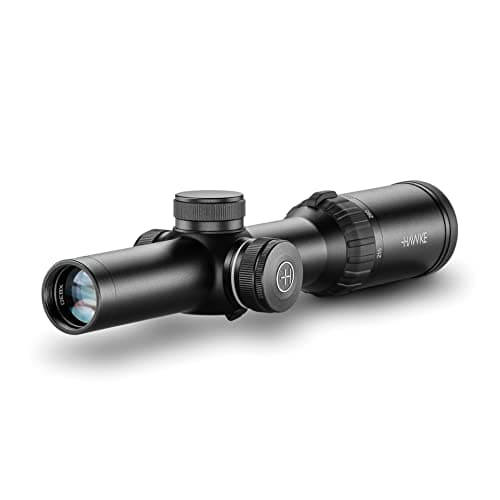
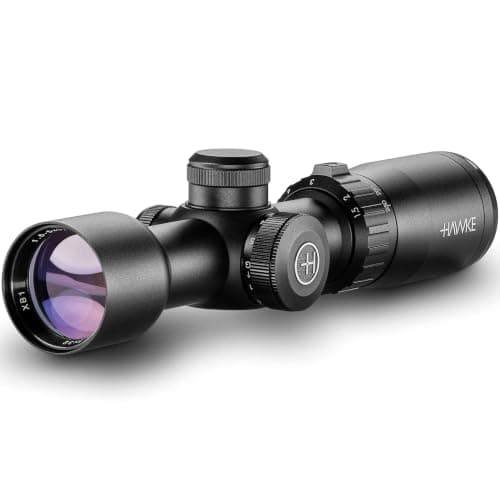
| Rank 1 | Hawke XB1 SR 1.5-5x32 | 1.5-5x | 8.7 | $159.99Amazon |
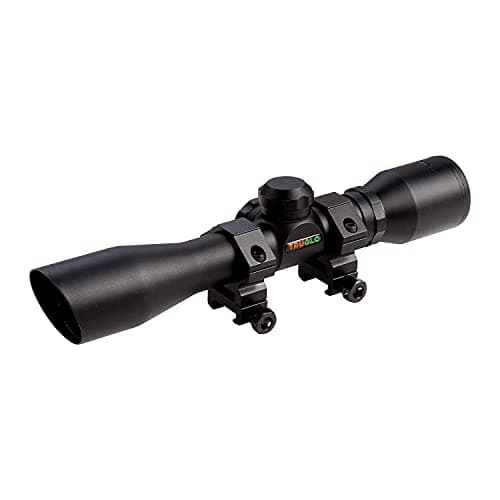
| Rank 2 | 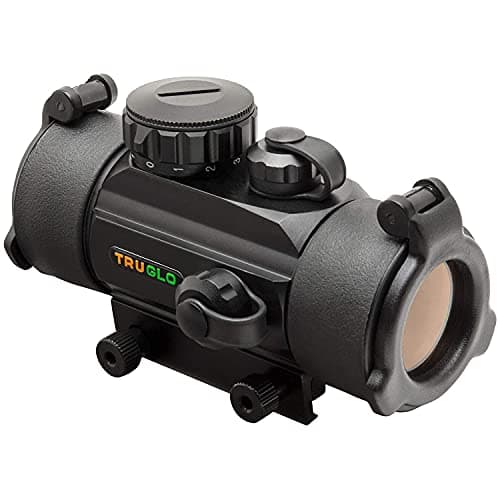 TruGlo Traditional Crossbow Tri-Dot 30mm | 1x | 7.6 | $58.49Amazon |
| Rank 3 |  TRUGLO Traditional Red-Dot 30mm | 1x | 7.0 | $56.02Amazon |
| Rank 4 | 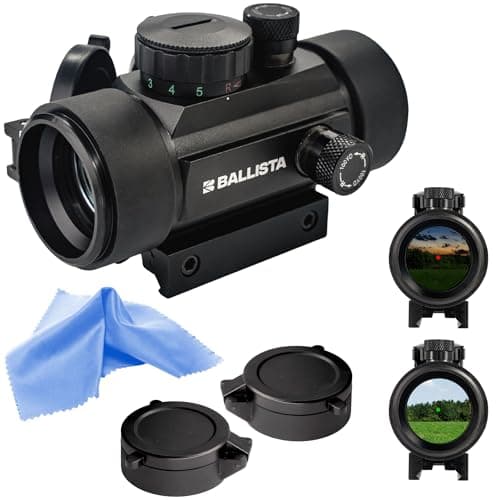 BALLISTA 1x30mm Reflex | 1x | 7.0 | $29.95Amazon |
| Rank 5 | 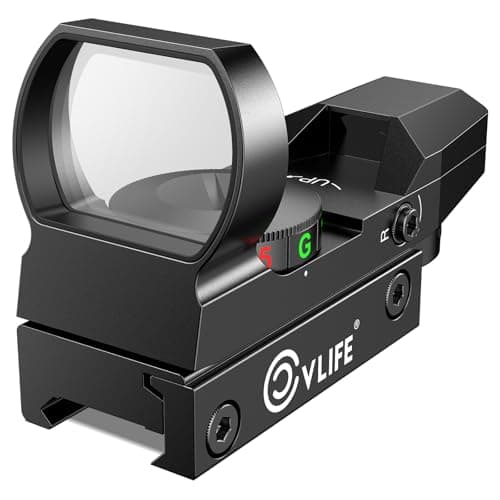 CVLIFE 1x22x33 Reflex | 1x | 6.8 | $23.99Amazon |
Buy a calibrated crossbow scope unless one of three things is true: your shots are all inside about 25 yards in thick cover, your bow is a low-speed recurve or youth model, or your bow has an 11 mm dovetail rail and a tiny budget. A red dot gives you one aim point; a crossbow scope gives you marks for 20, 30, 40 and 50 yards.
This is the most common upgrade question on a budget crossbow, because so many packages ship with a plain red dot in the box. The honest answer is not flattering to the dot - but it is not a blanket dismissal either, and the cases where a dot is right are real cases with real hunters in them.
In detail
One scope, and the dots worth owning
Hawke XB1 SR 1.5-5x32
Calibrated for 250 to 425 fps with 10-yard aim points running from a 20-yard zero all the way to 100, on 11-layer multi-coated glass. The no-fault lifetime warranty is the part worth noting: Hawke repairs or replaces it regardless of how it broke, which on a crossbow — a machine that recoils forward into its own scope — is not a trivial promise.
| Published spec | Value |
|---|---|
| Speed range | 250-425 fps |
| Magnification | 1.5-5x |
| Objective | 32 mm |
| Aim points | 20-100 yd in 10 yd steps |
| Reticle | XB1 SR, red and green illuminated |
| Glass | 11-layer fully multi-coated, System H2 |
| Warranty | No-fault lifetime repair or replace |
What it does well
- Aim points to 100 yards from a 20-yard zero
- Red and green illumination rather than one color
- No-fault lifetime warranty covers accidental damage
- Fast-focus eyebell and a high-torque zoom ring
Where it falls short
Our rubric
- 8.8
- 8.4
- 9.0
- 8.2
- 8.8
TruGlo Traditional Crossbow Tri-Dot 30mm
Three descending dots at 5, 3.5 and 2 MOA in a 30 mm tube with an integrated weaver mount, and the only sight in this group whose listing names a crossbow as the intended weapon. Three dots is not a calibrated reticle, but it is three references instead of one, which is the difference between guessing holdover and estimating it.
| Published spec | Value |
|---|---|
| Magnification | 1x |
| Objective | 30 mm |
| Aim points | Three descending dots - 5 MOA, 3.5 MOA, 2 MOA |
| Speed calibration | |
| Eye relief | Unlimited |
| Mount | Integrated weaver-style |
| Brightness | Adjustable rheostat |
| Size | 9 x 5.8 x 2.3 in |
| Weatherproofing | Shock, water and fog resistant |
| Stated weapon | Crossbow |
What it does well
- Three aim points rather than one, from descending dot diameters
- The listing names crossbows as the intended platform
- Integrated weaver mount - nothing else to buy
- Unlimited eye relief, which matters on a bow that fires toward its own optic
Where it falls short
Our rubric
- 6.4
- 8.8
- 7.6
- 8.0
- 8.6
TRUGLO Traditional Red-Dot 30mm
One 5 MOA dot in a CNC-machined aircraft-aluminum 1x30 housing with an integrated weaver mount and rheostat brightness. The listing names crossbows among its platforms alongside guns and airguns. Built well for the money, and completely honest about being one aim point.
| Published spec | Value |
|---|---|
| Magnification | 1x |
| Objective | 30 mm |
| Aim points | One - 5 MOA dot |
| Speed calibration | |
| Eye relief | Unlimited |
| Mount | Integrated weaver-style |
| Brightness | Rheostat controlled |
| Body | CNC-machined aircraft-grade aluminum |
| Weatherproofing | Waterproof, fog proof, shock resistant |
| Stated platforms | Guns, airguns and crossbows |
What it does well
- A CNC aircraft-aluminum body at a budget price
- Integrated weaver mount, no rings to source
- Rheostat brightness rather than fixed steps
- Waterproof and fog proof per the listing
Where it falls short
Our rubric
- 4.8
- 8.6
- 7.8
- 8.2
- 8.8
BALLISTA 1x30mm Reflex
A reversible mount that fits both 20 mm Picatinny/Weaver and 11 mm dovetail rails, which is the reason to look at it: a good many budget and recurve crossbows ship with the narrow dovetail and most sights will not sit on one. A 57-foot field of view at 100 yards, red or green, battery included.
| Published spec | Value |
|---|---|
| Magnification | 1x |
| Objective | 30 mm |
| Aim points | One dot, red or green |
| Speed calibration | |
| Mount | Reversible - 20 mm Picatinny/Weaver and 11 mm dovetail |
| Field of view | 57 ft at 100 yd |
| Brightness levels | 5 |
| Weight | 8 oz |
| Size | 4.48 x 2.12 x 2.7 in |
| Body | Aluminum alloy, flip-open lens caps |
| Battery | CR2032 included |
What it does well
- Fits an 11 mm dovetail as well as a 20 mm rail - the only sight here that does
- Publishes its field of view, weight and dimensions
- Red or green with five brightness levels
- Battery and flip caps in the box
Where it falls short
Our rubric
- 4.6
- 9.4
- 7.4
- 6.6
- 8.8
CVLIFE 1x22x33 Reflex
Four selectable reticles - dot, circle-dot, crosshair-dot and crosshair-circle-dot - in red or green on a 33 mm tubeless reflex lens, on a standard 20 mm Picatinny base. The crosshair options give you a horizontal reference the plain dots do not, and it costs less than a dozen bolts.
| Published spec | Value |
|---|---|
| Magnification | 1x |
| Lens aperture | 33 mm |
| Aim points | Four selectable reticles - dot, circle/dot, crosshair/dot, crosshair/circle/dot |
| Speed calibration | |
| Illumination | Red and green, 5 brightness levels each |
| Mount | 20 mm Picatinny base, co-witness height |
| Eye relief | Unlimited, parallax corrected |
| Body | Aluminum alloy, tubeless open reflex |
| Included | Allen wrench |
What it does well
- Four reticles, including crosshairs that give a horizontal reference
- Red and green, five levels each
- An open reflex design is lighter and less obstructive than a tube
- Cheapest optic on this site
Where it falls short
Our rubric
- 5.0
- 7.6
- 7.8
- 6.0
- 9.4
The actual difference: one reference, or four
A red dot projects a single illuminated point. You zero it at one distance, and at every other distance you are holding over or under by feel. A crossbow scope's reticle carries calibrated marks at fixed yardages, and the spacing between them is matched to a bolt speed - which is why crossbow scopes have a speed dial and rifle scopes do not. Our crossbow scope reticles explained page covers how the stacked marks are built, and crossbow speed rings explained covers the dial that matches them to your bow.
That is the whole comparison. Everything else - glass, illumination, eye relief, mounting - is a detail by comparison.
| Red dot / reflex | Calibrated crossbow scope | |
|---|---|---|
| Aim points | One (three on the TruGlo Tri-Dot) | Typically four to nine, at fixed yardages |
| Matched to bolt speed | No | Yes, via a speed dial or a fixed calibration |
| Magnification | 1x | 1.5-5x, 2-7x, 3-12x and fixed 4x are all common |
| Target identification at 40 yd | Your eyes only | Magnified |
| Field of view | Very wide | Narrower, and narrower still at high power |
| Speed of acquisition | Fastest | Slower, especially at high magnification |
| Eye relief | Unlimited on every unit here | Published figure, 3-4 in typical |
| Needs a yardage estimate | Yes, and you get no help with it | Yes, and the reticle tells you what to do with it |
| Typical price bracket | The cheapest optic on this site | From about the price of two dozen bolts upward |
Where a red dot genuinely wins
1. Thick cover, inside 25 yards
If every shot you take is in a river bottom or a bedded-thicket setup where you can see 25 yards on a good day, calibrated marks for 40 and 50 yards are decoration. What matters is a very wide field of view, a bright point you can find instantly, and an optic that does not vignette when your head is not perfectly placed. A dot wins all three outright.
2. Low-speed bows: recurves, youth and entry packages
A calibrated reticle is only correct if the bolt speed it was built around matches your bow. Scopes in this category are commonly calibrated for 300 to 460 fps, and a recurve crossbow at 245 fps or a youth bow in the 280 fps range falls off the bottom of that span - at which point the extra marks are wrong rather than merely unused. A single dot zeroed at 20 yards is honest about what it is. Compound vs recurve crossbow and best crossbow for youth cover the bows this applies to.
3. An 11 mm dovetail rail, or a genuinely tiny budget
Plenty of budget and recurve crossbows ship with a narrow 11 mm dovetail rather than a 20 mm Picatinny/Weaver rail, and most crossbow scopes assume the wide one. A reflex sight with a reversible mount solves it for less than the cost of a rail adapter plus rings. And if the choice is a twenty-five-dollar dot or shooting a bare rail this season, buy the dot.
Where a red dot costs you the shot
Three situations, and they describe the majority of crossbow hunting in the United States.
- A field edge or food plot. The moment your shooting lane runs past 30 yards, a single aim point becomes a guess that gets worse with distance. The reason scope makers print marks every ten yards is that the trajectory falls steeply enough to need them - see crossbow speed and fps.
- Any shot where you cannot identify the target clearly. 1x means your naked eye. At 40 yards in low light, magnification is not a luxury; it is how you confirm what you are about to shoot.
- A fast bow. A 400 fps class crossbow is bought for flatter trajectory and more reach, and then a one-point sight throws away the reach you paid for. If you own a bow from the fastest crossbows, put a calibrated scope on it.
The dots worth owning
TruGlo Traditional Crossbow Tri-Dot 30mm - the one to buy
Three descending dots at 5, 3.5 and 2 MOA in a 30 mm tube, unlimited eye relief, rheostat brightness, an integrated weaver mount, and the only listing in this group that names a crossbow as the intended weapon. Three references is not a calibrated reticle, but it turns pure feel into structured estimation, and that is a real improvement.
The cons: the dot spacing is not calibrated to any bolt speed, so it is not a yardage scale and should not be used as one; 9 in of length is a lot on a compact bow; and there is no magnification at all.
TRUGLO Traditional Red-Dot 30mm - a single dot, built properly
A CNC-machined aircraft-aluminum 1x30 housing, waterproof and fog proof, with a rheostat and an integrated weaver mount. The listing names crossbows among its platforms. For a close-cover bow this is a well-made, inexpensive sight. The cons: one 5 MOA aim point, no calibration, and weaver mounting only.
BALLISTA 1x30mm Reflex - the one for a dovetail rail
The reversible mount fits both a 20 mm Picatinny/Weaver and an 11 mm dovetail, which is the entire reason it is here: it is the only sight in this group that will go on the narrow rail many budget and recurve bows use. It publishes its field of view (57 ft at 100 yd), weight (8 oz) and dimensions, which most sights at the price do not.
The cons: 8 oz is heavy for a reflex sight, there is no waterproof or fog-proof rating on the listing, and stock on it was thin at our last check.
CVLIFE 1x22x33 Reflex - the cheapest honest option
Four selectable reticles, including two with crosshairs that give you a horizontal reference a plain dot cannot, in red or green at five brightness levels on a 20 mm Picatinny base. It costs less than a dozen bolts. The cons: no calibration, no magnification, 20 mm rails only, no waterproof rating, and an open reflex lens that collects rain a sealed tube does not.
The scope to buy instead
Hawke XB1 SR 1.5-5x32
The counter-argument in one product. A speed-selector ring, 1.5-5x magnification, a 32 mm objective and the SR reticle's stacked aim points - so the marks are matched to your bow's actual bolt speed rather than to an assumption. It is the scope we point budget-bow owners at when they ask what single upgrade is worth the money.
If your bow is faster or your light is worse, the rest of the field is on best crossbow scopes, with the cheaper end broken out on crossbow scopes under $200 and the low-light options on best low-light crossbow scopes. For a narrow blind, compact crossbow scopes.
Two practical arguments nobody makes for the dot
Both camps oversell themselves, so here are two genuine advantages of a red dot that the scope side tends to skip past, and the honest limit on each.
A dot works with both eyes open
A 1x sight with unlimited eye relief does not force you to close an eye or find a precise head position, which means you keep your peripheral vision. In a ground blind with a second animal moving, or a turkey setup where the shot could come from either side, that is worth something real. The limit: it is only an advantage while the shot stays close enough that one aim point is still correct. Blind geometry is its own problem - see cocked width and ground blinds.
A dot has one failure mode and it is obvious
A dead battery means no dot, which you notice the moment you switch it on at the stand, and a CR2032 costs almost nothing to carry spare. A scope has no battery at all unless its reticle is illuminated - but a scope has a calibration that can be quietly wrong, which is a worse failure because nothing tells you. If your scope's speed ring is set for a bolt speed your bow does not make, every shot past your zero is off and the optic looks fine. The limit on the dot: you still have no holdover when the battery is fine.
That second point is the real reason we push people toward scopes rather than away from them: the scope's weakness is fixable in five minutes with the right speed setting and a chronograph figure, and crossbow speed and fps covers where to get that number. The dot's weakness is permanent.
Mounting: check your rail before you buy anything
This is where a lot of money gets wasted, and it takes thirty seconds to avoid.
- Measure the rail. A 20 mm Picatinny or Weaver rail is the common one. An 11 mm dovetail is narrower and is what many budget and recurve bows use. A sight for one will not sit on the other without an adapter.
- Check whether rings are included. The TruGlo sights here have integrated weaver mounts; the reflex sights have their own bases. Tube scopes usually need rings, and whether they are in the box changes the real price.
- Mind the eye relief. A crossbow fires forward into its own optic, and a scope mounted too far back puts the ocular where your eyebrow is. Every dot here has unlimited eye relief, which is a genuine advantage of the type.
- Then mount it properly. Torque, level and position all decide whether your zero holds - the procedure is on the crossbow scope mounting guide, and zeroing is on how to sight in a crossbow.
Our verdict
For most crossbow hunters in most places, a calibrated scope is the right sight and a red dot is a downgrade dressed up as simplicity. The three exceptions are genuine: thick close cover, a low-speed bow whose velocity falls below what any speed dial covers, and a dovetail rail with a tight budget. If you are in one of those, the TruGlo Traditional Crossbow Tri-Dot is the dot we would own, because three descending dots beat one.
And whichever sight you mount, the aim point is only half the problem. The other half is knowing the distance, which is what the best rangefinders for crossbow hunting is about - a sixty-dollar purchase that improves a red dot more than a three-hundred-dollar scope does.