Best low light
The best low-light crossbow scopes
Deer move at the edges of legal light. Four published specifications decide whether you can see them, and brightness control matters as much as glass.
String & Stock earns a commission when you buy through our links, at no extra cost to you. Prices come from Amazon and change; the date beside every price is when we last verified it. Full disclosure.
Ranked
Quick picks
| # | Product | Objective | Score | Price |
|---|---|---|---|---|
| Rank 1 | TenPoint RangeMaster 100 | 36 mm | 8.8 | $299.99Amazon |
| Rank 2 | 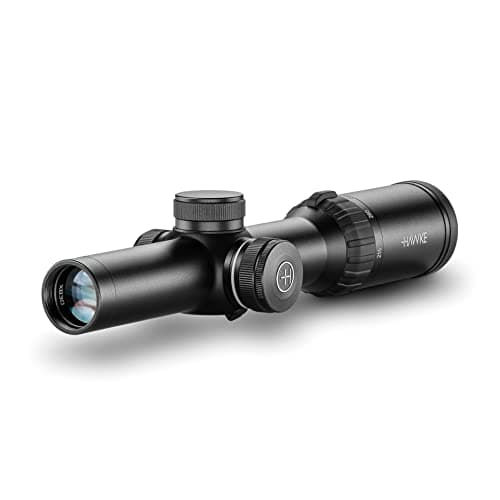 Hawke XB30 Pro SR 1-5x24 | 24 mm | 8.9 | $173.98Amazon |
| Rank 3 | 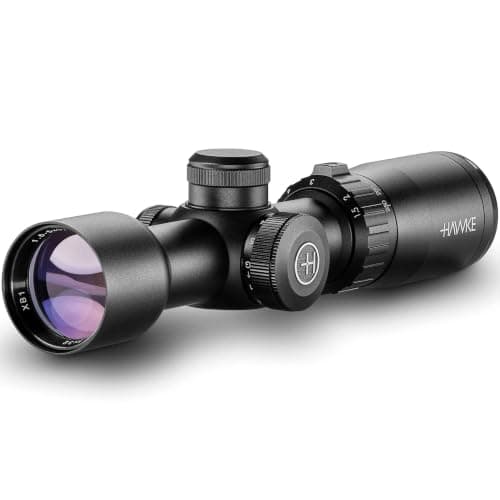 Hawke XB1 SR 1.5-5x32 | 32 mm | 8.7 | $159.99Amazon |
| Rank 4 | 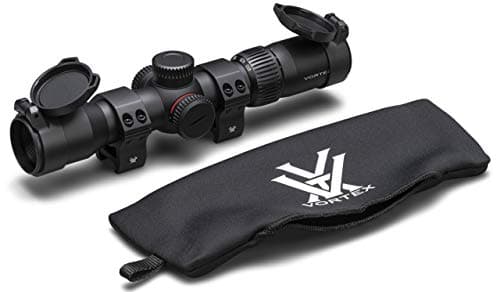 Vortex Crossfire II 2-7x32 Crossbow Kit | 32 mm | 8.6 | $199.00Amazon |
| Rank 5 | 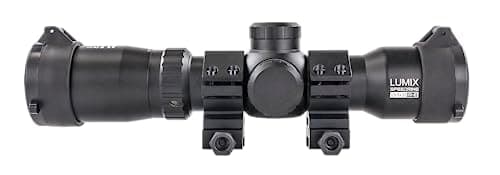 Killer Instinct Lumix Speedring 1.5-5x32 | 32 mm | 8.2 | $94.99Amazon |
Four published specifications decide low-light performance: objective diameter (bigger gathers more light), tube diameter (30 mm passes more than 1 inch), coating layers (more is better), and illumination control — where stepless adjustment beats fixed steps, because the lowest fixed step is often still too bright at true last light.
Deer move at dawn and dusk, which is exactly when a scope is working hardest. And the counter-intuitive part: the most common low-light failure is not glass that is too dark. It is a reticle that is too bright, blooming over the animal you are trying to aim at.
In detail
Five scopes for the edges of the day
TenPoint RangeMaster 100
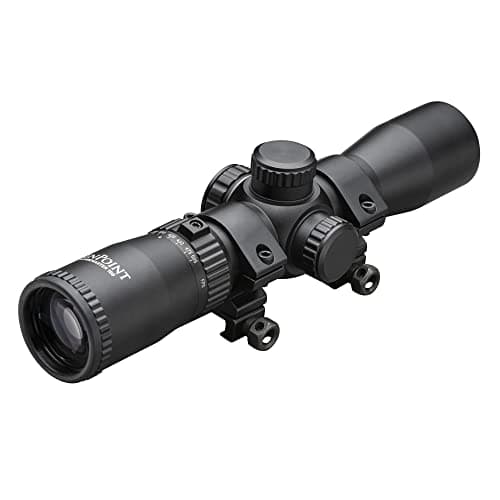
A 2-7x36 variable that accommodates 380 to 505 fps — the only scope here whose speed range starts where most others stop. Nine illuminated aim references on an etched-glass reticle: dots at 20, 30 and 40, crosshairs at 50, 60 and 70. If you bought a 430 or 470 fps bow, most crossbow scopes cannot be dialed for it. This one can.
| Published spec | Value |
|---|---|
| Speed range | 380-505 fps |
| Magnification | 2-7x |
| Objective | 36 mm |
| Max calibrated range | 100 yd |
| Reticle | Etched glass, 3 illuminated dots at 20/30/40 yd, 3 crosshairs at 50/60/70 yd |
| Weatherproofing | Water and fog proof |
| Zero procedure | Sight at 20 yd, micro-tune at 50 yd, zeroed at 100 |
What it does well
- 380-505 fps is the only range here that covers a 470 fps bow
- 7x at the top end is real magnification for a 100-yard hold
- Etched-glass reticle stays clean in the field of view
- 36 mm objective gathers more light than the 24 mm competition
Where it falls short
Our rubric
- 9.0
- 9.0
- 9.2
- 9.0
- 7.4
Hawke XB30 Pro SR 1-5x24
A speed-selector power ring covering 215 to 450 fps, which is the broadest span any scope on this site publishes. Dial your bow's speed and the reticle's aim points line up with your trajectory. 16-layer multi-coated glass in a 30 mm mono-tube does the rest. If you own more than one bow, or expect to change bows, this is the scope that follows you.
| Published spec | Value |
|---|---|
| Speed range | 215-450 fps |
| Magnification | 1-5x |
| Objective | 24 mm |
| Tube | 30 mm |
| Reticle | Illuminated SR, stepless rheostat |
| Glass | 16-layer fully multi-coated |
| Weatherproofing | Nitrogen purged, waterproof, fog proof |
What it does well
- 215-450 fps covers every bow on this site, from the SAS recurve to the R470
- Stepless illumination rheostat rather than fixed brightness steps
- 30 mm mono-tube passes more light than a 1-inch body
- Metal screw-in lens covers rather than rubber flip caps
Where it falls short
Our rubric
- 9.8
- 8.8
- 8.6
- 8.6
- 8.4
Hawke XB1 SR 1.5-5x32
Calibrated for 250 to 425 fps with 10-yard aim points running from a 20-yard zero all the way to 100, on 11-layer multi-coated glass. The no-fault lifetime warranty is the part worth noting: Hawke repairs or replaces it regardless of how it broke, which on a crossbow — a machine that recoils forward into its own scope — is not a trivial promise.
| Published spec | Value |
|---|---|
| Speed range | 250-425 fps |
| Magnification | 1.5-5x |
| Objective | 32 mm |
| Aim points | 20-100 yd in 10 yd steps |
| Reticle | XB1 SR, red and green illuminated |
| Glass | 11-layer fully multi-coated, System H2 |
| Warranty | No-fault lifetime repair or replace |
What it does well
- Aim points to 100 yards from a 20-yard zero
- Red and green illumination rather than one color
- No-fault lifetime warranty covers accidental damage
- Fast-focus eyebell and a high-torque zoom ring
Where it falls short
Our rubric
- 8.8
- 8.4
- 9.0
- 8.2
- 8.8
Vortex Crossfire II 2-7x32 Crossbow Kit
An XBR-2 reticle built around a 40-yard zero with holdovers from 20 to 100 yards, dual red and green illumination, and the Vortex VIP warranty: unlimited, unconditional, lifetime, transferable. The kit includes 30 mm rings, flip caps and a neoprene cover, so there is nothing else to buy.
| Published spec | Value |
|---|---|
| Magnification | 2-7x |
| Objective | 32 mm |
| Reticle | XBR-2, dual red and green illumination |
| Zero | 40 yd |
| Holdover range | 20-100 yd |
| Included | 30 mm rings, flip caps, neoprene cover |
| Warranty | VIP unlimited lifetime, fully transferable |
What it does well
- The best warranty terms on this site, and transferable
- The kit includes rings and caps, so the price is the whole price
- A 40-yard zero puts the holdovers where crossbow shots actually happen
- O-ring sealed and nitrogen purged
Where it falls short
Our rubric
- 8.0
- 8.6
- 8.8
- 8.4
- 8.6
Killer Instinct Lumix Speedring 1.5-5x32
An adjustable speed gauge covering 270 to 450 fps, variable reticle brightness, and a metal chassis that is fog, water and shock proof, for less than a hundred dollars. For a budget bow that shipped with a fixed 4x32, this is the single cheapest upgrade that changes how the bow shoots past 40 yards.
| Published spec | Value |
|---|---|
| Speed range | 270-450 fps |
| Magnification | 1.5-5x |
| Objective | 32 mm |
| Reticle range | Up to 100 yd |
| Reticle | Adjustable brightness illuminated |
| Chassis | Metal, fog, water and shock proof |
| Lens covers | Spring-loaded flip |
What it does well
- 270-450 fps covers nearly every bow on this site
- Variable brightness, not a two-step switch
- Metal chassis at a sub-hundred-dollar price
- Cheapest real upgrade over a bundled fixed-power scope
Where it falls short
Our rubric
- 8.8
- 7.0
- 7.8
- 7.4
- 9.4
How we picked
Objective diameter, tube diameter and published coating detail, then illumination control. We have not conducted optical measurements and publish none of our own. See our methodology.
The four specifications, side by side
| Scope | Objective | Tube | Coatings | Illumination control |
|---|---|---|---|---|
| TenPoint RangeMaster 100 | 36 mm | Upgraded glass, water and fog proof | Illuminated, etched glass | |
| Hawke XB30 Pro | 24 mm | 30 mm | 16-layer fully multi-coated | Stepless rheostat, red |
| Hawke XB1 | 32 mm | 1 in | 11-layer fully multi-coated, System H2 | Red and green |
| Vortex Crossfire II | 32 mm | 30 mm | Proprietary anti-reflective on all surfaces | Dual red and green |
| Killer Instinct Lumix | 32 mm | Not stated | Adjustable brightness |
What each specification actually does
Objective diameter
The front lens. A larger objective gathers more light, and the difference between 24 mm and 36 mm is substantial at last light. The cost is bulk and height over the rail — a big objective needs taller rings, which raises your cheek weld.
Tube diameter
A 30 mm tube passes more light to your eye than a 1-inch tube and gives more internal adjustment travel. Both Hawke's XB30 Pro and the Vortex kit are 30 mm. The XB1's 1-inch body is the compromise that keeps it cheaper.
Coating layers
Every air-to-glass surface reflects some light away unless it is coated. Hawke publishes 16 layers on the XB30 Pro and 11 on the XB1 — the most specific coating claims here. Vortex describes multiple anti-reflective coatings on all air-to-glass surfaces without a layer count. Killer Instinct publishes nothing.
Illumination control, which is the one people get wrong
At true last light a bright red reticle blooms: the glow spreads and covers the spot you are aiming at. A stepless rheostat — the XB30 Pro's — lets you turn it down until it is barely visible, which is exactly where you want it. Five levels (the CVLIFE) is next best. A two-position switch is the worst.
What also matters and is rarely mentioned
- Reticle type. An etched-glass reticle stays clean and thin; a thick wire reticle covers more of a dark target. The RangeMaster's etched glass with nine references is the best implementation here.
- Exit pupil. Objective divided by magnification. At 5x a 24 mm objective gives a 4.8 mm exit pupil; at 2x a 32 mm objective gives 16 mm. Turn the magnification down at last light — it brightens the image for free.
- Eye relief. More eye relief means a bigger eye box, which matters when you are finding the scope quickly from an awkward position in poor light.
The free improvements
- Turn the magnification down. The single most effective low-light change, and it costs nothing.
- Turn the illumination down, not up. Start at the dimmest setting that you can see and leave it there.
- Clean the lenses. Smeared glass scatters light and halves your effective last light.
- Use the lens caps on the walk in. Dew and frost on the objective are worse than any specification.