Guides
Crossbow accuracy at 50 yards
One independently measured figure exists and it is impressive. Here it is, plus the five things between you and it.
String & Stock earns a commission when you buy through our links, at no extra cost to you. Prices come from Amazon and change; the date beside every price is when we last verified it. Full disclosure.
Ranked
Quick picks
| # | Product | Straightness | Score | Price |
|---|---|---|---|---|
| Rank 1 | TenPoint Turbo X | 8.8 | $1,399.99Amazon | |
| Rank 2 | 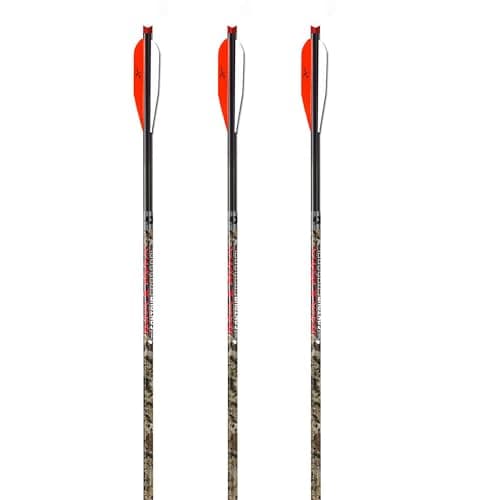 Carbon Express Maxima Contour Crossbolts | +/- .002 in | 9.0 | $29.97Amazon |
| Rank 3 | 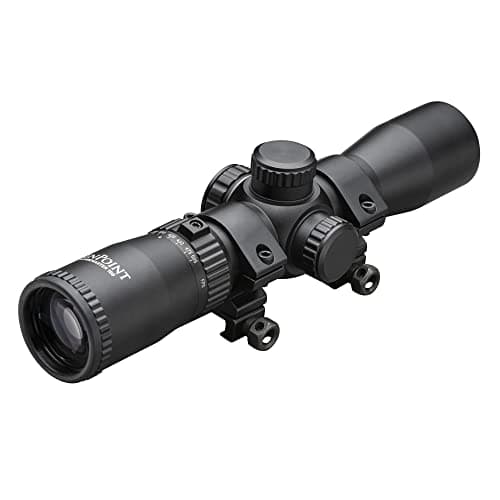 TenPoint RangeMaster 100 | 8.8 | $299.99Amazon | |
| Rank 4 | 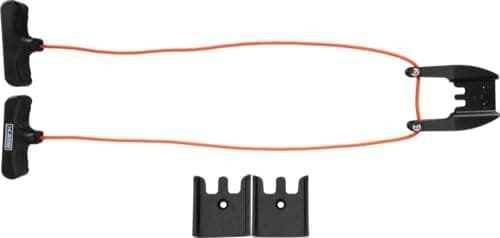 Bear Archery Aluminum Crossbow Cocking Sled | 7.6 | $39.95Amazon | |
| Rank 5 | 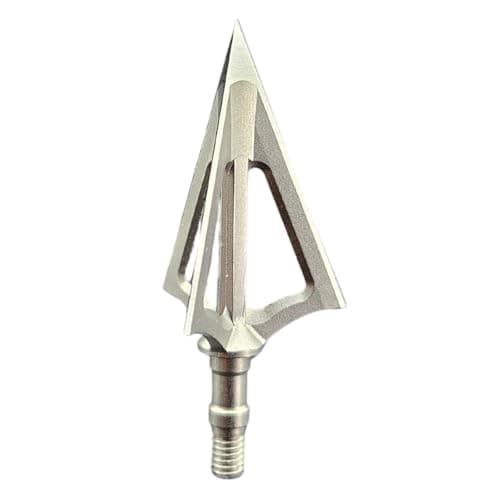 G5 Montec 100 gr | 8.9 | $44.95Amazon |
Independent Outdoor Life testing in 2025 recorded a 1.23-inch average group at 50 yards from a TenPoint Turbo X, across four three-shot groups. That is what a good crossbow and a machine-steady setup can do; what a hunter does from a blind chair in the cold is a different number.
We cite that figure because it is third-party and the test is described. Every other accuracy claim on this site is our reading of published specifications, and we will not invent group sizes we did not measure.
What 50 yards asks of a crossbow setup
A crossbow bolt at 50 yards has been in the air long enough for small errors to express themselves. Everything that is slightly wrong at 20 yards is visibly wrong at 50, which makes it the useful distance to diagnose a setup — and the distance TenPoint's own RangeMaster instructions use for micro-tuning before declaring a 100-yard zero.
In detail
The setup that makes 50 yards possible
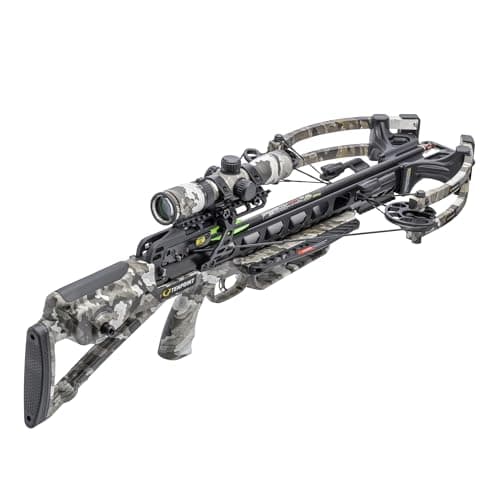
TenPoint Turbo X
415 fps, 6.9 pounds, and an ACUslide that cocks and de-cocks silently. This is the bow to look at when you want the easy-cocking, safe-unloading package but are not willing to drop to 400 fps to get it. Outdoor Life's independent 2025 testing recorded a 1.23-inch average group at 50 yards across four three-shot groups, which is a claim we can point at rather than make.
| Published spec | Value |
|---|---|
| Speed | 415 fps |
| Weight | 6.9 lb |
| Cocking aid | ACUslide, integrated |
| De-cocks | Yes, backwind and stop anywhere |
| Trigger | S2 zero-creep, with dry-fire prohibitor |
| Scope | 100-yard RangeMaster 100, illuminated |
| Independent accuracy | 1.23 in average group at 50 yd (Outdoor Life, 2025) |
What it does well
- Silent cocking and safe de-cocking from the same integrated system
- 6.9 pounds is light for a 415 fps bow
- A two-cable bow assembly is the simplest thing to maintain in TenPoint's line
- The accuracy claim is third-party, not the maker's own range day
Where it falls short
Our rubric
- 9.4
- 9.0
- 8.8
- 8.2
- 8.6
- 7.4
Carbon Express Maxima Contour Crossbolts
Dual Spine Weight Forward is not marketing: the shaft has two spines, a stiffer section forward of a softer one, and Carbon Express claims it cuts oscillation in half. The figures are the reason to buy — .002 inch straightness checked to a ten-thousandth, spine sorted to .0025 inch, weight sorted to 1 grain. Nothing else on this page publishes that level of sorting.
| Published spec | Value |
|---|---|
| Length | 20 in |
| Weight | 390 gr |
| Diameter | 0.348 in |
| Straightness | +/- .002 in |
| Spine tolerance | +/- .0025 in |
| Weight tolerance | +/- 1.0 gr |
| Vanes and nocks | 3 in Dragon Vanes; moon nocks installed, C-Nocks included |
What it does well
- Straightness, spine and weight tolerances all published and all tight
- Dual-spine construction claims 50 percent less oscillation
- Both moon nocks and flat C-Nocks in the pack, so it fits more bows
- Laser-matched sets rather than randomly boxed shafts
Where it falls short
Our rubric
- 9.4
- 8.2
- 9.6
- 8.6
- 8.0
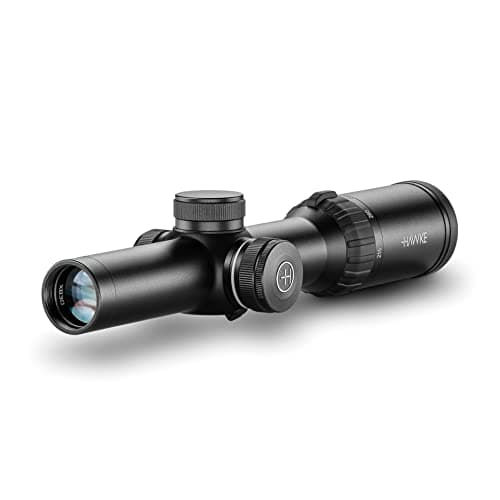
TenPoint RangeMaster 100
A 2-7x36 variable that accommodates 380 to 505 fps — the only scope here whose speed range starts where most others stop. Nine illuminated aim references on an etched-glass reticle: dots at 20, 30 and 40, crosshairs at 50, 60 and 70. If you bought a 430 or 470 fps bow, most crossbow scopes cannot be dialed for it. This one can.
| Published spec | Value |
|---|---|
| Speed range | 380-505 fps |
| Magnification | 2-7x |
| Objective | 36 mm |
| Max calibrated range | 100 yd |
| Reticle | Etched glass, 3 illuminated dots at 20/30/40 yd, 3 crosshairs at 50/60/70 yd |
| Weatherproofing | Water and fog proof |
| Zero procedure | Sight at 20 yd, micro-tune at 50 yd, zeroed at 100 |
What it does well
- 380-505 fps is the only range here that covers a 470 fps bow
- 7x at the top end is real magnification for a 100-yard hold
- Etched-glass reticle stays clean in the field of view
- 36 mm objective gathers more light than the 24 mm competition
Where it falls short
Our rubric
- 9.0
- 9.0
- 9.2
- 9.0
- 7.4
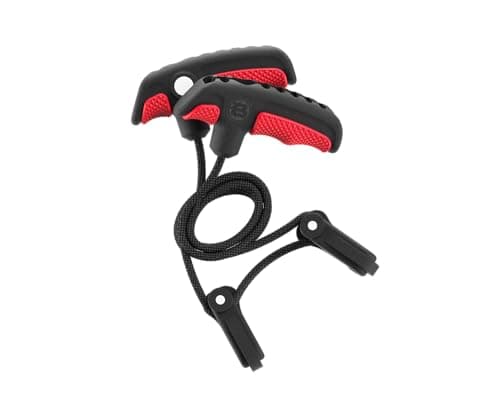
Bear Archery Aluminum Crossbow Cocking Sled
An aluminum sled with three interchangeable inserts for the BearX Impact, Constrictor, Intense and Saga. A sled pulls both sides of the string from one rigid frame rather than two loose hooks, which removes the most common source of an uneven cock — and an uneven cock is a flier.
| Published spec | Value |
|---|---|
| Type | Cocking sled, aluminum |
| Inserts | Three, included |
| Fits | BearX Impact, Constrictor, Intense, Saga |
| Material | Aluminum |
| Effort reduction | |
| De-cocks |
What it does well
- A rigid frame pulls both string sides evenly
- Aluminum rather than molded plastic
- Three inserts cover four Bear models
Where it falls short
Our rubric
- 6.8
- 6.0
- 8.2
- 7.4
- 8.4
G5 Montec 100 gr
One-piece metal-injection-molded steel with a 1 to 1-1/8 inch cut, cut-on-contact geometry and every head spin-tested before it ships. There are no blades to replace, no screws to loosen and no collar to fail. For a fast bow, a fixed one-piece head is the most reliable thing you can put on the front of a bolt.
| Published spec | Value |
|---|---|
| Weight | 100 gr (85 and 125 also offered) |
| Cutting diameter | 1 to 1-1/8 in |
| Blades | 3, fixed |
| Construction | One-piece MIM steel |
| Sharpening | Diamond cut, cut-on-contact |
| Quality control | 100% spin-tested |
| Per pack | 3 |
What it does well
- One piece: no blades, screws or collars to fail
- Every head spin-tested before it ships
- Resharpenable, so a head survives more than one animal
- Cut-on-contact geometry starts cutting immediately
Where it falls short
Our rubric
- 8.2
- 9.4
- 9.0
- 9.6
- 8.4
The five things that cost you accuracy at 50
1. An uneven cock
The most common and most overlooked. If one side of the string comes back further than the other, the bolt leaves at an angle — and a fraction of a degree is inches at 50 yards. A rope cocker pulled off-center creates this; a rigid sled or a crank largely removes it. See how to cock a crossbow.
2. The speed dial set wrong
Your 50-yard aim point is calculated for a bolt velocity. If the dial is set for 350 fps and your bow shoots 415, the mark is wrong and no amount of windage adjustment fixes it. Set the dial, zero at 20, verify at 40, micro-tune at 50. See speed rings explained.
3. Mismatched arrows
Three bolts of three different weights produce three trajectories. Straightness matters here too: at 50 yards the difference between .001 in and .004 in starts to show. Carbon Express publishes .002 in as a maximum with spine sorted to .0025 and weight to 1 gr. See best crossbow bolts.
4. Loose hardware
A scope ring that has worked loose over a season, a quiver bracket that rattles, a limb bolt that has backed off. Crossbow vibration does this. Check every fastener before each session.
5. You
Off-hand, a wobble that costs an inch at 20 yards costs two and a half at 50. From a solid rest — a blind window frame, a shooting stick, a bench — most of that disappears. Almost every hunting shot should be from a rest, and almost every practice shot at 50 should be too if you are diagnosing the bow rather than yourself.
A diagnostic sequence for 50 yards
- Confirm the speed dial is set to your bow's figure and the 20-yard zero is good.
- Shoot three identical bolts from a solid rest at 50 yards.
- A tight group in the wrong place is a scope or dial problem. Adjust.
- A vertical string of hits usually means inconsistent arrow weight or velocity. Check your bolts are identical.
- A horizontal spread points at an uneven cock or a loose mount.
- A random scatter means check head spin, nock fit and limb hardware before anything else.
Broadheads at 50 yards
Fixed heads plane, and the effect scales with distance: a head that groups with field points at 20 yards may not at 50. That is a real argument for keeping hunting shots inside 40 yards even if your field-point groups say otherwise. Confirm with three broadheads into a broadhead-capable target before the season. See mechanical vs fixed blade.
50 yards is practice, not a hunting distance
Shooting at 50 teaches you what your setup does and exposes the faults above. It does not mean you should take a 50-yard shot at a live animal: flight time gives the animal time to move, a ten-yard range error at that distance is a miss, and broadhead flight may differ from your practice points. See crossbow effective range.