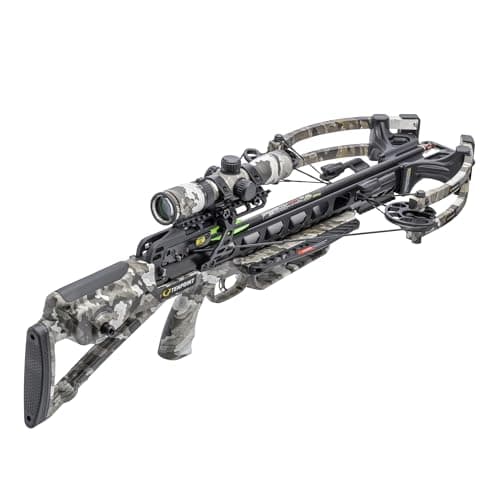
Best rangefinding
The best rangefinding crossbow scopes
They solve the actual cause of most missed crossbow shots. They also cost four figures and are not legal for hunting everywhere. Read the second part first.
String & Stock earns a commission when you buy through our links, at no extra cost to you. Prices come from Amazon and change; the date beside every price is when we last verified it. Full disclosure.
Ranked
Quick picks
| # | Product | Magnification | Score | Price |
|---|---|---|---|---|
| Rank 1 | Burris Oracle X Rangefinding 2-7x | 2-7x | 8.7 | $999.00Amazon |
| Rank 2 | 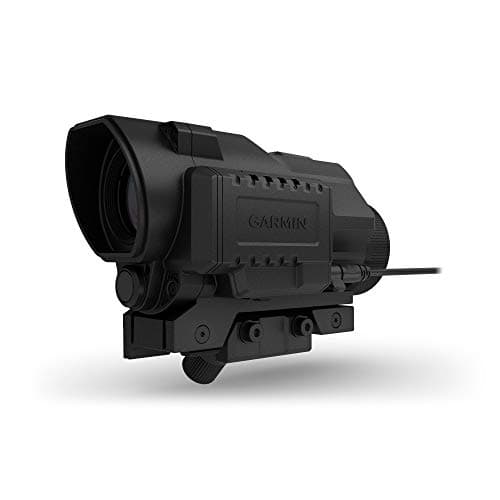 Garmin Xero X1i | 3.5x | 8.6 | $1,399.99Amazon |
| Rank 3 | 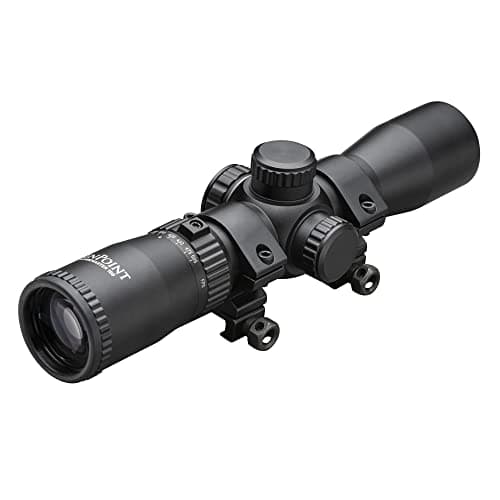 TenPoint RangeMaster 100 | 2-7x | 8.8 | $299.99Amazon |
| Rank 4 | 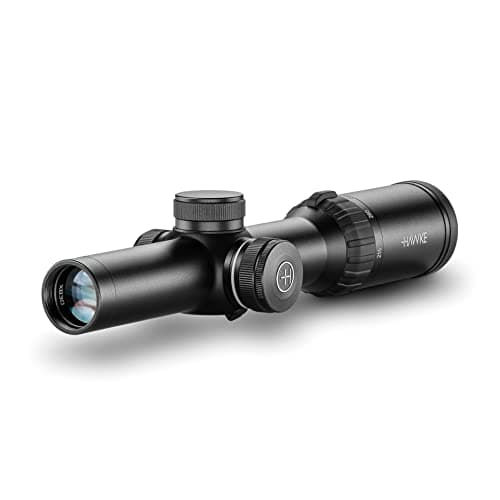 Hawke XB30 Pro SR 1-5x24 | 1-5x | 8.9 | $173.98Amazon |
| Rank 5 | 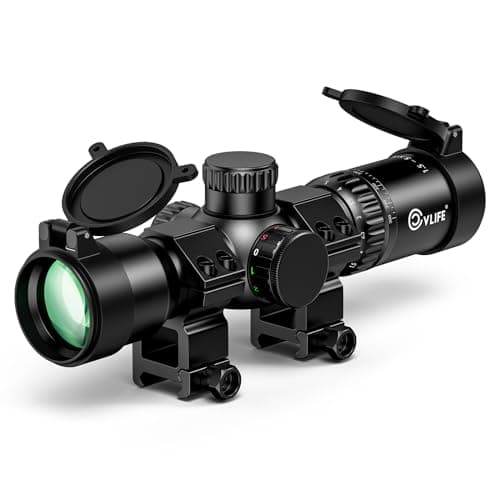 CVLIFE 1.5-5x32 Rangefinder Reticle | 1.5-5x | 8.1 | $99.99Amazon |
A rangefinding crossbow scope measures the distance to the target and shows a corrected aim point, usually accounting for shot angle. That removes the most common cause of a missed crossbow shot past 30 yards — a misjudged range — but electronic sights are prohibited for hunting in some states.
Here is the problem these solve. A crossbow bolt drops steeply, so being ten yards wrong about the distance is a miss or a wounded animal. A stacked-reticle scope assumes you know the range. You usually do not, and estimating across a field at dusk is harder than anyone admits.
In detail
Rangefinding scopes and the manual alternatives
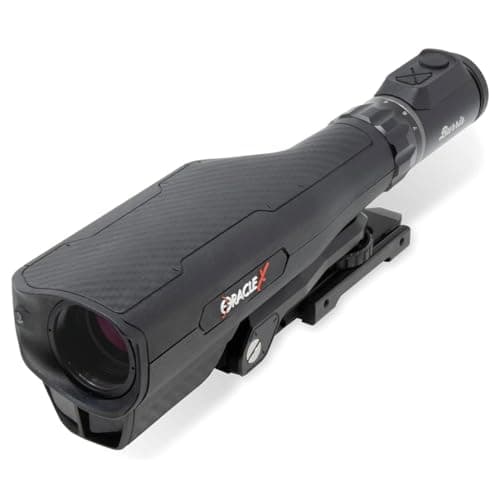
Burris Oracle X Rangefinding 2-7x
A built-in laser rangefinder that can be triggered by a wireless remote, an inclinometer that factors the angle of a steep treestand shot, and magnification compensation so the aim point stays right as you zoom. It solves the problem that causes most missed crossbow shots: a bolt drops so much past 40 yards that a guessed range is a miss.
| Published spec | Value |
|---|---|
| Magnification | 2-7x |
| Rangefinder | Built-in laser, remote or button activated |
| Inclinometer | Yes, factors shot angle |
| Aim point | Electronic, magnification compensated |
| Mount | Aluminum, Weaver |
| Weatherproofing | Water resistant |
| Speed range |
What it does well
- Ranges the target and gives an exact aim point in one motion
- The inclinometer handles steep treestand angles, which flat ranging gets wrong
- Magnification compensation keeps the hold correct across the zoom range
- Wireless remote means less movement at the shot
Where it falls short
Our rubric
- 9.4
- 8.6
- 9.4
- 8.2
- 6.8
Garmin Xero X1i
It ranges automatically and hands you a lit aim point, with a Target Lock indicator that tells you the laser has a consistent reading rather than leaving you to wonder. Custom bolt profiles mean one unit can be correct for two different arrow weights. Read the last bullet on the listing first: some jurisdictions prohibit electronic crossbow scopes for hunting.
| Published spec | Value |
|---|---|
| Magnification | 3.5x |
| Ranging | Auto, wired trigger or device button |
| Range to game | 250 yd |
| Range to reflective target | 500 yd |
| Aim point | Illuminated, auto brightness |
| Profiles | Custom bolt profiles |
| Legal note | Electronic sights are regulated or prohibited in some jurisdictions |
What it does well
- Auto-ranging with minimal movement at the moment of the shot
- Target Lock confirms the reading is stable before you commit
- Custom bolt profiles for different arrow weights
- Laser Locate marks the shot position on a compatible Garmin GPS
Where it falls short
Our rubric
- 9.6
- 8.4
- 9.6
- 8.8
- 6.0
TenPoint RangeMaster 100
A 2-7x36 variable that accommodates 380 to 505 fps — the only scope here whose speed range starts where most others stop. Nine illuminated aim references on an etched-glass reticle: dots at 20, 30 and 40, crosshairs at 50, 60 and 70. If you bought a 430 or 470 fps bow, most crossbow scopes cannot be dialed for it. This one can.
| Published spec | Value |
|---|---|
| Speed range | 380-505 fps |
| Magnification | 2-7x |
| Objective | 36 mm |
| Max calibrated range | 100 yd |
| Reticle | Etched glass, 3 illuminated dots at 20/30/40 yd, 3 crosshairs at 50/60/70 yd |
| Weatherproofing | Water and fog proof |
| Zero procedure | Sight at 20 yd, micro-tune at 50 yd, zeroed at 100 |
What it does well
- 380-505 fps is the only range here that covers a 470 fps bow
- 7x at the top end is real magnification for a 100-yard hold
- Etched-glass reticle stays clean in the field of view
- 36 mm objective gathers more light than the 24 mm competition
Where it falls short
Our rubric
- 9.0
- 9.0
- 9.2
- 9.0
- 7.4
Hawke XB30 Pro SR 1-5x24
A speed-selector power ring covering 215 to 450 fps, which is the broadest span any scope on this site publishes. Dial your bow's speed and the reticle's aim points line up with your trajectory. 16-layer multi-coated glass in a 30 mm mono-tube does the rest. If you own more than one bow, or expect to change bows, this is the scope that follows you.
| Published spec | Value |
|---|---|
| Speed range | 215-450 fps |
| Magnification | 1-5x |
| Objective | 24 mm |
| Tube | 30 mm |
| Reticle | Illuminated SR, stepless rheostat |
| Glass | 16-layer fully multi-coated |
| Weatherproofing | Nitrogen purged, waterproof, fog proof |
What it does well
- 215-450 fps covers every bow on this site, from the SAS recurve to the R470
- Stepless illumination rheostat rather than fixed brightness steps
- 30 mm mono-tube passes more light than a 1-inch body
- Metal screw-in lens covers rather than rubber flip caps
Where it falls short
Our rubric
- 9.8
- 8.8
- 8.6
- 8.6
- 8.4
CVLIFE 1.5-5x32 Rangefinder Reticle
A 300 to 460 fps speed ring, a 20 to 100 yard ballistic reticle, five illumination levels and a claimed 95 percent light transmission, for a hundred dollars. The speed range is the headline: almost nothing else at this price can be dialed for a 430 fps bow.
| Published spec | Value |
|---|---|
| Speed range | 300-460 fps |
| Magnification | 1.5-5x |
| Objective | 32 mm |
| Length | 8.2 in |
| Reticle | Etched glass ballistic, red and green, 5 brightness levels |
| Light transmission | 95% (claimed) |
| Durability | Aircraft-grade aluminum, shock tested to 1000 G, nitrogen purged |
What it does well
- 300-460 fps covers fast bows at a budget price
- Five illumination levels and an etched-glass reticle
- Rings, flip caps, batteries and a wrench are all in the box
Where it falls short
Our rubric
- 9.0
- 7.2
- 8.0
- 7.4
- 9.2
How we picked
The two genuine rangefinding scopes first, scored on what they publish about ranging performance and angle compensation. Then three manual scopes as the honest alternative, because a handheld rangefinder plus a good speed-dialed scope does most of the same job for a tenth of the money. See our methodology.
The two rangefinding options
| Burris Oracle X | Garmin Xero X1i | |
|---|---|---|
| Magnification | 2-7x variable | 3.5x fixed |
| Ranging trigger | Wireless remote or range button | Wired trigger or device button |
| Published range to game | Not stated | 250 yd |
| Angle compensation | Integrated inclinometer | Not stated as an inclinometer |
| Aim point | Electronic, magnification compensated | Illuminated, auto brightness |
| Bolt profiles | Not stated | Custom profiles |
| Extra features | Weaver mount, aluminum adjustment system | Target Lock, Steady Aim, Laser Locate with a Garmin GPS |
Burris Oracle X
The variable magnification is the practical advantage: 2-7x with magnification compensation, so the aim point stays correct as you zoom. The inclinometer matters more than it sounds — a steep treestand shot has a shorter horizontal distance than the line-of-sight range, and flat ranging gets that wrong. The wireless remote means less movement at the moment of the shot.
Garmin Xero X1i
Auto-ranging rather than button-triggered, with Target Lock telling you the laser has a consistent reading rather than leaving you to guess. Custom bolt profiles mean one unit can be correct for two arrow weights. Laser Locate projects the shot position to a compatible Garmin GPS, which is a genuinely useful recovery feature. Fixed 3.5x is the trade.
The cheaper answer, honestly
A handheld rangefinder plus a scope with a wide speed dial gets you most of the way. Range the trees and the field edges when you arrive, note the numbers, and you have the distances before the animal appears — which is how most experienced hunters handle it anyway.
- Hawke XB30 Pro — 215-450 fps, stepless illumination, under two hundred dollars.
- TenPoint RangeMaster 100 — 380-505 fps with nine aim references to 100 yards, around three hundred.
- CVLIFE 1.5-5x32 — a ballistic reticle and 300-460 fps for a hundred dollars, despite "rangefinder" in the name; it is a reticle, not a laser.
Note that last point. Several budget scopes use "rangefinder" to describe a reticle with ranging marks, not a laser. The two things are not comparable and the naming is unhelpful.
What to weigh before buying
- Legality in your state. First, and in writing from your wildlife agency rather than a forum.
- Batteries. A dead cell on an electronic sight means no aim point at all. Carry spares and know how the unit behaves when the battery dies.
- Cold weather. Electronics and lithium cells both slow down in the cold. Plan for it.
- Whether you need it. If you hunt a fixed blind over a field you have already ranged, you may not.