Guides
Crossbow kinetic energy, explained
The formula, the arithmetic for your own setup, and the honest conclusion: on a crossbow, energy is almost never what is holding you back.
String & Stock earns a commission when you buy through our links, at no extra cost to you. Prices come from Amazon and change; the date beside every price is when we last verified it. Full disclosure.
Ranked
Quick picks
| # | Product | Kinetic energy | Score | Price |
|---|---|---|---|---|
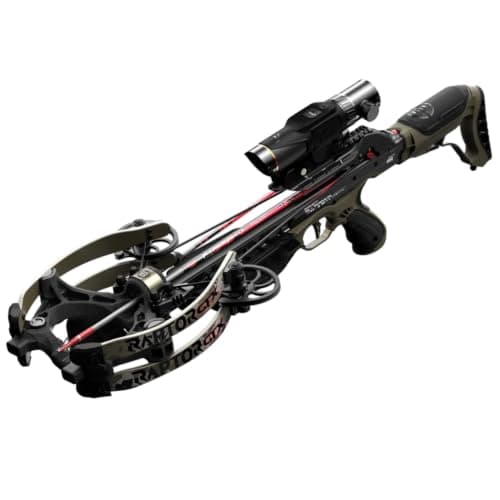
| Rank 1 | Barnett Hyper Raptor GTX | 152 ft-lb | 8.2 | $1,199.99Amazon |
| Rank 2 | 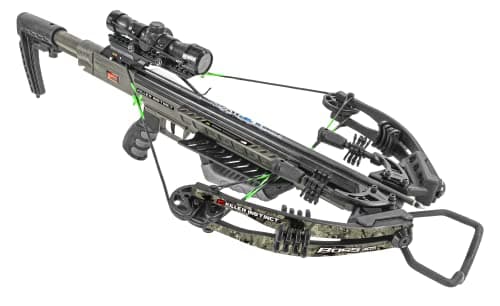 Killer Instinct Boss 405 | 134 ft-lb | 8.1 | $299.99Amazon |
| Rank 3 | 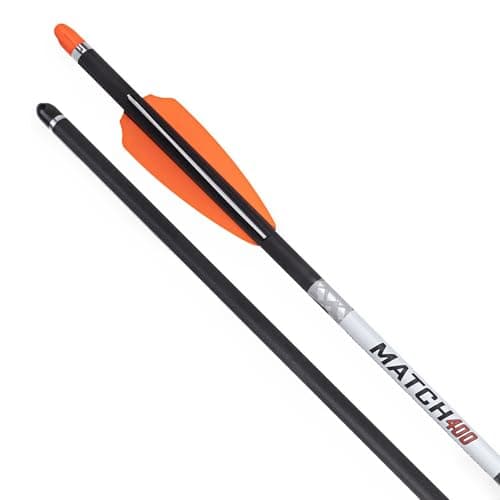 Wicked Ridge Match 400 | 8.5 | $69.99Amazon | |
| Rank 4 | 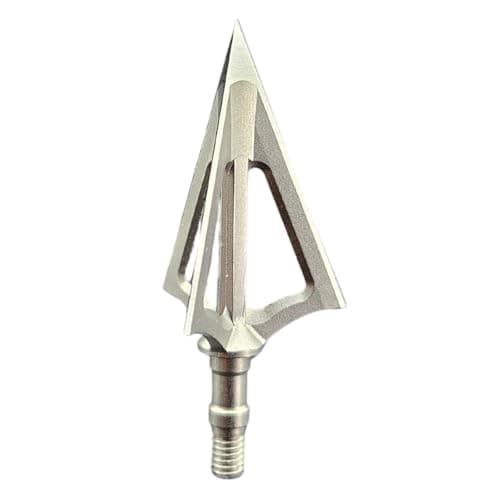 G5 Montec 100 gr | 8.9 | $44.95Amazon | |
| Rank 5 | 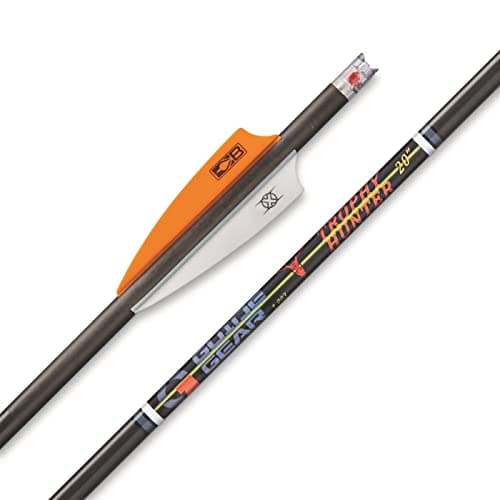 Guide Gear Trophy Hunter Pro (by Victory) | 8.1 | $47.49Amazon |
Kinetic energy in foot-pounds equals arrow weight in grains times velocity in fps squared, divided by 450,240. A 400-grain arrow at 400 fps carries about 142 ft-lb. Commonly cited guidance puts whitetail deer around 25 ft-lb, so a crossbow has energy to spare.
This is the one crossbow calculation worth doing yourself, because it takes thirty seconds and it settles a question people spend a lot of money on.
The formula
KE (ft-lb) = (arrow weight in grains × velocity in fps²) ÷ 450,240. The divisor converts grains and feet per second into foot-pounds. Nothing else is needed.
Worked for real setups
| Arrow weight | Velocity | Kinetic energy |
|---|---|---|
| 350 gr | 400 fps | 124 ft-lb |
| 400 gr | 400 fps | 142 ft-lb |
| 400 gr | 430 fps | 164 ft-lb |
| 400 gr | 470 fps | 196 ft-lb |
| 400 gr | 330 fps | 97 ft-lb |
| 425 gr | 415 fps | 162 ft-lb |
| 390 gr | 245 fps | 52 ft-lb |
Note the bottom row: even the slowest bow on this site, a 245 fps recurve with a 390 gr arrow, produces roughly double the commonly cited whitetail threshold.
What the makers publish
- Barnett Hyper Raptor GTX: 152 ft-lb at 425 fps, the highest published figure on this site.
- Killer Instinct Boss 405: 134 ft-lb at 405 fps.
- Nobody else on this site publishes a kinetic-energy figure, which is why the formula is worth knowing.
In detail
Bows and arrows that drive the arithmetic
Barnett Hyper Raptor GTX
425 fps and 152 ft-lb of kinetic energy through .204-diameter HyperFlite arrows, with a laser rangefinding scope in the box. Barnett claims over 25 percent deeper penetration than a standard-diameter arrow. Note the cocking aid: it ships with a rope cocker, not a crank, so budget for one if that is why you are here.
| Published spec | Value |
|---|---|
| Speed | 425 fps |
| Kinetic energy | 152 ft-lb |
| Arrow | .204 HyperFlite, 20 in |
| Cocking aid | Rope cocking device |
| Trigger pull | 3 lb |
| Trigger | TriggerTech frictionless, anti-dry-fire nock sensor |
| Scope | BUK OPS X-Factor laser rangefinding |
What it does well
- 152 ft-lb is the highest published kinetic-energy figure here
- A rangefinding scope is included, which is normally a several-hundred-dollar add
- The TriggerTech release is the crispest trigger spec in Barnett's line
- Pivoting limb pockets and an adjustable buttstock help fit
Where it falls short
Our rubric
- 6.4
- 9.2
- 8.0
- 8.0
- 7.8
- 7.8
Killer Instinct Boss 405
405 fps, 134 ft-lb, 6.7 pounds, and a 6-position stock with an adjustable foregrip so the bow actually fits you. The 14.75-inch cocked width is the limitation. For a shooter between sizes — a smaller adult, a teenager still growing — the adjustability is worth more than two inches of width.
| Published spec | Value |
|---|---|
| Speed | 405 fps |
| Kinetic energy | 134 ft-lb |
| Weight | 6.7 lb |
| Cocked width | 14.75 in |
| Overall length | 33.5-36 in, adjustable |
| Cocking aid | Rope cocker, included |
| Included | 4x32 IR scope, quiver, three HYPR Lite bolts, rail lube, string dampeners |
What it does well
- A 6-position stock and X-Lok foregrip fit a wide range of shooters
- 134 ft-lb published at a budget price
- 6.7 pounds with a Micro-Lite aluminum barrel
- Limited lifetime warranty on non-wearable parts
Where it falls short
Our rubric
- 6.4
- 8.6
- 7.8
- 6.8
- 8.8
- 9.2
Wicked Ridge Match 400
Six 20-inch shafts at 400 grains with a 46-grain aluminum insert that produces 14 percent front-of-center, which Wicked Ridge claims gives up to 20 percent tighter groups than its previous arrow. Six per pack is the practical detail: that is a full quiver and spares in one purchase.
| Published spec | Value |
|---|---|
| Length | 20 in |
| Weight | 400 gr |
| Straightness | within .004 in |
| Insert | 46 gr aluminum |
| Front of center | 14% |
| Nock | Alpha-Nock HP with aluminum bushing |
| Vanes | 3.5 in Bohning X Vanes, slight offset |
What it does well
- Six per pack, which is a quiver's worth in one box
- 14 percent front-of-center published, which most makers do not state
- A 46-grain aluminum insert rather than a plastic one
- Alpha-Nock engages the string deeply, which reduces shoot-over
Where it falls short
Our rubric
- 8.4
- 8.6
- 8.0
- 8.6
- 9.0
G5 Montec 100 gr
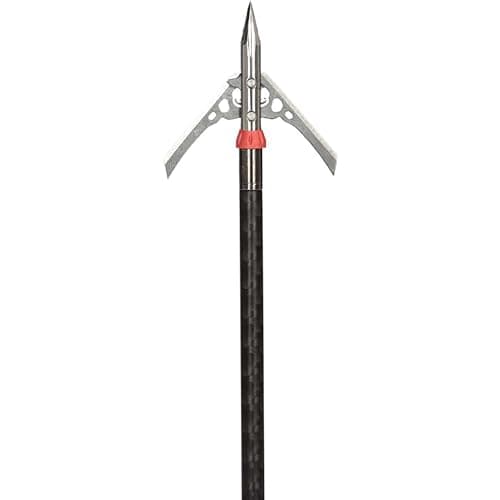
One-piece metal-injection-molded steel with a 1 to 1-1/8 inch cut, cut-on-contact geometry and every head spin-tested before it ships. There are no blades to replace, no screws to loosen and no collar to fail. For a fast bow, a fixed one-piece head is the most reliable thing you can put on the front of a bolt.
| Published spec | Value |
|---|---|
| Weight | 100 gr (85 and 125 also offered) |
| Cutting diameter | 1 to 1-1/8 in |
| Blades | 3, fixed |
| Construction | One-piece MIM steel |
| Sharpening | Diamond cut, cut-on-contact |
| Quality control | 100% spin-tested |
| Per pack | 3 |
What it does well
- One piece: no blades, screws or collars to fail
- Every head spin-tested before it ships
- Resharpenable, so a head survives more than one animal
- Cut-on-contact geometry starts cutting immediately
Where it falls short
Our rubric
- 8.2
- 9.4
- 9.0
- 9.6
- 8.4
Guide Gear Trophy Hunter Pro (by Victory)
Made by Victory Archery, carrying a 110-grain brass insert — the heaviest on this page — plus a red lighted half-moon nock and Victory's ICE coating, which the listing credits with easier penetration and less noise through the rail. The heavy insert is the reason to pick these: front-of-center weight is what makes a bolt fly like a dart.
| Published spec | Value |
|---|---|
| Length | 20 in |
| Brass insert | 110 gr |
| Nock | Red lighted half-moon |
| Carbon | 100% standard high modulus |
| Vanes | 3 in Bohning X-Vanes |
| Coating | Victory ICE |
| Straightness |
What it does well
- A 110-grain brass insert is the heaviest here, which maximizes front-of-center
- Lighted nocks included rather than a separate purchase
- ICE coating reduces rail friction and noise
Where it falls short
Our rubric
- 8.0
- 8.8
- 7.4
- 8.2
- 8.4
The thresholds, and what they are
Commonly cited bowhunting guidance puts whitetail deer in the region of 25 ft-lb and larger game progressively higher. These figures circulate widely in the archery community and are useful as orders of magnitude rather than as precise cut-offs — they are rules of thumb, not measured kill thresholds, and where a state sets a legal minimum it is the state's figure that binds.
The practical conclusion is unaffected by the exact number. Published crossbow figures of 134-196 ft-lb sit five to eight times above the commonly quoted deer figure.
Why energy is not your limiting factor
If energy were the constraint, these would be the symptoms. On a crossbow they almost never are:
- Arrows failing to penetrate on a square broadside shot. Rare with any crossbow and a sharp broadhead.
- Bolts stopping in the near-side shoulder. This is usually a shot-placement or broadhead-choice problem.
- Pass-throughs that do not happen. A crossbow with a 400 gr arrow and a fixed head typically passes through a deer.
What actually limits a crossbow hunter, in order:
- Shot placement, by a wide margin.
- Misjudged range, which is the most common cause of a miss past 30 yards. See effective range.
- Broadhead performance — a dull or badly-flying head, or a mechanical that failed to open.
- The animal reacting to the shot. See crossbow noise.
How to raise your energy, if you want to
- A heavier arrow. Energy scales linearly with mass and you lose some velocity. 400 gr complete is the mainstream answer.
- A heavier insert. A 110 gr brass insert raises both weight and front-of-center. Guide Gear's Victory-made bolts carry one.
- A faster bow. Energy scales with velocity squared, so this is the strongest lever — and the most expensive, with target and broadhead consequences.
- Not a lighter arrow. It raises speed and lowers mass, and the net effect on energy is usually negative. Never below your bow's published minimum weight.
Momentum, briefly
Some bowhunters prefer momentum (mass × velocity) to kinetic energy as a penetration predictor, because it weights mass more heavily and penetration is about pushing through resistance rather than depositing energy. It is a reasonable argument and it points the same way: heavier arrows penetrate better. Either metric tells you a crossbow has enough for deer.
Frequently asked questions
How do you calculate crossbow kinetic energy?
How much kinetic energy do you need for deer?
Does a heavier arrow increase kinetic energy?
Is kinetic energy or momentum better for penetration?
What limits a crossbow hunter if not energy?
Sources
Read next
Bolts & Broadheads
Crossbow bolt weight, explained
Bolts & Broadheads
The best crossbow broadheads for deer