Best for deer
The best crossbow broadheads for deer
A whitetail is a large, thin-skinned animal, so you have energy to spend on a wide cut — until the shot quarters into a shoulder. Five heads, with the cases they suit.
String & Stock earns a commission when you buy through our links, at no extra cost to you. Prices come from Amazon and change; the date beside every price is when we last verified it. Full disclosure.
Ranked
Quick picks
| # | Product | Cutting diameter | Score | Price |
|---|---|---|---|---|
| Rank 1 | Rage Hypodermic Trypan NC | 8.6 | $57.49Amazon | |
| Rank 2 | 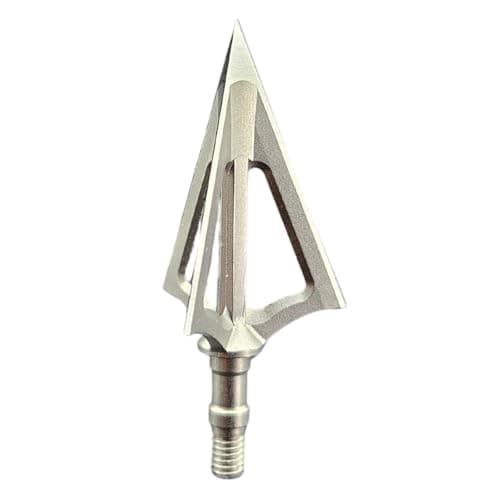 G5 Montec 100 gr | 1 to 1-1/8 in | 8.9 | $44.95Amazon |
| Rank 3 | 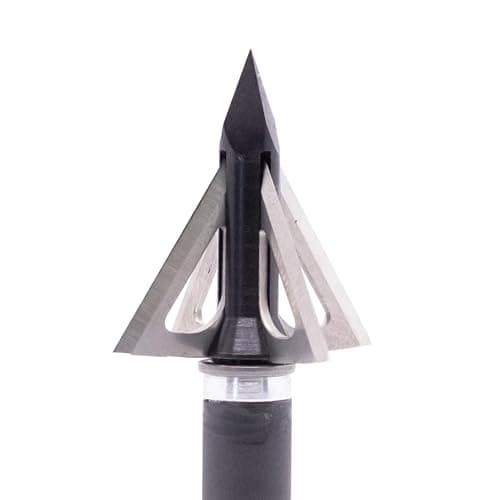 Slick Trick Standard Pro Series and Magnum | 8.7 | $48.99Amazon | |
| Rank 4 | 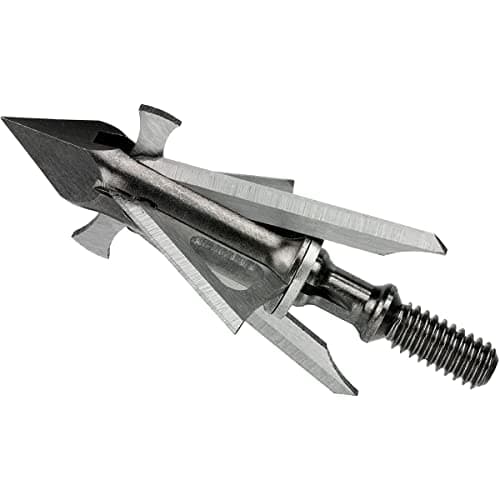 Muzzy Trocar HBX Hybrid | 8.3 | $43.10Amazon | |
| Rank 5 | 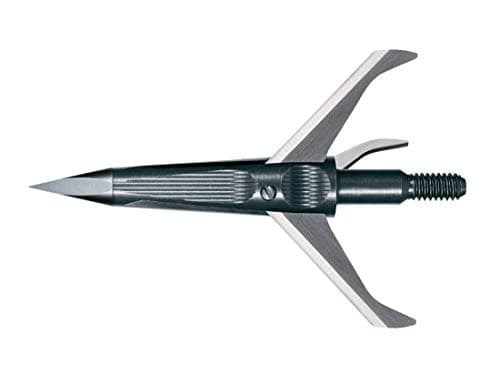 NAP Spitfire Crossbow | 1.5 in | 8.2 | $29.97Amazon |
For whitetail deer with a crossbow, a 1.5-inch mechanical and a 1-1/8-inch one-piece fixed head are both excellent and they suit different shots. The mechanical gives a wider wound channel on a broadside shot; the fixed head penetrates better when the shot quarters into a shoulder.
Crossbows generate considerably more kinetic energy than most compound bows — published figures on this site run to 152 ft-lb — and commonly cited guidance puts whitetail deer around 25 ft-lb. You have energy to spend. The question is what you spend it on.
In detail
Five heads for deer
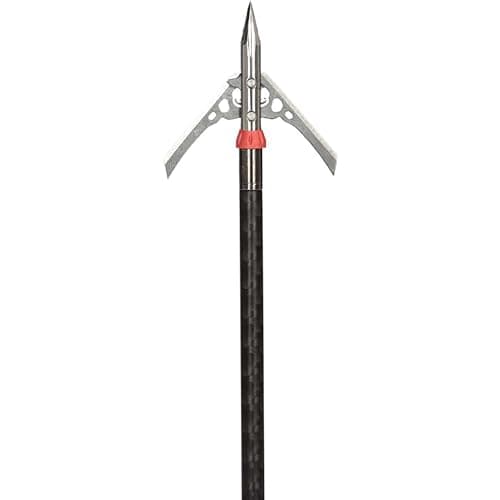
Rage Hypodermic Trypan NC
A one-piece titanium ferrule, .039-inch stainless blades, a hybrid tip and No Collar retention — meaning the blades are held closed by the ferrule geometry rather than a rubber band you have to replace every shot. For a fast bow, the collar is the part that fails, so removing it matters.
| Published spec | Value |
|---|---|
| Weight | 100 gr |
| Blade thickness | 0.039 in |
| Type | Mechanical, expandable |
| Ferrule | One-piece titanium |
| Retention | No Collar |
| Tip | Hybrid |
| Per pack | 3 |
What it does well
- No Collar retention removes the consumable rubber band
- A titanium ferrule is lighter and stronger than aluminum
- .039-inch blades are thick for a mechanical
- Ferrule alignment adapter helps it spin true
Where it falls short
Our rubric
- 8.6
- 8.4
- 8.8
- 8.8
- 7.2
G5 Montec 100 gr
One-piece metal-injection-molded steel with a 1 to 1-1/8 inch cut, cut-on-contact geometry and every head spin-tested before it ships. There are no blades to replace, no screws to loosen and no collar to fail. For a fast bow, a fixed one-piece head is the most reliable thing you can put on the front of a bolt.
| Published spec | Value |
|---|---|
| Weight | 100 gr (85 and 125 also offered) |
| Cutting diameter | 1 to 1-1/8 in |
| Blades | 3, fixed |
| Construction | One-piece MIM steel |
| Sharpening | Diamond cut, cut-on-contact |
| Quality control | 100% spin-tested |
| Per pack | 3 |
What it does well
- One piece: no blades, screws or collars to fail
- Every head spin-tested before it ships
- Resharpenable, so a head survives more than one animal
- Cut-on-contact geometry starts cutting immediately
Where it falls short
Our rubric
- 8.2
- 9.4
- 9.0
- 9.6
- 8.4
Slick Trick Standard Pro Series and Magnum
Four .035-inch stainless blades in a short Super Steel ferrule giving 2-1/4 inches of total cut, with a 4-edge bone-splitting tip and Alcatraz blade lock. Short, fat and fixed: it flies like a field point because there is barely any ferrule forward of the blades to plane in the wind.
| Published spec | Value |
|---|---|
| Weight | 100 gr |
| Total cut | 2-1/4 in (1-1/8 in + 1-1/8 in) |
| Blade thickness | 0.035 in |
| Blades | Stainless, 4 |
| Ferrule | Super Steel |
| Blade lock | Alcatraz |
| Tip | 4-edge bone splitting |
What it does well
- 2-1/4 inches of total cut from a fixed head
- A short ferrule means less wind planing
- Alcatraz blade lock keeps blades seated through bone
- Explicitly suited to crossbows, compounds and recurves
Where it falls short
Our rubric
- 8.4
- 9.0
- 8.8
- 9.0
- 8.2
Muzzy Trocar HBX Hybrid
Four blades: two fixed, two mechanical, with the fixed pair offset to induce spin. It is a genuine middle path — the fixed blades cut on contact and the mechanicals widen the channel, and the chisel tip and stainless ferrule are built to survive bone.
| Published spec | Value |
|---|---|
| Weight | 100 gr |
| Blades | 4 (2 fixed, 2 mechanical) |
| Type | Hybrid |
| Tip | Chisel |
| Ferrule | Stainless steel |
| Design note | Offset fixed blades induce spin |
| Cutting diameter |
What it does well
- Fixed blades cut on contact even if the mechanicals do not open
- Offset fixed blades stabilize the arrow in flight
- A stainless ferrule and chisel tip for bone
Where it falls short
Our rubric
- 8.0
- 8.6
- 8.2
- 8.8
- 8.2
NAP Spitfire Crossbow
A 1.5-inch cutting diameter with Diamize-sharpened blades and a Trophy tip, for under thirty dollars. The Spitfire has been in production long enough that its failure modes are known, and the crossbow-specific version exists because the standard one was not holding up at crossbow speeds.
| Published spec | Value |
|---|---|
| Weight | 100 gr |
| Cutting diameter | 1.5 in |
| Type | Mechanical |
| Blades | Diamize sharpened |
| Tip | Trophy tip |
| Blade thickness | |
| Per pack | 3 |
What it does well
- A 1.5-inch cut at the lowest price of any mechanical here
- The crossbow-specific version is built for the velocity
- A long production record
Where it falls short
Our rubric
- 8.2
- 7.8
- 8.0
- 7.6
- 9.2
How we picked
Cut diameter, penetration characteristics and reliability, weighted for the shots a crossbow hunter actually takes — close, often from a blind or stand, sometimes at a quartering angle. See our methodology.
Which head for which shot
| Head | Cut | Type | Best shot |
|---|---|---|---|
| Rage Hypodermic Trypan NC | Mechanical, No Collar | Broadside, inside 40 yd | |
| G5 Montec | 1 to 1-1/8 in | Fixed, one piece | Any angle, including a quartering shoulder |
| Slick Trick Magnum | 2-1/4 in total | Fixed, 4 blade | Broadside, with a well-tuned bow |
| Muzzy Trocar HBX | Hybrid, 4 blade | Any angle — fixed blades always cut | |
| NAP Spitfire Crossbow | 1.5 in | Mechanical | Broadside, on a budget |
The broadside case: mechanical
On a square broadside shot behind the shoulder, there is no heavy bone in the way and the limiting factor is the size of the hole. That is where a mechanical earns its keep: a 1.5 in cut through both lungs produces a blood trail a fixed 1-1/8 in head does not.
For a crossbow specifically, pick one that cannot deploy early: the Rage Trypan NC's No Collar design, or a head with a published speed rating. See broadheads for 400 fps bows.
The quartering case: fixed
A quartering-to shot means the arrow may meet the shoulder, and a mechanical that has already spent energy opening is the wrong tool. A one-piece steel fixed head with cut-on-contact geometry drives through: the G5 Montec's 1-1/8 in cut and all-steel construction, or TenPoint's version of the same design.
The hybrid Muzzy Trocar HBX covers both cases: two fixed blades cut on contact regardless, two mechanicals widen the channel when there is energy to do so.
Grain weight for deer
One hundred grains is the default and what your bow's included arrows are matched to. 125 grains pushes more weight forward, improving front-of-center and penetration, at the cost of some velocity — and it changes your zero. If you switch, re-verify at 40 yards. See 100 vs 125 grain.
The pre-season routine
- Spin test every head on the shaft. Tip wobble means re-seat or replace.
- Shoot three into a broadhead-capable target at 20 yards. Confirm they group with your field points.
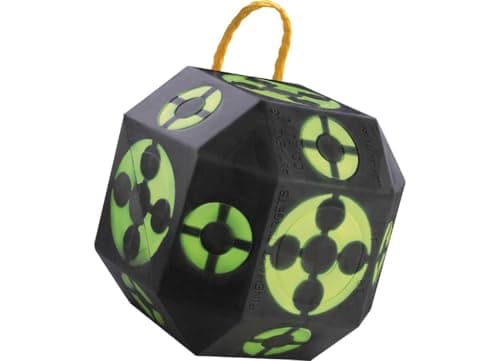
- Never into a bag target. Broadheads shred the fill. See broadhead targets.
- Check your state's rules on minimum cutting diameter, which some states specify for big game.
- Replace blades after any hit. A used edge is not a hunting edge.
What we would carry
A quiver with the mechanical you have zeroed, and the knowledge of which shots to pass on. If you hunt thick cover where quartering shots are the norm rather than the exception, carry the one-piece fixed head instead and accept the narrower cut — penetration you have beats a wound channel you did not reach.
Frequently asked questions
What is the best broadhead for deer with a crossbow?
How much kinetic energy do you need for deer?
Should I use a 100 or 125 grain broadhead for deer?
Do broadheads need to match my field points?
How many broadheads do I need for a season?
Sources
Read next
Crossbows
The best crossbows for deer hunting
Bolts & Broadheads
Mechanical vs fixed blade broadheads
Bolts & Broadheads
100 vs 125 grain broadheads
Targets & Cases
The best broadhead targets for crossbows