Reverse vs forward draw
Reverse draw vs forward draw crossbows
Reverse draw moves the limbs rearward, which lengthens the power stroke and shifts the balance back into your hands. Here is what that is actually worth.
String & Stock earns a commission when you buy through our links, at no extra cost to you. Prices come from Amazon and change; the date beside every price is when we last verified it. Full disclosure.
Ranked
Quick picks
| # | Product | Cocked width | Score | Price |
|---|---|---|---|---|
| Rank 1 | Ravin R26X | 5.75 in | 8.7 | $1,999.99Amazon |
| Rank 2 | 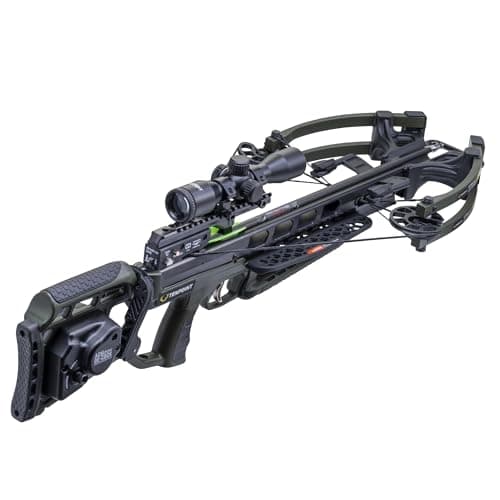 TenPoint Titan X De-Cock | 9.75 in | 9.0 | $799.99Amazon |
| Rank 3 | 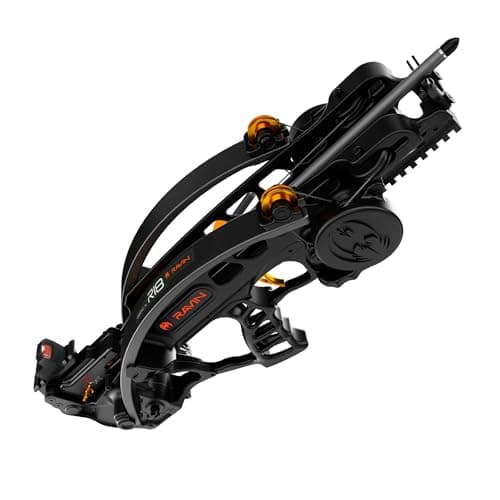 Ravin R18 | 8.6 | $1,999.99Amazon | |
| Rank 4 | 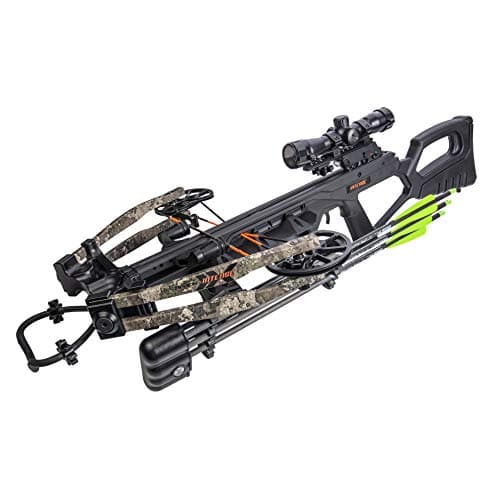 Bear X Intense | 10 in | 8.2 | $405.40Amazon |
| Rank 5 | 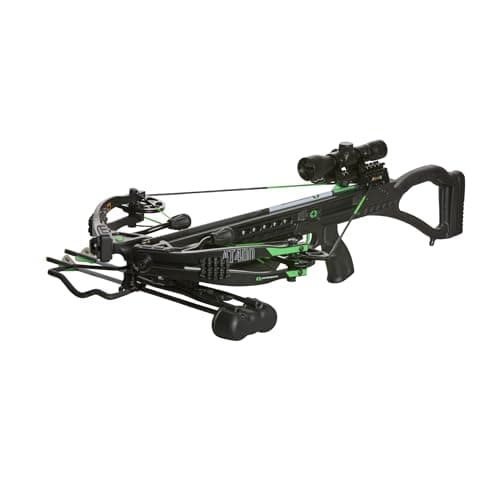 CenterPoint Wrath 430 | 9 in | 8.9 | $749.99Amazon |
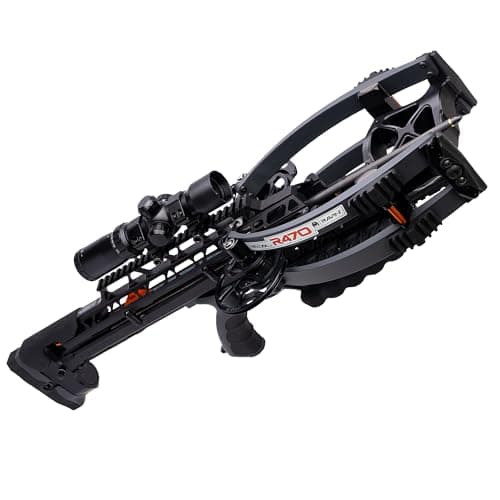
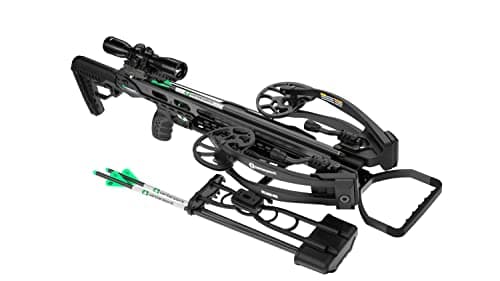
On a forward-draw crossbow the limbs sit at the front, ahead of the rail. On a reverse-draw the limbs are mounted rearward, pointing back, so the string starts behind the riser. That lengthens the power stroke for a given overall length and moves the mass toward your hands.
This is one of the few genuine engineering arguments in crossbows, as opposed to a marketing one, and the consequences are measurable. It is also frequently confused with Ravin's cam system, which is a separate thing.
In detail
Bows from both layouts
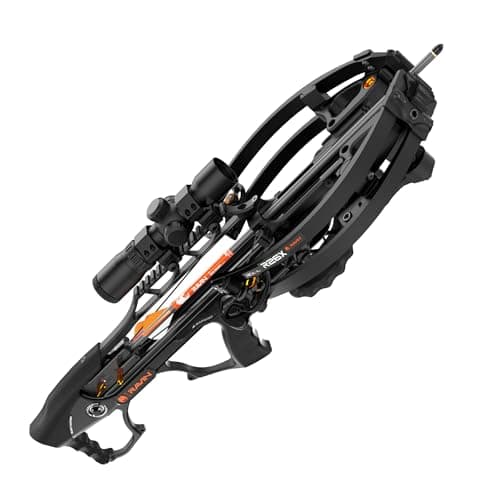
Ravin R26X
5.75 inches axle-to-axle cocked, 6.5 pounds, and a cocking system you can stop mid-stroke without the bow fighting you. The one-way bearing is the feature that matters on a cold morning in a blind: you can cock in stages, quietly, instead of committing to one noisy pull.
| Published spec | Value |
|---|---|
| Cocked width | 5.75 in |
| Weight | 6.5 lb |
| Cocking | Silent, stop mid-cycle; Trac Trigger and one-way bearing |
| Cam system | Helicoil, 340-degree cam rotation |
| Arrows | Three Ravin .003 arrows, 400 gr total |
| Scope | 100-yard illuminated |
| Speed |
What it does well
- Stop-anywhere cocking is the quietest draw stroke published here
- A 5.75-inch cocked width beats every non-Ravin bow on this site
- A 100-yard illuminated scope is included rather than an upsell
Where it falls short
Our rubric
- 9.2
- 8.0
- 9.4
- 9.6
- 9.0
- 6.6
TenPoint Titan X De-Cock
The de-cocking version of TenPoint's best-selling bow, and the most complete answer on this site to the question that brings most people here. The integrated ACUdraw De-Cock drops cocking effort to 5 pounds, and it backwinds, so you can unload the bow at the end of a sit without firing a bolt into the dirt. 400 fps and a 9.75-inch front end are the supporting cast.
| Published spec | Value |
|---|---|
| Speed | 400 fps |
| Cocking effort | 5 lb |
| Cocked width | 9.75 in |
| Cocking aid | ACUdraw De-Cock, integrated |
| De-cocks | Yes, backwind the handle |
| Trigger pull | 3.5 lb |
| Included | Pro-View 400 lighted scope, three Pro Elite 400 arrows, quiver, bow hanger |
What it does well
- 5 lb of cocking effort is the lowest figure any bow on this site publishes
- Safe de-cocking: the Auto-Brake gear system holds the handle wherever you let go
- A 9.75-inch front end clears blind windows and stand rails
- Ships assembled and pre-sighted, so first setup is a scope zero and nothing else
Where it falls short
Our rubric
- 9.6
- 8.4
- 8.5
- 9.0
- 7.8
- 8.6
Ravin R18
Ravin's Verticoil cams coil the string over 720 degrees, which collapses the cocked height to 1.3 inches. Nothing else on this site is close. At 6 pounds with a Versa-Draw crank built in, it is the bow for a tight blind window or a mobile saddle setup, and the price is the reason most people do not end up with one.
| Published spec | Value |
|---|---|
| Cocked height | 1.3 in |
| Weight | 6 lb |
| Cocking aid | Versa-Draw crank, integrated |
| Cam system | 720-degree Verticoil |
| Arrows | Three 16 in .003 R18 arrows, 350 gr total |
| Sight | Ravin 3-dot reflex |
| Speed |
What it does well
- A 1.3-inch cocked height makes blind-window geometry a non-issue
- Ravin's shortest and lightest model at 6 pounds
- The Versa-Draw crank is integrated, so the cocking aid is never forgotten
- The Frictionless Flight System keeps the arrow off the rail
Where it falls short
Our rubric
- 9.0
- 7.5
- 8.4
- 9.8
- 9.2
- 6.8
Bear X Intense
400 fps from a 12.7-inch power stroke, 10 inches cocked and 14 uncocked, with an illuminated scope, a 4-arrow quiver and a cocking rope. The cheapest way on this site to get a published 10-inch cocked width.
| Published spec | Value |
|---|---|
| Speed | 400 fps |
| Cocked width | 10 in |
| Uncocked width | 14 in |
| Power stroke | 12.7 in |
| Cocking aid | Cocking rope, included |
| Safety | Anti-dry-fire mechanism |
| Included | Three Bear X TrueX arrows, illuminated scope, 4-arrow quiver, lube and wax |
What it does well
- A 10-inch cocked width at a sub-five-hundred price
- 400 fps from a long 12.7-inch power stroke
- Complete ready-to-shoot package
Where it falls short
Our rubric
- 6.2
- 8.4
- 7.8
- 9.0
- 8.0
- 9.0
CenterPoint Wrath 430
A 9-inch cocked bullpup that shoots 430 fps off a 200-pound draw, with a silent crank in the box. That combination — tight blind geometry, real speed, and a crank you do not have to buy — is why this bow keeps turning up in the answer to the ground-blind question.
| Published spec | Value |
|---|---|
| Speed | 430 fps |
| Draw weight | 200 lb |
| Cocked width | 9 in |
| Cocking aid | Silent cranking device, included |
| Design | Bullpup, full-bearing cam compound |
| Scope | 4x32 illuminated |
| Included | Three 20 in 400 gr carbon arrows, detachable quiver, rope cocker |
What it does well
- A 9-inch cocked width with 430 fps behind it
- A silent crank and a rope cocker both included
- CNC-machined aluminum rails and cams
- 400-grain arrows included, which suits the speed
Where it falls short
Our rubric
- 8.6
- 9.4
- 8.6
- 9.4
- 7.4
- 8.8
What changes, and why
Power stroke
The power stroke is the distance the string travels from cocked to released. More power stroke means more time accelerating the arrow, which means more speed from the same draw weight. Moving the limbs rearward lets a reverse-draw bow have a longer power stroke in the same overall length — the Bear X Intense publishes 12.7 in, which is how it reaches 400 fps.
Balance
A forward-draw bow puts the limbs, cams and a loaded quiver out in front of your forward hand, so it is nose-heavy. Hold one off-hand for a minute and you feel it. A reverse-draw bow carries that mass closer to the trigger, which makes it steadier to hold and easier to swing on a moving animal.
Cocked width
Reverse-draw layouts tend to be narrower cocked, because the limbs are shorter and the geometry allows the cams to sit closer together. This is where the layout and Ravin's cam system compound: Ravin bows are both reverse-oriented and Helicoil-cammed, which is why they reach 5.75 in.
The honest comparison
| Forward draw | Reverse draw | |
|---|---|---|
| Power stroke for a given length | Shorter | Longer |
| Balance | Nose-heavy | Closer to the hands |
| Typical cocked width | Wider | Narrower |
| Price | Lower at every performance level | Higher |
| Parts and service | Conventional, widely understood | Fewer shops familiar with them |
| Scope mount position | Conventional | Sometimes further forward |
| Availability under $500 | Plenty | Very little |
What reverse draw is not
- Not a bullpup. A bullpup moves the *trigger group* rearward along the stock. The CenterPoint Wrath 430 is a bullpup forward-draw bow and reaches 9 in cocked that way.
- Not Ravin's cam system. Helicoil and Verticoil are cam geometries. They stack with a reverse layout but are a separate technology.
- Not automatically quieter. Noise comes from string oscillation and limb ring, which are dampable on either layout.
- Not a cocking-effort advantage. Effort comes from the aid, not the layout. A reverse-draw bow with a rope cocker is still a hard pull.
Who should care
If you shoot off-hand or swing on moving animals, the balance difference is real and you will notice it inside one session. If you hunt from a tight blind, the width tendency matters and you should shop the published figures regardless of layout. If you shoot from a rest at stationary targets, the balance advantage largely disappears and you are paying for geometry you are not using.
And if cocking effort is your constraint, this whole argument is secondary: buy the bow with the 5 lb crank, in whichever layout it comes. See crank vs rope cocker.