Best hog heads
The best crossbow broadheads for hogs
A mature boar wears layered cartilage over the shoulder. The head that gets through it is narrow, one-piece and sharpened to cut on contact - not the widest head in the shop.
String & Stock earns a commission when you buy through our links, at no extra cost to you. Prices come from Amazon and change; the date beside every price is when we last verified it. Full disclosure.
Ranked
Quick picks
| # | Product | Cutting diameter | Score | Price |
|---|---|---|---|---|
| Rank 1 | QAD Exodus Crossbow Full Blade 100 gr | 1.25 in | 8.7 | $49.99Amazon |
| Rank 2 | 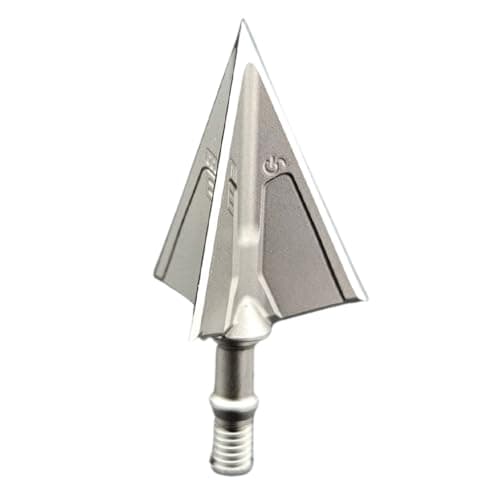 G5 Montec M3 100 gr | 1-1/16 in | 8.9 | $54.95Amazon |
| Rank 3 | 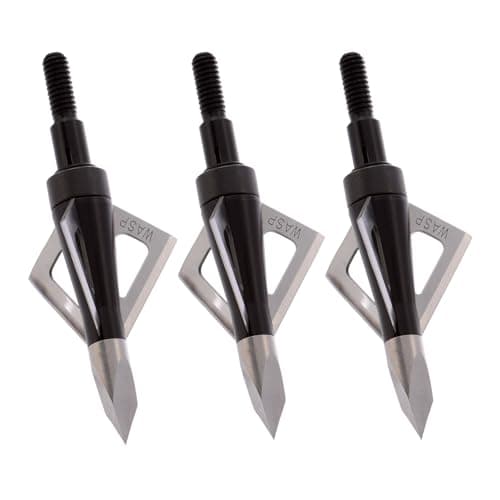 Wasp Boss SST 3-Blade | 1-1/8 in | 8.3 | $44.99Amazon |
| Rank 4 | 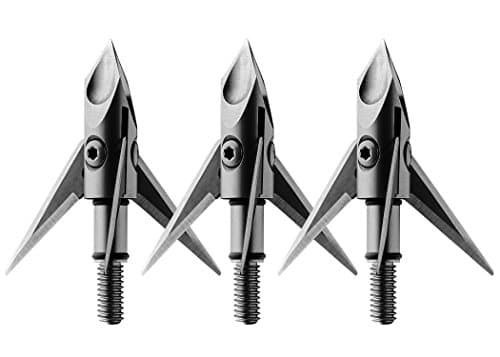 Ramcat Crossbow Hydroshock-X | 8.5 | $39.99Amazon | |
| Rank 5 | 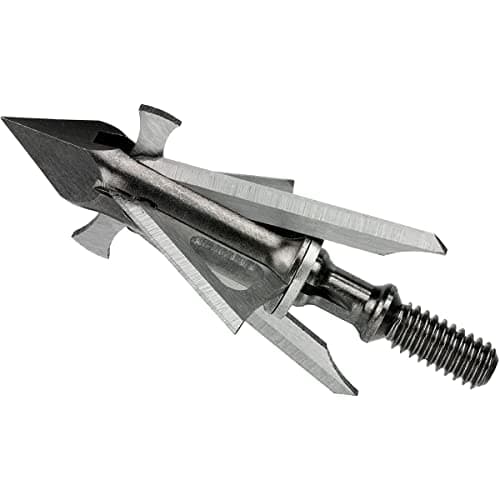 Muzzy Trocar HBX Hybrid | 8.3 | $44.99Amazon |
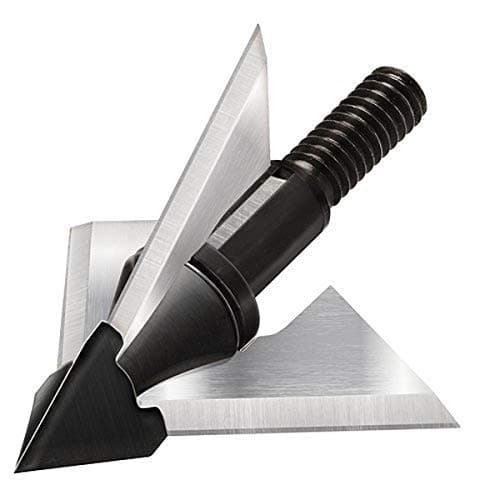
The best crossbow broadhead for hogs is the QAD Exodus Crossbow Full Blade 100 gr: a 1.25-inch cutting diameter on a deliberately short body with a steep cutting angle, built specifically for crossbow bolts. Against a boar's layered shoulder shield, a narrow, structurally simple head penetrates where a wide one stops.
The shield is what makes hog broadhead selection different from every other animal. A mature boar builds up a plate of layered cartilage over the shoulder, hardened by fighting and by rubbing on trees, and it thickens with age. It is not bone, and it is not soft tissue; it behaves more like a dense laminate, and it is very good at stopping broadheads that have to deploy or that present a wide frontal area.
Which means the instinct most hunters bring from whitetails - buy the widest cut you can get away with - is exactly wrong here. Every head on this page is a fixed head, and the ranking runs from the narrowest and most structurally simple outward. Our elk roundup ranks on blade thickness, because there the obstacle is bone; here it is cartilage, and the axis is frontal area.
In detail
Five heads for a shoulder shield
QAD Exodus Crossbow Full Blade 100 gr
A deliberately short fixed head with a steep cutting angle and a published 1.25-inch cut, built for crossbow bolts and made in the USA. The short body is the design argument: less length forward of the shaft means less lever for a crosswind to push on, which is why short fixed heads group better than long ones.
| Published spec | Value |
|---|---|
| Weight | 100 gr |
| Cutting diameter | 1.25 in |
| Blade thickness | |
| Type | Fixed, full blade |
| Blades | Replaceable, cut-on-contact |
| Design | Super short body, steep cutting angle |
| Built for | Crossbow bolts |
| Origin | Made in the USA |
| Per pack | 3 |
What it does well
- A very short body reduces wind planing
- A 1.25 inch cut is wide for a fixed head
- The only head here specified for crossbow bolts and made in the USA
Where it falls short
Our rubric
- 8.8
- 8.8
- 8.8
- 9.0
- 8.2
G5 Montec M3 100 gr
One solid piece of 420 stainless steel with a 1-1/16 inch cut, no vents, cut-on-contact geometry and every head spin-tested before it ships. There are no blades to replace, no screws to loosen and no collar to fail. For a fast bow, a fixed one-piece head is the most reliable thing you can put on the front of a bolt.
| Published spec | Value |
|---|---|
| Weight | 100 gr (125 also offered) |
| Cutting diameter | 1-1/16 in |
| Blades | 3, fixed |
| Construction | One-piece MIM, 420 stainless steel, no vents |
| Sharpening | Diamond cut, cut-on-contact |
| Quality control | 100% spin-tested |
| Per pack | 3 |
What it does well
- One piece: no blades, screws or collars to fail
- Every head spin-tested before it ships
- Resharpenable, so a head survives more than one animal
- Cut-on-contact geometry starts cutting immediately
Where it falls short
Our rubric
- 8.2
- 9.4
- 9.0
- 9.6
- 8.4
Wasp Boss SST 3-Blade
A low-profile fixed head with a stainless trocar tip hardened to Rockwell 46C and hollow ground, and .027-inch blades ground to line up exactly with the tip edges — which is the detail that determines whether a head penetrates or deflects. A 1-1/8 inch cut from an aerodynamic aluminum ferrule.
| Published spec | Value |
|---|---|
| Weight | 100 gr |
| Cutting diameter | 1-1/8 in |
| Blade thickness | 0.027 in |
| Blades | 3, fixed |
| Tip | Stainless trocar, Rockwell 46C, hollow ground |
| Ferrule | Short aerodynamic aluminum |
| Origin | Made in the USA |
What it does well
- Blades aligned to the tip edges, which is what drives penetration
- A published tip hardness figure, which almost nobody states
- Low-profile ferrule flies like a field point
Where it falls short
Our rubric
- 8.6
- 8.4
- 8.4
- 7.8
- 8.0
Ramcat Crossbow Hydroshock-X
A pivoting fixed head: it moves on impact to keep the arrow driving forward even when it meets bone, with .032-inch rear-sharpened stainless blades cantilevered over the shaft. The listing also states it meets broadhead regulations in all 50 states, which is a genuinely useful thing to know before you order.
| Published spec | Value |
|---|---|
| Weight | 100 gr |
| Blade thickness | 0.032 in |
| Type | Fixed, pivoting |
| Blades | Rear-sharpened stainless, blade-over-shaft |
| Aerodynamics | Deep tip lobes form an airfoil |
| Legality | Meets broadhead regulations in all 50 states |
| Cutting diameter |
What it does well
- A pivoting head keeps driving forward through bone
- Rear-sharpened blades keep cutting if there is no pass-through
- Legal in all 50 states, which the listing states outright
- Cheapest broadhead on this page
Where it falls short
Our rubric
- 8.4
- 9.0
- 8.2
- 8.6
- 9.2
Muzzy Trocar HBX Hybrid
Four blades: two fixed, two mechanical, with the fixed pair offset to induce spin. It is a genuine middle path — the fixed blades cut on contact and the mechanicals widen the channel, and the chisel tip and stainless ferrule are built to survive bone.
| Published spec | Value |
|---|---|
| Weight | 100 gr |
| Blades | 4 (2 fixed, 2 mechanical) |
| Type | Hybrid |
| Tip | Chisel |
| Ferrule | Stainless steel |
| Design note | Offset fixed blades induce spin |
| Cutting diameter |
What it does well
- Fixed blades cut on contact even if the mechanicals do not open
- Offset fixed blades stabilize the arrow in flight
- A stainless ferrule and chisel tip for bone
Where it falls short
Our rubric
- 8.0
- 8.6
- 8.2
- 8.8
- 8.2
How we picked
Published cutting diameter, narrowest first, among heads that are structurally strong enough to justify it. Then the tip - cut-on-contact beats chisel on cartilage, because the hole starts at the surface rather than being punched. Then one-piece or vented construction, because a vent is a stress point. Our scoring axes are on the methodology page.
The penetration table
| Head | Grain | Published cutting diameter | Blades | Construction |
|---|---|---|---|---|
| QAD Exodus Crossbow Full Blade | 100 gr | 1.25 in | 3, replaceable | Short body, steep angle, cut-on-contact |
| G5 Montec M3 | 100 gr | 1-1/16 in | 3, fixed | One-piece MIM 420 stainless, no vents |
| Wasp Boss SST 3-Blade | 100 gr | 1-1/8 in | 3, fixed | Stainless trocar tip, Rockwell 46C |
| Ramcat Crossbow Hydroshock-X | 100 gr | Rear-sharpened, pivoting | Blade-over-shaft, 0.032 in blades | |
| Muzzy Trocar HBX Hybrid | 100 gr | 4 (2 fixed, 2 mechanical) | Stainless ferrule, chisel tip |
Why narrow wins against cartilage
A broadhead's energy budget is finite. Cutting a wider hole costs energy that is then not available to push the ferrule and shaft deeper. Through soft tissue that trade is cheap, which is why wide mechanicals work so well on deer. Through a shield it is expensive: the head has to keep moving through a dense layer before it reaches anything vital, and frontal area is what slows it.
That is also why the one hybrid head on this page sits last. The Muzzy Trocar HBX is a good head and the offset fixed blades that induce spin are a real design idea, but two of its four blades are mechanical, and on a shield that is two blades being asked to deploy at the worst possible moment. Included here because hogs are often a secondary target on a deer hunt and a single-quiver compromise is a real situation - not because we would choose it for a boar.
Mass is the other half
Narrow heads need momentum behind them. Shoot the heavy end of your bow's published arrow range, and consider a heavier insert to move front-of-center forward: a 95 gr or 110 gr brass insert turns an ordinary shaft into a penetration tool for a few dollars. The arithmetic for why a heavier arrow carries more energy to the animal than a faster light one is on crossbow bolt weight, and the shaft options are on best crossbow bolts.
What the top three are each for
QAD Exodus Crossbow Full Blade 100 gr
1.25 in of cut from a deliberately short body with a steep cutting angle, replaceable cut-on-contact blades, built in the USA and specified for crossbow bolts rather than adapted to them. The short ferrule is the detail that matters twice over: it planes less in wind and it puts less of the head out in front to deflect. It is the head we would buy for a boar.
G5 Montec M3
One-piece metal-injection-molded 420 stainless steel, 1-1/16 in of cut, no vents anywhere, diamond-cut cut-on-contact edges, and 100 percent spin-tested at the factory. It publishes the narrowest cut here and has nothing in it to come loose, flex or need replacing. If you want the fewest possible failure points, this is the answer, and a 125 gr version exists if you want more mass up front.
Wasp Boss SST 3-Blade
1-1/8 in of cut, 0.027 in blades and a hollow-ground stainless trocar tip hardened to Rockwell 46C on a short aerodynamic aluminum ferrule, made in the USA. The hardened tip is the specific reason it is here: a trocar tip punches rather than slices, which on cartilage is slightly less efficient than cut-on-contact, but it is extremely difficult to blunt.
Our pick
The QAD Exodus, for the combination of a narrow cut, a short strong body and a cut-on-contact edge that is built for crossbow velocity from the outset. The G5 Montec M3 is the pick if you want one piece of steel with nothing to maintain, and it is cheaper. The Ramcat Hydroshock-X is worth a look if you hunt in multiple states, because Ramcat states it meets broadhead regulations in all fifty.
What we would not shoot at a hog
- A wide mechanical. The widest heads on this site cut over 2 in. On a shield that is the problem, not the feature. See best mechanical broadheads for where they do belong.
- A light arrow. A narrow head with no mass behind it is just a narrow head.
- A broadside shot on a mature boar. Wait for quartering away. This is free and it works better than any head.
- A field-point zero. Fixed heads fly differently; confirm with the head you will hunt.
- A dull head out of the packet. Most heads ship sharp enough; some do not. Check every one before it goes in the quiver.
Match the rest of the setup to the animal
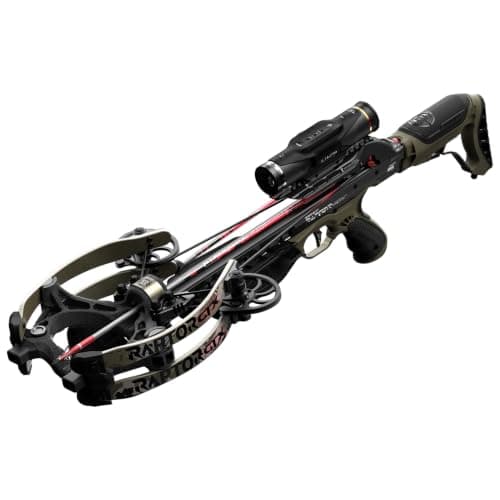
Hogs are a close-range, low-light, fast-moving proposition, and the bow matters as much as the head. Best crossbow for hog hunting ranks bows on reload speed and published energy for exactly this reason, and a lit reticle is close to mandatory - best low-light crossbow scopes covers the optics. Practice with the broadhead you will hunt, on a target rated for broadheads: see best broadhead targets.
Frequently asked questions
What is the best broadhead for hogs with a crossbow?
Will a mechanical broadhead go through a hog's shield?
What cutting diameter is best for hogs?
Where should you aim on a hog with a crossbow?
What arrow weight should I shoot at hogs?
Sources
Read next
Crossbows
The best crossbows for hog hunting
Bolts & Broadheads
The best fixed blade crossbow broadheads
Bolts & Broadheads
The best crossbow broadheads for elk
Bolts & Broadheads
Mechanical vs fixed blade broadheads
Bolts & Broadheads
Crossbow bolt weight, explained