Sight types
Types of crossbow scopes
Before you compare brands, decide which kind of sight you are shopping for. Five categories exist, they solve different problems, and four of them are the wrong answer for most hunters.
String & Stock earns a commission when you buy through our links, at no extra cost to you. Prices come from Amazon and change; the date beside every price is when we last verified it. Full disclosure.
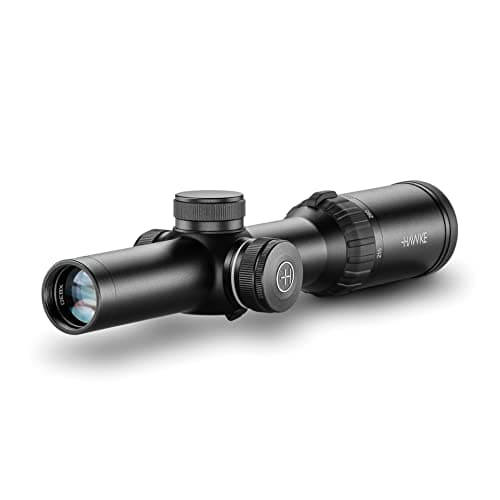
Hawke XB30 Pro SR 1-5x24
A speed-selector power ring covering 215 to 450 fps, which is the broadest span any scope on this site publishes.
Ranked
Quick picks
| # | Product | Magnification | Score | Price |
|---|---|---|---|---|
| Rank 1 | Hawke XB30 Pro SR 1-5x24 | 1-5x | 9.6 | $173.98XB30 Pro SR 1-5x24 |
| Rank 2 | 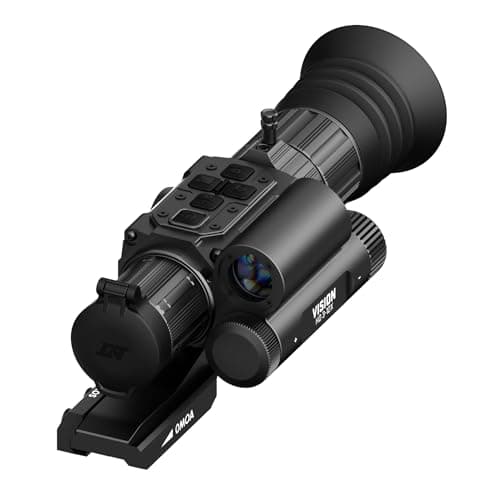 TenPoint Vision HD 3-12x Digital Rangefinding | 3-12x | 9.5 | $899.99Vision HD 3-12x Digital Rangefinding |
| Rank 3 | 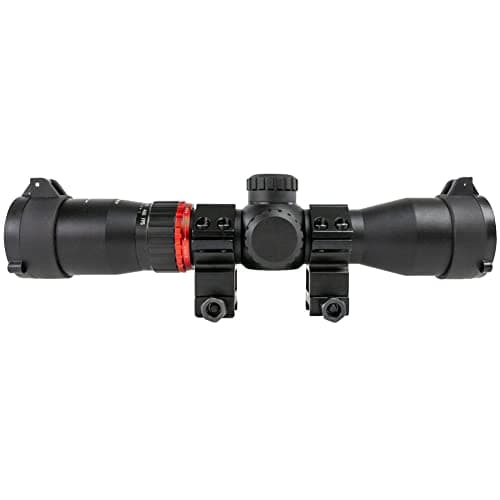 Killer Instinct Big Game Max View 2-7x36 | 2-7x | 9.2 | $159.99Big Game Max View 2-7x36 |
| Rank 4 | 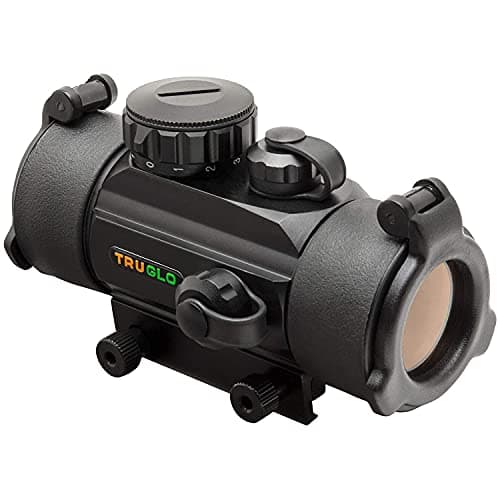 TruGlo Traditional Crossbow Tri-Dot 30mm | 1x | 8.8 | $71.99Traditional Crossbow Tri-Dot 30mm |
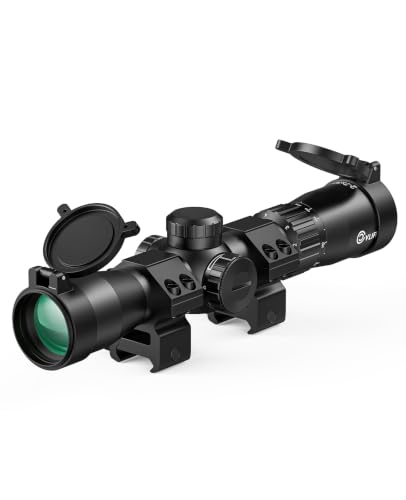
| Rank 5 | 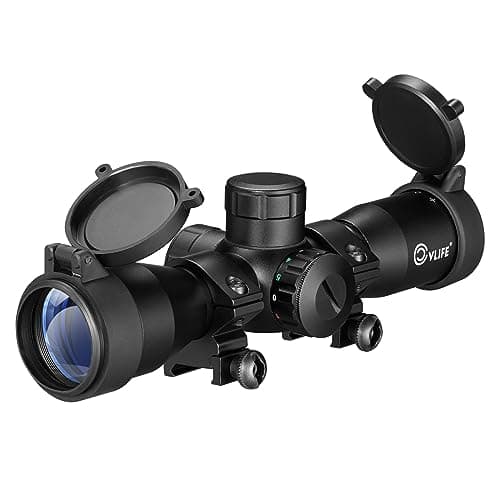 CVLIFE 4x32 Compact | 4x | 8.7 | $66.994x32 Compact |
Crossbow sights fall into five categories: fixed-magnification multi-reticle scopes, variable-magnification scopes with a speed dial, illuminated scopes built for low light, digital rangefinding scopes that range and compensate for you, and 1x red dots. For most hunters shooting inside 50 yards, a variable scope with a speed dial matched to your bow's velocity is the right category.
Almost every crossbow scope question is really a category question wearing a brand name. Someone asks which scope is best, but what they actually need to settle first is whether they are buying magnification, a speed dial, light transmission, a laser, or just a dot. Pick the wrong category and no amount of shopping inside it helps.
So this page sorts the market into the five kinds of sight that exist, says plainly what each one buys and what it costs you, and shows one verified live example of each. Once you know the category, our best crossbow scopes roundup ranks the options inside it.
In detail
One verified example of each category
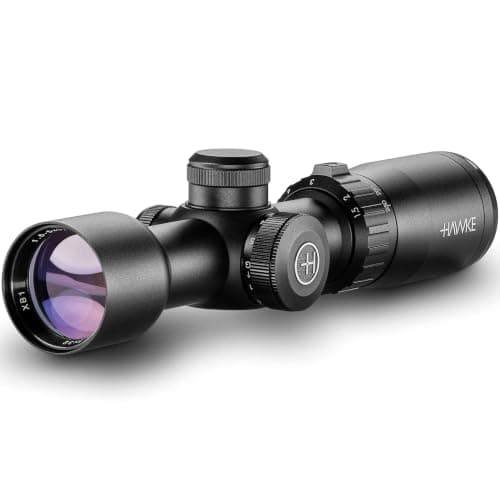
Hawke XB30 Pro SR 1-5x24
A speed-selector power ring covering 215 to 450 fps, which is the broadest span any scope on this site publishes. Dial your bow's speed and the reticle's aim points line up with your trajectory. 16-layer multi-coated glass in a 30 mm mono-tube does the rest. If you own more than one bow, or expect to change bows, this is the scope that follows you.
| Published spec | Value |
|---|---|
| Speed range | 215-450 fps |
| Magnification | 1-5x |
| Objective | 24 mm |
| Tube | 30 mm |
| Reticle | Illuminated SR, stepless rheostat |
| Glass | 16-layer fully multi-coated |
| Weatherproofing | Nitrogen purged, waterproof, fog proof |
Why we recommend it
- 215-450 fps covers every bow on this site, from the SAS recurve to the R470
- Stepless illumination rheostat rather than fixed brightness steps
- 30 mm mono-tube passes more light than a 1-inch body
- Metal screw-in lens covers rather than rubber flip caps
Good to know
1x at the bottom end is a wide field, not a precision magnification
Our rubric
- 9.8
- 9.5
- 9.4
- 9.4
- 9.3
TenPoint Vision HD 3-12x Digital Rangefinding
An integrated laser that ranges from 5 to 1100 yards, pairs the reading with one of five pre-loaded TenPoint arrow ballistic profiles, and hands you the corrected aim point with no arithmetic. One-shot zeroing means a single shot at 30 yards calibrates it out to 100. It solves the problem that causes most missed crossbow shots: a bolt drops so much past 40 yards that a guessed range is a miss.
| Published spec | Value |
|---|---|
| Magnification | 3-12x |
| Rangefinder | Integrated laser, 5-1100 yd |
| Drop compensation | 5 pre-loaded TenPoint arrow ballistic profiles |
| Zeroing | One shot at 30 yd, calibrated to 100 yd |
| Recording | 1080p video and sound, three trigger modes |
| Runtime | Up to 10 hr, 5 hr per battery |
| Weatherproofing | Waterproof, shockproof |
Why we recommend it
- Ranges from 5 to 1100 yards and applies the drop compensation itself
- One-shot zeroing: sight in at 30 yards and the calibration holds to 100
- 3-12x is the widest magnification range of any scope on this site
- Records the shot in 1080p with sound, including a recoil-triggered hands-free mode
Good to know
Battery dependent — a dead cell is a scope with no aim point
Our rubric
- 9.8
- 9.5
- 9.8
- 9.2
- 8.4
Killer Instinct Big Game Max View 2-7x36
A velocity dial covering 340 to 460 fps, a 36 mm objective on a 30 mm tube, and an LDC reticle with aim points every ten yards to seventy and every five out to a hundred and fifty — for about a hundred dollars. For a fast budget bow that shipped with a fixed 4x32, this is the cheapest upgrade that changes how it shoots past 40 yards. The dial starts at 340 fps, so it is the wrong scope for a slow compound or a recurve.
| Published spec | Value |
|---|---|
| Speed range | 340-460 fps |
| Magnification | 2-7x |
| Objective | 36 mm |
| Tube | 30 mm |
| Reticle range | 10 yd steps to 70 yd, 5 yd steps to 150 yd |
| Reticle | LDC, illuminated red and green, adjustable brightness |
| Chassis | Waterproof, fogproof and shockproof; flip-up caps |
Why we recommend it
- A velocity dial rather than one assumed speed, at the bundled-scope price
- A 36 mm objective on a 30 mm tube is unusual at this money
- Aim references out to 150 yd for range practice
- Adjustable reticle brightness, not a two-step switch
Good to know
340 fps is the bottom of the dial, so slow bows and recurves are out
Our rubric
- 8.7
- 8.9
- 9.4
- 9.2
- 9.8
TruGlo Traditional Crossbow Tri-Dot 30mm
Three descending dots at 5, 3.5 and 2 MOA in a 30 mm tube with an integrated weaver mount, and the only sight in this group whose listing names a crossbow as the intended weapon. Three dots is not a calibrated reticle, but it is three references instead of one, which is the difference between guessing holdover and estimating it.
| Published spec | Value |
|---|---|
| Magnification | 1x |
| Objective | 30 mm |
| Aim points | Three descending dots - 5 MOA, 3.5 MOA, 2 MOA |
| Speed calibration | |
| Eye relief | Unlimited |
| Mount | Integrated weaver-style |
| Brightness | Adjustable rheostat |
| Size | 9 x 5.8 x 2.3 in |
| Weatherproofing | Shock, water and fog resistant |
| Stated weapon | Crossbow |
Why we recommend it
- Three aim points rather than one, from descending dot diameters
- The listing names crossbows as the intended platform
- Integrated weaver mount - nothing else to buy
- Unlimited eye relief, which matters on a bow that fires toward its own optic
Good to know
The dots are not calibrated to any bolt speed, so the spacing is not a yardage
Our rubric
- 8.4
- 9.5
- 8.8
- 9.0
- 9.4
CVLIFE 4x32 Compact
7.7 inches and 11.3 ounces with a 250 to 350 fps speed adjustment and six aim points to 70 yards. The length is the reason it is here: on a 31-inch bullpup, a 9-inch scope hangs off both ends. Note the speed ceiling of 350 fps — this is a scope for a slower bow.
| Published spec | Value |
|---|---|
| Speed range | 250-350 fps |
| Magnification | 4x |
| Objective | 32 mm |
| Length | 7.7 in |
| Weight | 11.3 oz |
| Reticle | Six aim points with six horizontal lines, 20-70 yd |
| Durability | Aircraft-grade aluminum, shock tested to 800 G |
Why we recommend it
- 7.7 inches and 11.3 ounces suit a short, light bow
- Six aim points plus ranging lines at a low price
- Rings, caps and batteries included
Good to know
A 350 fps ceiling rules out most bows on this site
Our rubric
- 8.4
- 8.4
- 8.7
- 8.4
- 9.7
The thing all five have to deal with
A crossbow bolt is heavy and comparatively slow, so it drops steeply. At 20 yd the drop is trivial. By 50 yd it is measured in feet, which means a single aim point cannot be right at more than one distance. Every category below is a different answer to that one problem, and the answers divide into three groups: reticles with pre-calculated marks, a dial that matches those marks to your bow, and a laser that does the arithmetic for you.
Two of our other pages are the mechanics behind this. Crossbow reticle types explained covers how the stacked marks are built, and crossbow speed rings explained covers the dial that matches them to your bolt velocity. This page is the level above both: which kind of sight to go shopping for.
1. Variable magnification with a speed dial
The mainstream answer, and the one most hunters should buy. You get a zoom range - commonly 1.5-5x, 2-7x or 1-5x - and a collar you set to your bow's published bolt speed, which rotates the optical system so the stacked aim points match your actual trajectory. Set the dial, zero at 20 yards, and the 30, 40 and 50-yard marks land where they claim to.
The Hawke XB30 Pro SR is the example here because of the span of its dial: 215-450 fps, the widest published range on this site, which covers everything from a slow recurve to a 450 fps flagship. It also has a stepless illumination rheostat rather than fixed brightness steps and a 30 mm mono-tube. What it costs you: more than many of the budget bows it might be going on, 1x at the bottom of the range is a wide field rather than a precision setting, and the illumination is red only.
The one check that decides whether this category works for you is whether your bow's speed falls inside the dial's range. A dial starting at 340 fps is useless on a 300 fps bow, and that is a specification mismatch no amount of zeroing fixes.
2. Digital rangefinding
The newest category and the most capable: an integrated laser ranges the target, the scope matches the reading against a stored arrow profile, and it hands you the corrected aim point. It removes the single largest cause of missed crossbow shots past 30 yards, which is not a bad scope or a bad trigger - it is a guessed distance.
The TenPoint Vision HD ranges from 5 to 1100 yd, carries five pre-loaded TenPoint arrow ballistic profiles, zeroes from one shot at 30 yd out to 100 yd, runs 3-12x, and records the shot in 1080p. What it costs you: it is battery dependent, and a dead cell is a scope with no aim point; runtime is up to 10 hr across two batteries; it is the most expensive optic on this site; and some states restrict electronic sights for hunting, which you must check before you buy. Our rangefinding crossbow scopes roundup covers the category and the legal question in full.
The cheaper route to the same benefit is a handheld unit in your pocket. Best rangefinders for crossbow hunting ranks those, and for most hunters it is the better value - you range the trail before the deer arrives, not while it is standing there.
3. Illuminated, for the first and last half hour
Not a separate optical design so much as a priority: a bigger objective lens, better coatings and a reticle you can see against dark cover. Legal shooting light at both ends of the day is when deer move, and a black crosshair on a black deer in black timber is a real problem that glass and illumination solve.
The Killer Instinct Big Game Max View shows how cheaply the basics can be had: a 340-460 fps velocity dial, a 36 mm objective on a 30 mm tube, and an LDC reticle illuminated in red and green with adjustable brightness, at bundled-scope money. What it costs you: the dial starts at 340 fps, so slow compounds and recurves are out; the listing does not specify glass coating layers; and no warranty terms are published. For the category proper, best low-light crossbow scopes ranks on published objective diameter and coatings.
4. Red dots and 1x reflex sights
One illuminated aim point, 1x, unlimited eye relief, very fast to acquire and very wide to look through. A lot of budget crossbow packages ship with one in the box, which is why so many hunters' first upgrade question is whether to keep it.
The honest answer is that a dot is right in a narrow set of cases: shots all inside roughly 25 yards in thick cover, a slow recurve or youth bow, or an 11 mm dovetail rail and a tiny budget. Outside those, you are holding over by feel at every distance except the one you zeroed. The TruGlo Traditional Crossbow Tri-Dot is the best version of the compromise - three descending dots at 5, 3.5 and 2 MOA instead of one, in a 30 mm tube with an integrated weaver mount. What it costs you: the dots are not calibrated to any bolt speed, so the spacing is not a yardage; there is no magnification for identifying a target at 40 yd; and at 9 in long it is substantial on a compact bow. The full argument is on crossbow red dot vs scope.
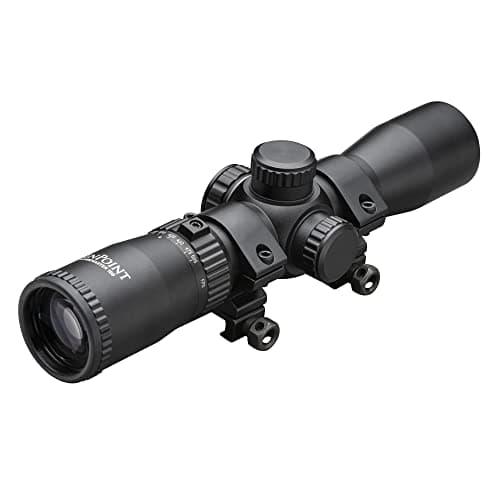
5. Fixed magnification
One power - almost always 4x - with a multi-reticle aim-point stack and often a speed adjustment too. It is the simplest, shortest and cheapest real crossbow scope, and it is what the majority of bundled packages include.
Length is the reason to choose one deliberately rather than by default. The CVLIFE 4x32 Compact is 7.7 in and 11.3 oz with six aim points to 70 yd, which on a short bullpup matters: a 9-inch scope on a 31-inch bow hangs off both ends. What it costs you: its speed adjustment tops out at 350 fps, which rules out most bows on this site; 4x is fixed, so you cannot open the field up for a close shot or close it down for a long one; and no warranty terms are published. Compact crossbow scopes ranks this category on published length and weight.
The categories side by side
| Aim points | Matched to bolt speed | Magnification | Needs a battery | Main cost | |
|---|---|---|---|---|---|
| Variable with speed dial | Typically four to nine | Yes, via the dial | 1-5x, 1.5-5x, 2-7x | Only for illumination | Price, and you must know your fps |
| Digital rangefinding | Computed per shot | Yes, via arrow profiles | 3-12x | Yes, always | Cost, runtime, state restrictions |
| Illuminated low light | Typically four to nine | Usually yes | 2-7x typical | Only for illumination | Bulk and objective diameter |
| Red dot / 1x reflex | One to three | No | 1x | Yes, for the dot | No calibrated holdover past your zero |
| Fixed magnification | Typically four to six | Sometimes | 4x | Only for illumination | No zoom, often a low speed ceiling |
How we picked the example in each category
One live, currently-purchasable product per category, chosen because its listing publishes the figure the category is judged on - speed range, ranging distance, objective diameter, aim-point count, physical length. Every number above is a manufacturer-published specification from the listing the buy link points at; we do not run a test lab, and our scoring axes are on the methodology page.
Pick your category first
- One bow, shots to 50 yards, want it right onceVariable magnification with a speed dial covering your bow's fps See the picks
- You hunt open country and misjudge rangeDigital rangefinding, or a handheld unit and a normal scope See the picks
- Dawn and dusk sits in heavy timberAn illuminated reticle and the biggest objective you can carry See the picks
- Thick cover, everything inside 25 yardsA red dot, and accept you have one calibrated distance See the picks
- A short bullpup, or a tight budgetA fixed 4x compact, checking the speed ceiling against your bow See the picks
The short version
Buy a variable scope with a speed dial that spans your bow's published velocity, unless one of four specific things is true: you misjudge range in open country, you hunt the edges of legal light, every shot you take is inside 25 yards in cover, or your bow is short enough that scope length is a real constraint. Settle the category, then zero it - how to sight in a crossbow takes about a dozen bolts.
Frequently asked questions
What are the different types of crossbow scopes?
What kind of crossbow scope should a beginner buy?
What is the difference between a crossbow scope and a rifle scope?
Do I need a rangefinding crossbow scope?
Is a red dot good enough for crossbow hunting?
What magnification do I need on a crossbow scope?
Our recommendation
TenPoint Vision HD 3-12x Digital Rangefinding
A rangefinder, a ballistic calculator and a camera in one unit.