Bag vs block
Bag vs block targets
Two different stopping mechanisms, two different jobs. Most crossbow owners end up with one of each, and here is why.
String & Stock earns a commission when you buy through our links, at no extra cost to you. Prices come from Amazon and change; the date beside every price is when we last verified it. Full disclosure.
Ranked
Quick picks
| # | Product | Speed rating | Score | Price |
|---|---|---|---|---|
| Rank 1 | Hurricane H28 | Up to 425 fps with standard-diameter arrows | 8.2 | $46.50Amazon |
| Rank 2 | 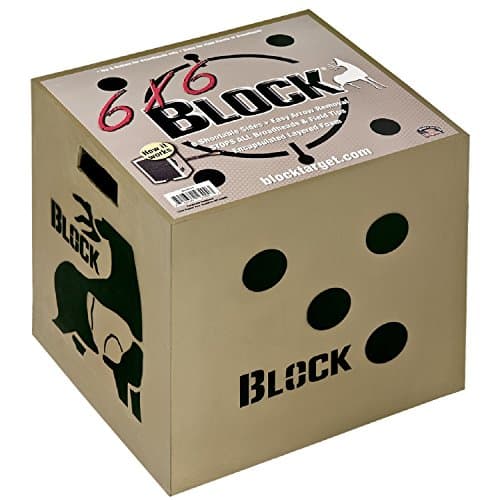 Block 6x6 Poly Fusion | Up to 400 fps | 8.2 | $99.95Amazon |
| Rank 3 | 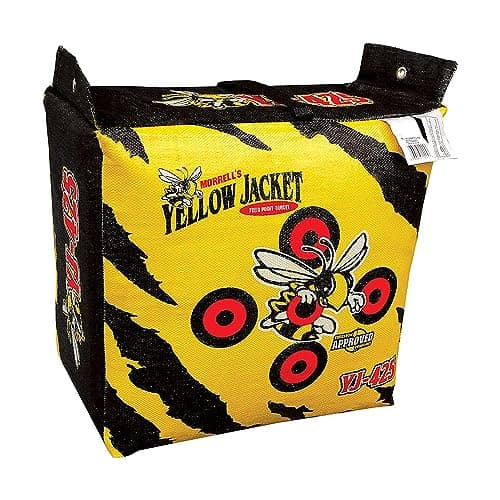 Morrell Yellow Jacket YJ-425 | Up to 425 fps | 8.3 | $69.99Amazon |
| Rank 4 | 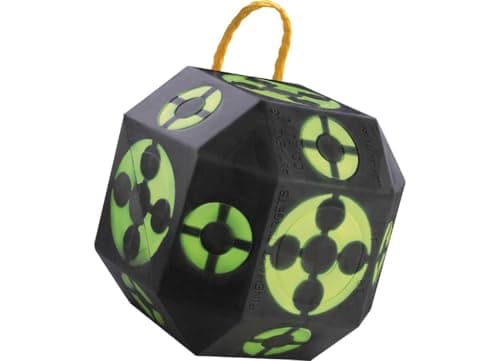 Rinehart 18-1 | Up to 500 fps | 9.0 | $159.99Amazon |
| Rank 5 | 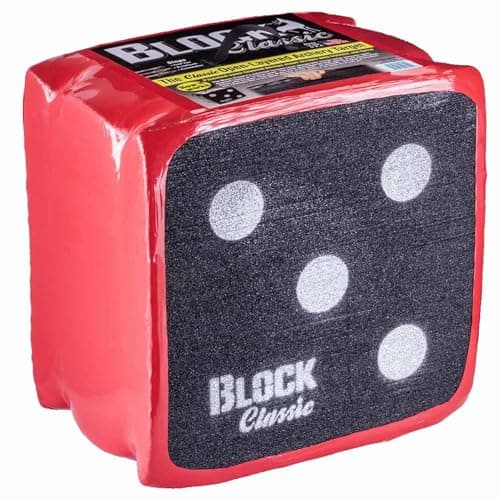 Block Classic | 8.2 | $77.50Amazon |
A bag target stops arrows with layered fiber fill: cheap, big-faced, easy to pull, field points only. A block or foam target stops them with layered or self-healing foam: takes broadheads, lasts longer, costs more. For a crossbow owner, a large bag for volume and a small foam target for broadheads is the usual answer.
In detail
Both types
Hurricane H28
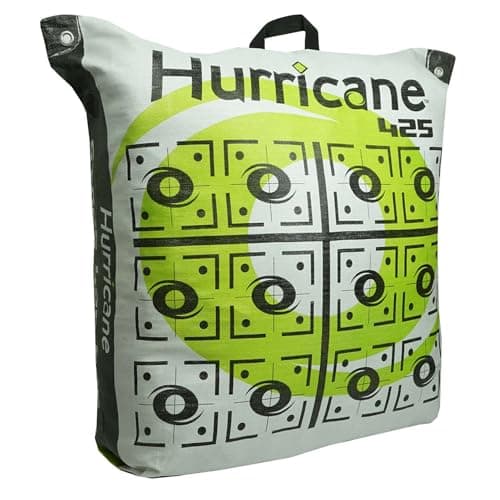
28 by 28 by 12 inches for under fifty dollars, rated to 425 fps with standard-diameter arrows, with deer vitals on the back offset from the front aiming points so the two sides wear in different places. Tri-Core technology is the stopping structure. The largest face on this page by a wide margin.
| Published spec | Value |
|---|---|
| Speed rating | Up to 425 fps with standard-diameter arrows |
| Dimensions | 28 x 28 x 12 in |
| Faces | 2 |
| Back face | Deer vitals, offset from the front aiming points |
| Technology | Tri-Core |
| Carry | Strap handle |
| Compatibility | Compound and crossbow |
What it does well
- A 28-inch face is the biggest here and the cheapest per square inch
- Offset front and back aiming points extend target life
- 425 fps rated
- High-contrast aiming points readable at distance
Where it falls short
Our rubric
- 8.0
- 8.8
- 7.0
- 7.8
- 9.4
Block 6x6 Poly Fusion
Six-sided, 400 fps rated, 18 by 18 by 16 inches, and the listing states it handles everything from practice tips to broadheads. Poly Fusion bonds the layers to the inside walls, which is Block's answer to the classic layered-target failure of the stack pulling apart.
| Published spec | Value |
|---|---|
| Speed rating | Up to 400 fps |
| Dimensions | 18 x 18 x 16 in |
| Faces | 6 |
| Technology | Poly Fusion multi-layer bonded to the inside walls |
| Arrow types | Practice tips through broadheads |
| Carry | Built-in handle |
What it does well
- Handles broadheads and field points on the same target
- A large 18-inch face, which suits sighting in
- Bonded layers resist the stack separating
Where it falls short
Our rubric
- 8.0
- 8.4
- 7.8
- 8.4
- 8.6
Morrell Yellow Jacket YJ-425
20 by 15 by 20 inches, 32 pounds, two shooting sides and ten bullseyes, rated to 425 fps and approved for crossbows. A big soft face is the right thing to sight a new bow into: you want every shot to land in something, including the first one that lands eighteen inches left.
| Published spec | Value |
|---|---|
| Speed rating | Up to 425 fps |
| Dimensions | 20 x 15 x 20 in |
| Weight | 32 lb |
| Faces | 2, with 10 bullseyes |
| Technology | MLDD and IFS |
| Weather | Weatherproof surface |
| Crossbow approved | Yes |
What it does well
- A big face catches the shots a new setup throws
- 425 fps rated and crossbow approved
- Easy arrow removal, which matters when a whole family is shooting
- Carry handle despite the 32 pounds
Where it falls short
Our rubric
- 8.2
- 9.0
- 6.8
- 8.0
- 9.0
Rinehart 18-1
Eighteen shootable faces of self-healing foam, broadhead capable, rated to 500 fps and explicitly crossbow approved. This is the one target on the site that handles the two hardest things at once: a 470 fps bolt and a fixed broadhead. 15 inches a side and light enough to carry by the handle.
| Published spec | Value |
|---|---|
| Speed rating | Up to 500 fps |
| Faces | 18 |
| Dimensions | 15 x 15 x 15 in |
| Broadhead capable | Yes |
| Foam | Signature series self-healing |
| Crossbow approved | Yes |
| Carry | Easy-carry handle |
What it does well
- 500 fps and broadhead capable together, which is rare
- Eighteen faces means you rotate rather than shooting out one spot
- Self-healing foam closes the hole behind the arrow
- Light with a carry handle
Where it falls short
Our rubric
- 9.4
- 8.6
- 9.0
- 9.4
- 8.0
Block Classic
The original open-layered Block: arrows stop with friction rather than force, entering between unglued layers that grip the shaft as it heats and release it as it cools. That mechanism is why the Block pulls easier than a solid-foam target. 18 by 18 by 13.5 inches, two-sided, high-contrast faces.
| Published spec | Value |
|---|---|
| Dimensions | 18 x 18 x 13.5 in |
| Faces | 2 |
| Technology | Patented open-layered friction design |
| Arrow removal | Heat and friction grip, then release on cooling |
| Faces detail | High-contrast black and white |
| Carry | Lightweight and portable |
| Speed rating |
What it does well
- The open-layer design gives the easiest pull of the foam targets here
- An 18-inch two-sided face
- Light enough to take to camp
Where it falls short
Our rubric
- 7.6
- 9.4
- 8.6
- 7.6
- 8.6
The two stopping mechanisms
Bag: friction over a long path
Loose synthetic fill inside a woven cover grips the shaft along several inches of travel. Big faces are cheap to build, arrows pull out easily, and the whole thing is light for its size — Morrell's YJ-425 is 20 x 15 x 20 in at 32 lb, Hurricane's H28 is 28 x 28 x 12 in.
The weakness is cutting. Broadhead blades cut the fill apart from the inside and the damage starts on the first shot.
Block: layered or self-healing foam
Block's open-layered design stops arrows with friction, not force — the shaft enters between unglued layers that grip it as the friction heats them and release it as it cools. Poly Fusion bonds those layers to the inside walls so the stack cannot separate. Rinehart's approach is different again: dense self-healing foam that seals the hole behind the arrow.
Either way, foam tolerates a cutting edge in a way fiber fill does not.
The comparison
| Bag | Block / foam | |
|---|---|---|
| Stopping mechanism | Layered fiber fill, friction over distance | Layered or self-healing foam |
| Broadheads | No | Yes, where the maker states it |
| Face size per dollar | Much larger | Smaller |
| Arrow pull | Easy | Easy on an open-layer Block; harder on dense foam |
| Faces | Usually 2 | Up to 18 |
| Speed ratings here | 425 fps maximum | 400-500 fps |
| Weight | Heavy for its size (32 lb) | Lighter per unit volume |
| Weatherproofing | Treated cover; keep it dry | Generally better |
Which job each one does
Pick by what you are doing
- Sighting in a new bowBag, the biggest you can get. A 28 in face catches the shots a new setup throws.
- High-volume field-point practiceBag or a mesh target. Cheapest per shot, easiest pull.
- Pre-season broadhead checkFoam, broadhead capable. Three arrows is all you need.
- A bow over 450 fpsFoam or mesh. No bag target here is rated for it.
- Shot-placement practiceFoam with 3D faces — the Rinehart RhinoBlock shows anatomical organs.
- A discharge target for unloadingSmall foam cube. Cheap, portable, and it takes repeated field points.
The speed-rating difference
This is where the choice narrows for crossbow owners. Bag targets here top out at 425 fps, and Hurricane specifies that figure for standard-diameter arrows. Foam and mesh go further: Block's Poly Fusion 400 fps, Morrell's High Roller 450 fps, Rinehart's 18-1 500 fps, SpyderWeb no stated limit.
If your bow is over 425 fps, bag targets are off the table entirely. See targets for fast bows.
Durability, which cuts both ways
- Bags fail by the fill compacting where you have been shooting, which gradually stops the arrows less. Rotating the two faces delays it; Hurricane offsets the back-face deer vitals from the front aiming points to spread wear further.
- Layered foam can fail by the stack separating. Block's Poly Fusion bonds the layers to the inside walls specifically to prevent it.
- Self-healing foam lasts longest and costs most, and the Rinehart 18-1's eighteen faces mean you may never shoot the same spot twice in a season.
What we would buy
Both, and it is about eighty dollars. A Hurricane H28 for the big face and field-point volume, plus a Delta McKenzie Speedbag Revolver or a Rinehart 18-1 for broadheads and discharge shots. If you can have only one and your bow is over 425 fps, the Rinehart 18-1 does everything except cheap volume.
Frequently asked questions
Is a bag or block target better for a crossbow?
Can you shoot a crossbow into a bag target?
Why do Block targets pull easier?
Which target lasts longer?
What target should I buy first?
Sources
Read next
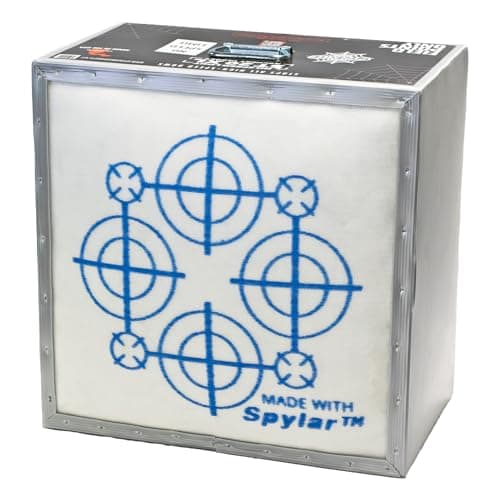
Targets & Cases
The best crossbow targets
Targets & Cases
The best broadhead targets for crossbows
Targets & Cases
Will a crossbow shoot through a target?
Targets & Cases
The best targets for a high-FPS crossbow