Vs traditional bows
Crossbow vs recurve and longbow
A crossbow holds the draw for you. A traditional bow makes you hold it. Almost every real difference follows from that one sentence.
String & Stock earns a commission when you buy through our links, at no extra cost to you. Prices come from Amazon and change; the date beside every price is when we last verified it. Full disclosure.
Ranked
Quick picks
| # | Product | Speed | Score | Price |
|---|---|---|---|---|
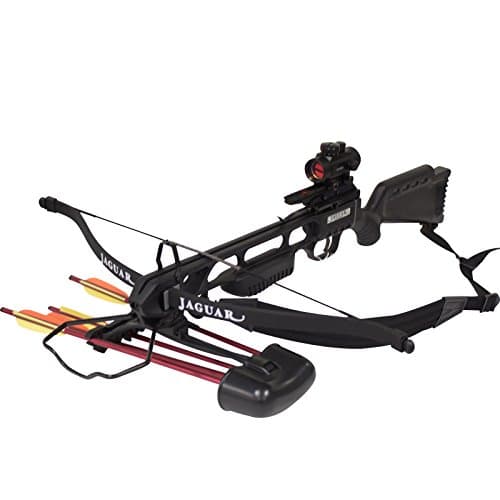
| Rank 1 | SAS Jaguar 175 lb Recurve | 245 fps | 6.8 | $169.99Amazon |
| Rank 2 | 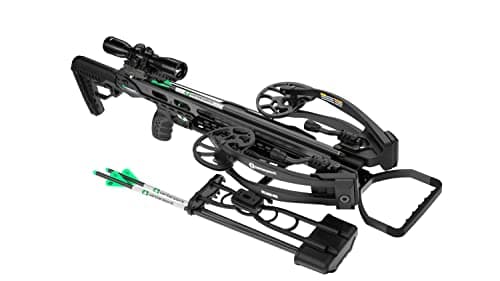 CenterPoint Hellion 400 | 400 fps | 8.3 | $339.95Amazon |
| Rank 3 | 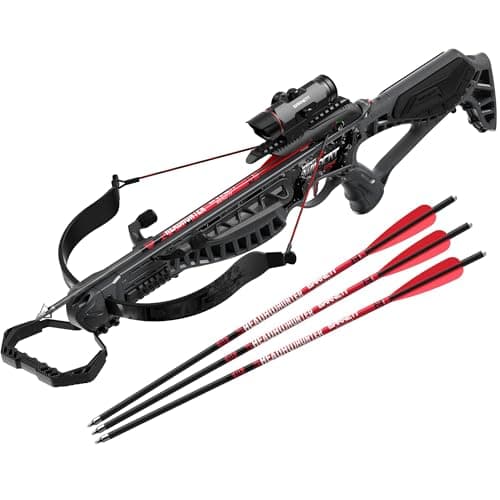 Barnett Wildcat CRX | 280 fps | 7.2 | $239.99Amazon |
A crossbow holds its own draw mechanically, so you can aim indefinitely, shoot from a seated position, and use a magnified scope. A traditional recurve or longbow is held by muscle, which limits hold time to seconds and effective range to roughly 20 to 30 yards for most hunters. The crossbow is far easier to become lethal with; the traditional bow is lighter, quieter and quicker to a second shot.
This comparison is not the same as crossbow vs compound bow. A compound has let-off, cams and usually a release and sights, which puts it much closer to a crossbow in how it is shot. A traditional recurve or longbow has none of that: no let-off, no mechanical hold, often no sights at all. The gap is much wider, and so is the answer.
The one difference everything follows from
A crossbow latches the string. Once it is cocked, the bow is holding 150-220 lb and you are holding a rifle-weight object you can rest on a blind window or a stand rail. A traditional archer at full draw is holding 45-60 lb with their back and shoulders and can do it for a handful of seconds before the shot deteriorates. Everything in the table below is downstream of that.
| Crossbow | Traditional recurve / longbow | |
|---|---|---|
| Who holds the draw | The bow, mechanically | You, with your back and shoulders |
| Hold time at aim | Indefinite | Seconds |
| Typical hunting range | 30-50 yd with a calibrated scope | 20-30 yd for most hunters |
| Sighting | Magnified scope with calibrated holds | Instinctive or a simple sight pin |
| Practice to become lethal | A range session or two to zero | Months to years of consistent form |
| Weight carried | 5.8-8.4 lb | 2-3 lb typically |
| Second shot | Re-cock: 10-30 seconds | A few seconds |
| Noise at the shot | Louder; needs silencers and string stops | Quieter |
| Shooting seated | Easy | Hard, and often not possible |
| Cocking effort | The main problem to solve | Not applicable |
Where the crossbow genuinely wins
- A shoulder that will not hold a draw. This is the single most common reason people switch, and it is a complete answer: see best crossbow for a shoulder injury.
- A blind or a chair. You can shoot a crossbow from almost any seated position. Drawing a traditional bow from a chair is awkward at best.
- Time to proficiency. A zeroed crossbow with a calibrated scope puts a competent shooter on a paper plate at 40 yards in an afternoon. Traditional archery does not work like that.
- Low light. An illuminated reticle is a real advantage at the two times of day deer move. Instinctive shooting is not easier in the dark.
Where the traditional bow genuinely wins
- Weight and simplicity. Two or three pounds, nothing to break, no gearbox, no scope to knock out of zero.
- Noise. A traditional bow is quieter at the shot than a crossbow of equivalent power, which matters inside 20 yards.
- Follow-up shots. Nocking another arrow is seconds. Re-cocking a crossbow is a procedure.
- The craft. This is not a specification and it is still the real reason many people shoot traditional. A crossbow does not offer it.
The recurve crossbow sits in between
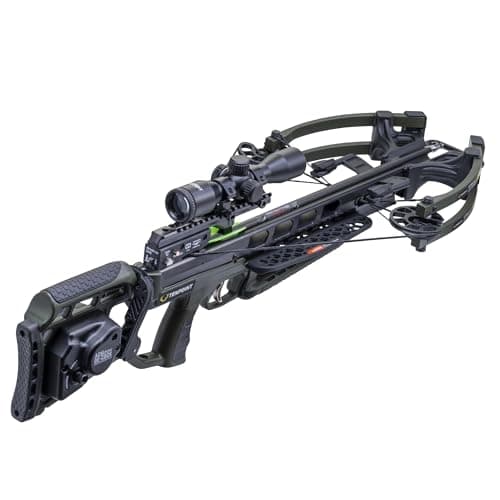
There is a third option people miss: a recurve crossbow. It has the mechanical latch and the scope of any crossbow, with the simplicity of recurve limbs — no cams, no cables, and a string you can change without a bow press. The SAS Jaguar publishes 175 lb of draw and 245 fps at the lowest price of any bow on this site; Excalibur builds the serious end of that market, covered in the Excalibur range review. The trade is speed: 245 fps is well below the 400 fps a budget compound crossbow publishes.
In detail
Three low-cost ways into a crossbow
SAS Jaguar 175 lb Recurve
175-pound draw, 245 fps, fiberglass limbs and a red dot. A recurve crossbow has no cams or cables to serve, which is a genuine maintenance advantage, and 245 fps is honest about what it is: a close-range bow for a shooter who wants simple.
| Published spec | Value |
|---|---|
| Draw weight | 175 lb |
| Speed | 245 fps |
| Limb | Compression-molded fiberglass |
| Design | Recurve |
| Safety | Auto safety cocking mechanism |
| Sight | Red dot, included |
| Stock | Reinforced composite |
What it does well
- No cams or cables to serve or replace
- 175 pounds is a lower draw than most compound bows here
- Cheapest complete bow on the site
Where it falls short
Our rubric
- 7.0
- 4.8
- 6.4
- 5.8
- 7.6
- 8.6
CenterPoint Hellion 400
8 inches cocked, 12 uncocked, 400 fps off a 185-pound draw, for the price of a mid-range scope. It is the narrowest bow on this site under five hundred dollars, which makes it the budget answer to the blind-window problem. Note that it requires CP400 lighted nocks.
| Published spec | Value |
|---|---|
| Speed | 400 fps |
| Draw weight | 185 lb |
| Cocked width | 8 in |
| Uncocked width | 12 in |
| Limbs | Compression fiberglass quad |
| Arrows | Three 20 in .003 straightness arrows |
| Nocks | Requires CP400 lighted nocks |
What it does well
- An 8-inch cocked width is the narrowest here outside the Ravin line
- A 185-pound draw is lower than its rivals at the same speed
- Roller retention spring and CNC aluminum rails at a budget price
Where it falls short
Our rubric
- 6.6
- 8.4
- 7.8
- 9.6
- 8.0
- 9.0
Barnett Wildcat CRX
280 fps at 6.1 pounds with a red dot, three arrows, broadheads, a quiver and a cocking device in the bundle. It is the least bow on this site and it is priced like it. Buy it to learn on, or if your season opens in three days and you have two hundred dollars.
| Published spec | Value |
|---|---|
| Speed | 280 fps |
| Weight | 6.1 lb |
| Cocking aid | Cocking device included; Rope-Hold technology |
| Sight | Red dot |
| Included | Three 20 in Headhunter arrows, broadheads, side-mount quiver |
| Safety | Anti-dry-fire, finger safety reminders, pass-through foregrip |
| Cocked width |
What it does well
- Complete and shootable out of the box, broadheads included
- 6.1 pounds with the quiver on
- Anti-dry-fire on a budget bow
Where it falls short
Our rubric
- 6.4
- 5.4
- 6.6
- 7.8
- 9.0
- 9.2
Season access, which may decide it for you
In a lot of states the practical question is not which weapon you prefer but which seasons each one opens. Crossbow inclusion in archery seasons varies by state, by season segment, and sometimes by the hunter's age or a disability permit. A traditional bow is legal wherever archery equipment is. This genuinely changes the answer in some states and we are not going to summarize fifty sets of rules — crossbow hunting regulations explains what to check and where.
Our read
If you are choosing a weapon to hunt effectively with, soon, from a blind or a stand, with a shoulder or a schedule that does not support months of form practice, the crossbow is the correct tool and it is not a close call. If you want a light, quiet, simple bow and you are willing to put in the practice and keep your shots inside 25 yards, a traditional recurve or longbow is a better experience and arguably a better hunt. Both are real answers. Only one of them is the answer to the question most people arrive here with.
One practical note for anyone weighing both: a crossbow commits you to a cocking routine and a traditional bow commits you to a practice routine. Those are the two ongoing costs, and they are the two things most often underestimated. If neither appeals, the honest answer may be a different weapon entirely.